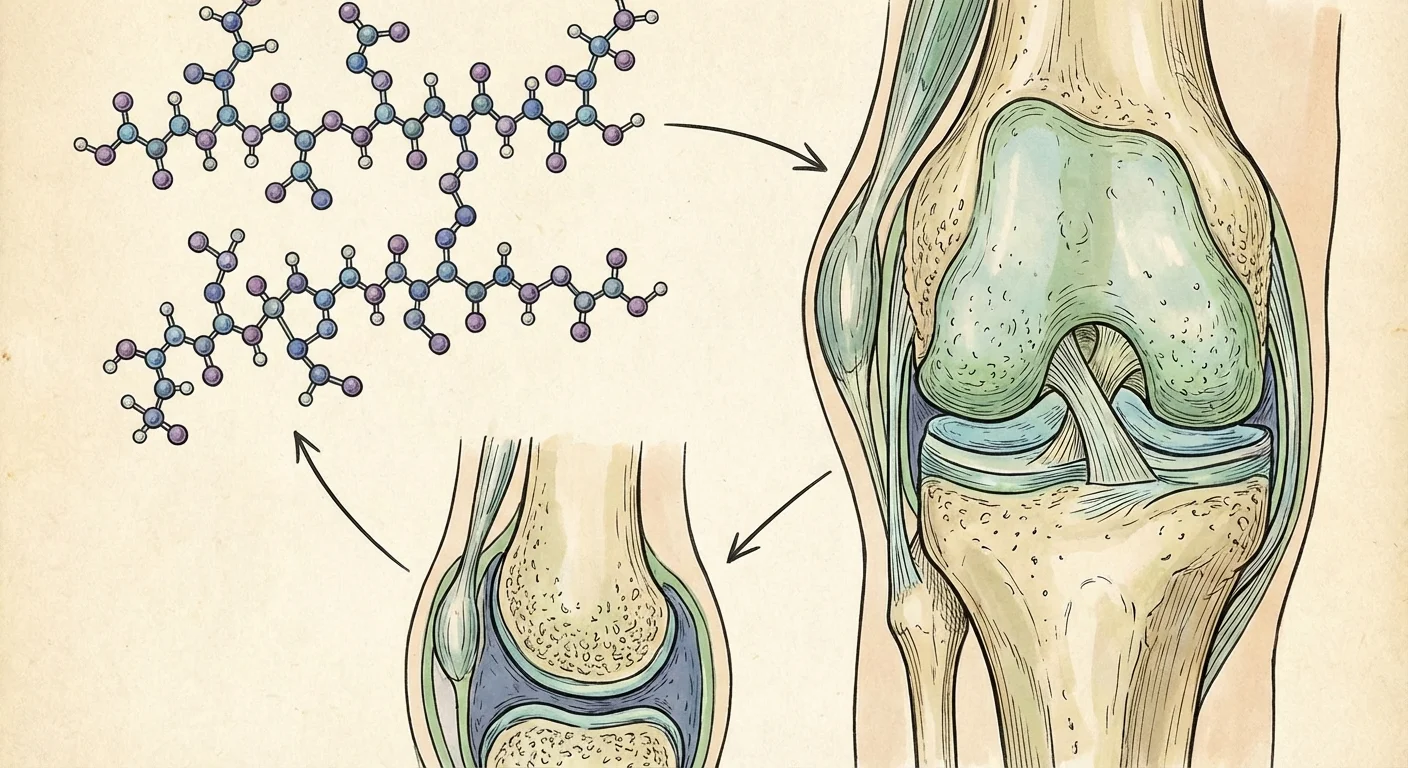
The Best Peptides for Joint Health: What the Research Actually Shows
Separating preclinical promise from clinical reality in musculoskeletal peptide therapy. BPC-157, TB-500, AOD-9604, and GHK-Cu examined with full evidence context.
Articular Cartilage
Studies (to 2024)
Are Over 60
in Human Joints
Joints are where the peptide therapy conversation gets real. Unlike the abstract goals of longevity or optimization, a torn rotator cuff, a degenerating knee, or chronic tendinitis is concrete. It hurts, it limits what you can do, and the conventional options (rest, ice, NSAIDs, corticosteroid injections, eventually surgery) have well-known limitations.
NSAIDs blunt pain but may actually impair the healing process. Corticosteroid injections provide temporary relief but accelerate cartilage degradation with repeated use. Physical therapy is essential but slow. Surgery is invasive, expensive, and comes with its own failure rates.
That gap between what patients need and what conventional medicine delivers is exactly why peptides for joint health have attracted so much attention. Several peptides have shown genuine biological activity in promoting tissue repair in ways that address the underlying problem rather than just masking symptoms.
The question isn't whether these molecules do interesting things in a petri dish or a rat model. Most of them clearly do. The question is whether the evidence supports their use in actual human joints, and at what level of confidence.
This article examines four peptides with the strongest relevance to joint repair and connective tissue health: BPC-157, TB-500, AOD-9604, and GHK-Cu. For each compound, we cover mechanism of action, preclinical and clinical evidence, and practical considerations. This is educational content, not medical advice.
Why Joints Are So Hard to Fix
Before evaluating individual peptides, it helps to understand what makes joint injuries so stubborn. The core issue is vascular supply.
Articular cartilage, the smooth tissue that caps the ends of bones inside a joint, has essentially no blood supply. It receives nutrients only by diffusion from the synovial fluid that bathes the joint. Tendons and ligaments have blood supply, but significantly less than muscles or skin.
This means the basic prerequisites for healing (delivery of oxygen, nutrients, immune cells, and growth factors to the injury site) are severely limited in the tissues that make up joints.
The Cartilage Problem
Adult articular cartilage has extremely limited regenerative capacity. Once damaged, it doesn't repair itself to its original hyaline structure. Instead, the body fills defects with fibrocartilage, a mechanically inferior substitute that can't bear loads or resist shear forces as well as the original tissue.
This is why osteoarthritis, once it begins, tends to progress. The replacement tissue fails under the same mechanical demands that damaged the original cartilage, creating a degenerative cycle.
Tendons and Ligaments
Tendons and ligaments heal somewhat better than cartilage, but the process is slow (months, not weeks). The repaired tissue is typically stiffer, less elastic, and more prone to re-injury than the original.
Collagen fibers in healed tendons are often disorganized compared to the parallel alignment found in healthy tendon, reducing tensile strength. Every peptide discussed in this article targets one or more of these fundamental problems: insufficient blood supply, inadequate growth factor signaling, excessive inflammation, and poor collagen organization during repair.
BPC-157: The Tissue Repair Generalist
BPC-157 (Body Protection Compound-157) is a synthetic pentadecapeptide (15 amino acids) derived from a protective protein found in human gastric juice. It was first isolated and characterized by Professor Predrag Sikiric at the University of Zagreb in 1993.
Since then, it's been the subject of extensive preclinical research across an unusually wide range of tissue types, including tendon, muscle, ligament, bone, gut, liver, and nervous system. For joint health specifically, BPC-157's relevance centers on its effects on tendons, ligaments, and to a lesser extent, cartilage.
How It Works
BPC-157's mechanism of action isn't fully understood, but research has identified several converging pathways. The peptide activates VEGFR2 and stimulates nitric oxide synthesis through the Akt-eNOS axis, promoting angiogenesis (new blood vessel formation) and enhanced blood flow to injured tissue.
In tendons and ligaments, which suffer from poor vascularity, this is significant. It also stimulates F-actin formation and activates the FAK-paxillin signaling pathway, which governs cell migration. In practical terms, BPC-157 promotes the movement of fibroblasts (the cells that produce collagen) toward the injury site.
A 2010 study by Chang and colleagues found that BPC-157 accelerated the outgrowth of tendon fibroblasts from tendon explants in a dose-dependent manner, increased cell survival under oxidative stress, and enhanced fibroblast migration. The pathway was linked to increased phosphorylation of both FAK and paxillin (Chang et al., 2010).
A follow-up study by the same group found that BPC-157 upregulated growth hormone receptor expression in tendon fibroblasts, one of the most abundantly affected genes. This suggests a mechanism through which the peptide amplifies the tissue's response to circulating growth factors (Chang et al., 2011).
BPC-157 also exerts anti-inflammatory effects by reducing pro-inflammatory cytokines including TNF-alpha and IL-6. It modulates nitric oxide pathways in a context-dependent manner: it can reduce thrombosis or mitigate bleeding depending on the vascular state of the injured tissue.
The Evidence
A 2025 systematic review published in The Orthopaedic Journal of Sports Medicine identified 36 studies on BPC-157 from 1993 to 2024. Thirty-five were preclinical (animal models). One was a clinical study.
That ratio tells you most of what you need to know about where BPC-157 sits on the evidence spectrum.
BPC-157 enhances growth hormone receptor expression and several pathways involved in cell growth and angiogenesis, while reducing inflammatory cytokines. In preclinical models, BPC-157 improved functional, structural, and biomechanical outcomes in muscle, tendon, ligament, and bony injuries. (Systematic review, The Orthopaedic Journal of Sports Medicine, 2025; 36 studies, 1993–2024)
In the preclinical literature, results are consistently positive. In rat models of Achilles tendon transection, BPC-157 treated tendons demonstrated increased load to failure and better functional recovery (measured by the Achilles Functional Index) over 14 days compared to controls.
In ligament injury models, BPC-157 enhanced collagen organization and biomechanical strength. In muscle contusion models, it accelerated collagen organization and suppressed the pro-inflammatory transcription factor egr-1 through its repressor nab2.
The single published human study is a 2021 retrospective chart review from a clinic in Orlando, Florida, examining 12 patients who received intra-articular BPC-157 injections for chronic knee pain. Seven of 12 patients reported pain relief lasting more than six months (Lee & Padgett, 2021).
This study had no control group, no blinding, no imaging follow-up, and patients had a mix of conditions including osteoarthritis, meniscus tears, and ligament sprains. Many of these conditions can improve on their own over time. It's preliminary evidence at best.
Despite consistent preclinical results and growing clinical use, there is no clinical safety data in humans for BPC-157. The peptide remains FDA Category 2 (prohibited for compounding) and is banned in professional sports by WADA. Anyone reporting adverse effects from unregulated products may be experiencing contamination, incorrect dosing, or genuine pharmacological effects that have never been characterized in controlled human studies.
TB-500 (Thymosin Beta-4): The Systemic Remodeler
TB-500 is a synthetic peptide fragment derived from thymosin beta-4, a 43-amino-acid protein that is expressed in nearly every cell in the human body. Thymosin beta-4 was originally isolated from calf thymus in the early 1980s.
Its concentration is particularly high in blood platelets, wound fluid, and immune cells, exactly the places where tissue repair is actively occurring. While BPC-157 tends to be discussed in terms of localized tissue repair, TB-500's identity is built around a different biological function: actin regulation.
How It Works
Actin is one of the most abundant proteins in the body and forms the structural scaffolding (cytoskeleton) that gives cells their shape and enables them to move. TB-500 binds to G-actin monomers and prevents them from polymerizing into filaments, keeping the cytoskeleton flexible and dynamic.
This might sound counterproductive, but cell migration requires the cytoskeleton to be continuously remodeled. Cells can't move through rigid, polymerized actin networks. By sequestering G-actin, TB-500 maintains the cellular flexibility that allows fibroblasts, endothelial cells, and keratinocytes to reach and repair damaged tissue.
Beyond actin regulation, thymosin beta-4 promotes angiogenesis, stimulates collagen deposition, reduces inflammatory signaling, and has been shown to reactivate progenitor (stem-like) cells that can differentiate into the specific cell types needed for repair.
One of its notable properties is that it appears to travel systemically to injury sites. This is why practitioners often administer it subcutaneously rather than locally, expecting it to reach damaged tissue through circulation.
The Joint-Specific Story
For joints specifically, the picture is complicated. Blain, Mason, and Duance at Cardiff University identified thymosin beta-4 as a mechanically regulated gene in articular cartilage chondrocytes: its expression increased 20-fold within 10 minutes of mechanical loading.
They found that thymosin beta-4 treatment increased the expression and activation of matrix metalloproteinases MMP-2 and MMP-9 in cartilage cells. This is where things get nuanced.
MMPs break down extracellular matrix. In the context of wound healing, controlled MMP activity is necessary to clear damaged tissue and make room for new matrix deposition. But in the context of osteoarthritis, excessive MMP activity is one of the primary drivers of cartilage destruction.
A 2017 study found that thymosin beta-4 levels were approximately 10 times higher in the serum and synovial fluid of rheumatoid arthritis patients compared to healthy controls, and correlated with inflammatory markers IL-6, IL-8, and VEGF (Kim et al., 2017).
TB-500's ability to promote tissue remodeling, angiogenesis, and cell migration could be beneficial for healing acute injuries like tendon tears or ligament sprains. But in a chronically inflamed joint with active cartilage degradation, those same properties (particularly MMP upregulation and angiogenesis) could theoretically accelerate destruction rather than repair.
TB-500 has been studied primarily in veterinary medicine (especially equine tendon injuries) and in preclinical models of cardiac, dermal, and neurological injury. There are no published controlled clinical trials of TB-500 for human joint conditions. Its use in human joint therapy is extrapolated from its known biological mechanisms and from practitioner experience, not from direct clinical evidence.
AOD-9604: The Cartilage Candidate
AOD-9604 is a modified fragment of human growth hormone, specifically amino acids 177 through 191 from the C-terminal end of the GH molecule. It was originally developed by Metabolic Pharmaceuticals in Australia as an anti-obesity agent, designed to retain GH's fat-metabolizing properties without its growth-promoting (and potentially dangerous) effects on IGF-1 levels.
Its relevance to joint health comes from an unexpected finding: AOD-9604 appears to promote proteoglycan and collagen production in chondrocytes, the cells that maintain cartilage. This makes it one of the few peptides with research specifically targeting cartilage regeneration rather than soft tissue repair.
The Key Study
The most cited study for AOD-9604 in joint health is Kwon and Park (2015), published in Annals of Clinical and Laboratory Science. The researchers used a collagenase-induced osteoarthritis model in 32 New Zealand white rabbits, dividing them into four groups: saline control, hyaluronic acid alone, AOD-9604 alone, and AOD-9604 combined with hyaluronic acid (Kwon & Park, 2015).
Weekly intra-articular injections were given for 4 to 7 weeks. All treatment groups showed better cartilage outcomes than saline controls, but the combination of AOD-9604 plus hyaluronic acid produced the best results: significantly better gross morphological and histopathological scores than either treatment alone, and a significantly shorter lameness period.
What makes AOD-9604 interesting for joints is its mechanism. It appears to recapitulate aspects of growth hormone's effects on cartilage development without stimulating IGF-1 production. Since IGF-1 elevation carries concerns about cancer promotion and other systemic effects, a peptide that supports cartilage without that baggage would be clinically valuable.
However, the exact molecular pathways by which AOD-9604 stimulates chondrocyte activity are not yet well characterized.
AOD-9604 is one of the most commonly discussed peptides for intra-articular injection, often combined with hyaluronic acid in clinical protocols. It received GRAS (Generally Recognized as Safe) status from the FDA for oral use as a food ingredient, but this doesn't extend to injectable applications. Like ipamorelin, it was placed on FDA Category 2 in September 2023 and later had its nomination withdrawn, leaving it in regulatory limbo for compounding as of early 2026.
GHK-Cu: The Connective Tissue Architect
GHK-Cu (glycyl-L-histidyl-L-lysine copper complex) is a naturally occurring tripeptide found in human blood plasma, saliva, and urine. Discovered in 1973, it's perhaps the best-characterized peptide on this list in terms of basic biology, though its joint-specific research is less developed than its skin and wound healing data.
GHK-Cu is fundamentally a copper delivery system. Copper is an essential cofactor for several enzymes critical to connective tissue: lysyl oxidase (which cross-links collagen and elastin fibers), superoxide dismutase (antioxidant defense), and cytochrome c oxidase (cellular energy production).
Mechanism and Research
By binding and delivering copper to cells at injury sites, GHK-Cu supports the enzymatic machinery that builds and maintains the extracellular matrix of connective tissues, including the collagen networks in tendons, ligaments, and cartilage.
GHK-Cu stimulates both the synthesis and the breakdown of collagen and glycosaminoglycans, and modulates the activity of both metalloproteinases and their inhibitors. This dual regulation (promoting both construction and demolition) is actually what healthy tissue remodeling looks like: old or damaged matrix is cleared while new matrix is deposited in its place.
It stimulates collagen types I and III, dermatan sulfate, chondroitin sulfate, and the proteoglycan decorin, all components of joint connective tissue.
A 2015 study by Fu and colleagues tested GHK-Cu in a rat model of anterior cruciate ligament (ACL) reconstruction and found it transiently improved healing outcomes. The peptide attracted immune and endothelial cells to the graft site and accelerated early-phase remodeling (Fu et al., 2015). However, the beneficial effects were time-limited, which the authors attributed to GHK-Cu's short biological half-life.
Gene profiling studies using the Broad Institute's Connectivity Map have revealed that GHK-Cu affects the expression of a large number of genes related to tissue remodeling, antioxidant defense, and anti-inflammatory responses (Pickart & Margolina, 2018). It upregulates TGF-beta pathway genes (critical for connective tissue synthesis) and suppresses pro-inflammatory cytokines including TNF-alpha and IL-6.
GHK-Cu's ability to increase glycosaminoglycan synthesis (including chondroitin sulfate, a major component of cartilage matrix) and stimulate collagen cross-linking through lysyl oxidase activation makes it a theoretically strong candidate for supporting cartilage and tendon health. However, direct studies of GHK-Cu on articular cartilage chondrocytes are limited, and there are no published clinical trials of GHK-Cu injection for any joint condition.
Head-to-Head Comparison
| Property | BPC-157 | TB-500 | AOD-9604 | GHK-Cu |
|---|---|---|---|---|
| Structure | 15-amino-acid peptide | 43-amino-acid protein fragment | 16-amino-acid GH fragment | Copper-binding tripeptide |
| Primary mechanism | Angiogenesis, fibroblast migration, anti-inflammatory | Actin regulation, cell migration, angiogenesis | Chondrocyte stimulation, proteoglycan production | Copper delivery, collagen cross-linking, ECM remodeling |
| Best target tissue | Tendons, ligaments, muscle | Tendons, ligaments (systemic) | Cartilage (intra-articular) | Connective tissue broadly |
| Preclinical joint data | Extensive (35+ animal studies) | Moderate (extrapolated) | Limited but specific (rabbit OA) | Limited (rat ACL model) |
| Human joint data | 1 retrospective case series (n=12) | None published | None published | None published |
| FDA status | Category 2 (prohibited) | Category 2 (prohibited) | GRAS for oral; removed from Cat 2 | Category 2 (injectable) |
| WADA status | Banned | Banned | Banned (S2) | Not specifically listed |
| Typical route | SubQ near injury site | SubQ (systemic) | Intra-articular | SubQ or topical |
| IGF-1 elevation | Indirect (via GHR upregulation) | No | No (key distinction from GH) | No |
| Commonly stacked with | TB-500 | BPC-157 | Hyaluronic acid | BPC-157 |
Common Stacking Protocols
In practitioner circles, these peptides are rarely used in isolation for joint conditions. The most common combinations take advantage of the fact that each peptide addresses a different aspect of the repair problem.
BPC-157 + TB-500 (The Recovery Stack)
This is the most frequently discussed combination for musculoskeletal injuries. The rationale is that BPC-157 provides localized tissue repair through angiogenesis and fibroblast activation, while TB-500 provides systemic support through actin-mediated cell migration and broader anti-inflammatory effects.
BPC-157 is typically injected subcutaneously near the injury site; TB-500 is injected subcutaneously at any convenient location, relying on systemic distribution. Practitioners often use a loading protocol for TB-500 (higher initial dose for 4–6 weeks) followed by a maintenance phase, while BPC-157 is administered more consistently at a steady dose for the duration of the treatment period. There is no published clinical trial validating this combination for any condition.
AOD-9604 + Hyaluronic Acid (The Cartilage Stack)
For degenerative joint conditions specifically, the Kwon and Park rabbit study provides the only controlled evidence for combining AOD-9604 with hyaluronic acid intra-articularly. The rationale is that HA provides immediate joint lubrication and chondroprotection while AOD-9604 stimulates the chondrocytes to produce new cartilage matrix.
Some clinical protocols add BPC-157 to this combination to provide additional angiogenic support to the periarticular tissues.
GHK-Cu as Adjunct
GHK-Cu is sometimes added to joint protocols, particularly for tendon injuries, based on its ability to promote collagen cross-linking and ECM remodeling. Its short half-life may limit its utility as a standalone, which is why the ACL reconstruction study noted only transient improvements.
Combining it with peptides that have longer-acting effects (like BPC-157) may theoretically provide both immediate matrix-building support and sustained tissue repair signaling.
The Evidence Hierarchy
Transparency about evidence quality isn't a limitation of this article. It's the point. The peptides discussed here occupy a wide spectrum from promising biology to clinical validation, and conflating preclinical enthusiasm with clinical proof does a disservice to anyone making decisions about their health.
BPC-157 for Tendon/Ligament
36 studies across three decades showing consistent improvements in tendon and ligament healing in animal models. Multiple confirmed mechanisms (FAK-paxillin, VEGFR2, NO system, GHR upregulation). Biomechanical outcomes (load to failure) measured, not just histology. But only one human study (retrospective, uncontrolled, n=12).
AOD-9604 for Cartilage
The Kwon and Park rabbit OA study is specific, controlled, and directly relevant to human joint disease. The combination with HA showed synergistic effects. However, this is a single animal study with 32 rabbits. No human joint data exists. The cartilage-specific mechanism needs better characterization.
TB-500 for Soft Tissue
Actin regulation and cell migration biology are well-established. Cardiac, dermal, and neurological models show healing benefits. However, the MMP upregulation finding in cartilage raises questions about use in degenerative joint disease. Veterinary use in equine injuries provides some translational signal. No human joint studies.
GHK-Cu for Connective Tissue
Decades of basic biology research. Well-characterized collagen, GAG, and ECM remodeling effects. The rat ACL study is directly relevant but showed only transient benefits. Gene profiling data is impressive but hasn't been translated to joint-specific outcomes. No human joint trials.
Not one of these peptides has been through a properly designed, placebo-controlled, randomized clinical trial for any human joint condition. The best human evidence available for joint peptides across all four compounds is a single retrospective chart review of 12 patients with no control group. Everything else is animal models, in vitro studies, and practitioner reports. This doesn't mean these peptides don't work. It means we don't know whether they work in humans, at what doses, for which conditions, and with what safety profile.
Context: Established Joint Therapies
Peptides for joints don't exist in a vacuum. They compete with and are sometimes used alongside therapies that have more clinical evidence behind them. Understanding where those established therapies stand helps calibrate expectations for peptides.
| Therapy | Evidence Level | Mechanism | Key Limitation |
|---|---|---|---|
| Hyaluronic acid injection | Multiple RCTs, mixed results | Joint lubrication, chondroprotection | Meta-analyses show modest benefit over placebo |
| PRP (Platelet-Rich Plasma) | Growing RCT data | Concentrated growth factors from patient's own blood | Inconsistent preparation methods; variable results |
| Corticosteroid injection | Well-established | Potent anti-inflammatory | Temporary; repeated use accelerates cartilage degradation |
| Physical therapy | Strong RCT support | Mechanical loading, neuromuscular adaptation | Requires sustained compliance; slow results |
| NSAIDs | Extensive RCT data | COX inhibition reduces inflammation | May impair healing; GI, cardiovascular, renal risks |
| Peptide therapy | Preclinical only (for joints) | Multi-pathway tissue repair | No controlled human trials; regulatory barriers |
PRP is perhaps the most instructive comparison. Like peptides, PRP emerged from strong biological rationale and encouraging preclinical data. Unlike peptides, PRP has now been tested in numerous randomized controlled trials.
The results have been genuinely encouraging for some conditions (particularly knee osteoarthritis and chronic tendinopathies) but inconsistent across studies, largely because PRP preparations vary widely in platelet concentration, leukocyte content, and activation method. Joint peptides may eventually follow a similar trajectory, but they're at least a decade behind PRP in clinical validation.
Regulatory Status (2025–2026)
The regulatory environment for joint peptides is among the most restrictive categories in the peptide space. The two most popular compounds (BPC-157 and TB-500) are both currently prohibited for compounding.
| Peptide | FDA Status | Compounding | WADA |
|---|---|---|---|
| BPC-157 | Category 2 (safety concerns) | Prohibited | Banned |
| TB-500 | Category 2 (safety concerns) | Prohibited | Banned |
| AOD-9604 | Removed from Cat 2; PCAC pending | Suspended pending review | Banned (S2) |
| GHK-Cu | Category 2 (injectable) | Prohibited (injectable); topical OK | Not specifically listed |
The practical implication is that these peptides are largely obtained through research chemical suppliers or through clinicians operating in jurisdictions with different regulatory frameworks.
The quality control implications are significant. A 2025 systematic review noted that "anywhere between 12% and 58% of ergo-nutritional supplements are contaminated with other, oftentimes unsafe, substances," and peptides from unregulated sources face the same risk. Contamination, degradation, under-dosing, and incorrect peptide identity are all documented concerns with research-grade products.
Practical Considerations
Acute Injuries (Tendon/Ligament)
BPC-157 has the strongest preclinical support here. Subcutaneous injection near the injury site is the most common approach, with typical protocols running 4–8 weeks. TB-500 is frequently added for systemic support. Physical therapy remains essential and should not be replaced by peptides.
Degenerative Joint Disease
AOD-9604 with hyaluronic acid has the most specific (though still limited) data for cartilage. Intra-articular injection is the appropriate route. The TB-500/cartilage MMP question warrants caution. Weight management and appropriate loading through exercise remain the highest-evidence interventions for OA.
Post-Surgical Recovery
BPC-157 and GHK-Cu both have data relevant to surgical healing (tendon repair, ACL reconstruction). The GHK-Cu ACL study showed transient benefits, suggesting that sustained delivery or repeated dosing may be necessary to overcome its short half-life. Coordinate with your surgeon.
Chronic Overuse/Tendinopathy
BPC-157's angiogenic effects are particularly relevant here, since chronic tendinopathy involves disorganized neovascularization and failed healing. The peptide may support a more organized vascular and collagen response. Eccentric loading protocols remain the gold standard for tendinopathy rehabilitation and should be used concurrently.
Frequently Asked Questions
Which peptide is best for knee osteoarthritis?
Can I use BPC-157 and TB-500 together?
Are joint peptides legal?
How long does a typical joint peptide protocol last?
Should I stop physical therapy if I start peptides?
Is TB-500 safe for degenerative joint disease?
The Bottom Line
BPC-157 has the deepest preclinical evidence for tendon and ligament healing. AOD-9604 is the most cartilage-specific option, with synergistic data when combined with hyaluronic acid. TB-500 provides systemic tissue repair support but its MMP effects warrant caution in degenerative joint disease. GHK-Cu supports broad connective tissue remodeling but has limited joint-specific data. None of these peptides have been through a controlled clinical trial for any human joint condition.
The peptides discussed in this article represent genuine biological tools for tissue repair, not marketing gimmicks. BPC-157's effect on tendon fibroblast migration, angiogenesis, and growth hormone receptor expression is well-documented in animal models. TB-500's actin regulation biology is fundamental to cell migration and wound repair.
AOD-9604 is one of the few compounds with data specifically showing chondrocyte stimulation and cartilage regeneration in an osteoarthritis model. GHK-Cu's collagen cross-linking and ECM remodeling effects address core connective tissue biology.
But genuine biology isn't the same as clinical evidence. Every one of these peptides currently sits in the same uncomfortable position: strong preclinical signal, near-zero controlled human data for joint conditions, significant regulatory barriers, and quality control concerns with available products.
The gap between what these molecules do in a rat tendon model and what they reliably do in a 55-year-old runner's arthritic knee is vast. That gap has not been bridged by clinical science.
That doesn't mean these peptides should be dismissed. It means they should be used with informed expectations, under medical supervision, in combination with (not as a replacement for) the established interventions that have direct clinical evidence for joint conditions.
The most responsible approach is to treat peptide therapy as a potential accelerant layered on top of a foundation that's already optimized, not as a shortcut around it.
This article is for educational and informational purposes only and does not constitute medical advice. None of the peptides discussed are FDA-approved for joint conditions. BPC-157 and TB-500 are currently prohibited for compounding in the United States. Consult a qualified healthcare provider before considering any peptide therapy.
References
Chang CH et al. BPC 157 enhances the growth hormone receptor expression in tendon fibroblasts. Journal of Orthopaedic Research. 2010. PubMed
Chang CH et al. BPC 157 effects on tendon healing involve the upregulation of growth hormone receptor. Journal of Applied Physiology. 2011. PubMed
Lee E, Padgett B. Intra-articular injection of BPC 157 for chronic knee pain. Alternative Therapies in Health and Medicine. 2021. PubMed
Kwon DR, Park GY. Effect of intra-articular injection of AOD9604 with hyaluronic acid in rabbit OA model. Annals of Clinical and Laboratory Science. 2015. PubMed
Kim J et al. Thymosin beta-4 in rheumatoid arthritis. Experimental and Molecular Medicine. 2017. PubMed
Fu SC et al. GHK-Cu in ACL reconstruction healing. Journal of Orthopaedic Research. 2015. PubMed
Pickart L, Margolina A. Regenerative and protective actions of GHK-Cu peptide. International Journal of Molecular Sciences. 2018. PubMed
Blain EJ et al. Thymosin beta-4 as a mechanically regulated gene in articular cartilage. Biochemical Society Transactions. 2002.
Systematic review of BPC-157 in orthopaedic sports medicine. The Orthopaedic Journal of Sports Medicine. 2025.
Therapeutic Peptides in Orthopaedics. Journal of the American Academy of Orthopaedic Surgeons. 2025.
Related reading:
BPC-157 Complete Guide · TB-500 Complete Guide · GHK-Cu Copper Peptide Guide · BPC-157 vs GHK-Cu Comparison
For compound profiles and sourcing info, visit PeptideArc.