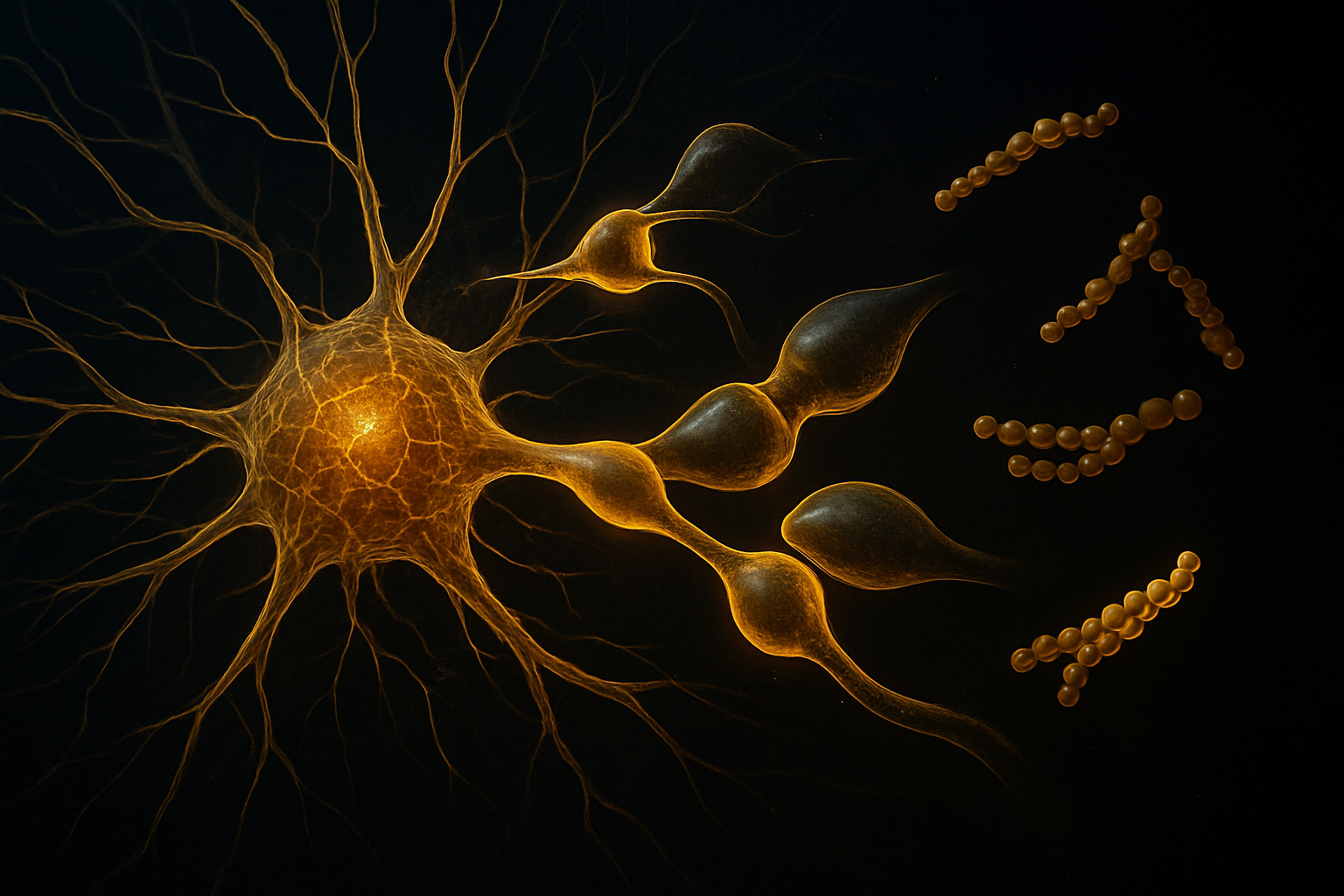
Cerebrolysin: The Neuropeptide Complex for Brain Recovery
A porcine brain-derived peptide mix approved in 40+ countries for stroke, TBI, and dementia. Over 200 clinical studies, yet virtually unknown in the US. Here's what the research actually shows.
Studies
Approved
Mechanism
Track Record
Cerebrolysin splits the medical world along geographic lines. In Russia, China, and much of Europe, it's a mainstream treatment for stroke and dementia. In the United States, most neurologists have never heard of it.
This disconnect isn't because the research doesn't exist. It's because the regulatory and commercial environment makes it invisible to American medicine.
This is an educational breakdown of Cerebrolysin covering its mechanisms, clinical evidence, dosing protocols, side effects, and availability. It is not a recommendation to use Cerebrolysin. Cerebrolysin is not FDA-approved in the United States. Consult a qualified healthcare provider before considering any peptide protocol.
Cerebrolysin at a Glance
Cerebrolysin (Porcine Brain Peptide Complex)
Composition: ~25% low-molecular-weight peptides + ~75% free amino acids | Source: Purified porcine (pig) brain tissue | Manufacturer: EVER Neuro Pharma (Austria) | Mechanism: Mimics BDNF, NGF, GDNF activity | Routes: IM (up to 5 mL) or IV (above 5 mL) | FDA Status: Not submitted for approval | Approved in: 40+ countries including Russia, China, Austria, Germany
Cerebrolysin is a peptide preparation derived from purified porcine brain tissue. It's manufactured through a standardized enzymatic process that breaks down brain proteins into small peptides and free amino acids.
The peptide fraction (below 10 kDa) provides the biological activity. These peptides mimic naturally occurring neurotrophic factors, the proteins your brain uses to grow, maintain, and repair neurons.
Think of it as a cocktail of brain-derived signaling molecules, not a single compound with a single target. For a deeper compound profile, visit PeptideArc.
How Cerebrolysin Works
Cerebrolysin acts through multiple overlapping pathways. Understanding these mechanisms explains why it shows up across such different clinical contexts, from acute stroke to chronic dementia.
Neurotrophic Factor Mimicry
The core mechanism is straightforward. Cerebrolysin's peptide fragments mimic the activity of BDNF (brain-derived neurotrophic factor), NGF (nerve growth factor), and GDNF (glial cell-derived neurotrophic factor). These are the proteins your brain naturally produces to grow and maintain neurons.
Hartbauer et al. (2001) demonstrated that Cerebrolysin activates the PI3K/Akt and MAPK/ERK signaling pathways (PubMed). These are the same downstream cascades triggered by actual BDNF binding.
| Factor Mimicked | Normal Role | Cerebrolysin Effect |
|---|---|---|
| BDNF | Neuron survival and growth | Activates PI3K/Akt and MAPK/ERK |
| NGF | Neuronal maintenance | Promotes neuronal health |
| GDNF | Dopaminergic neuron protection | Supports dopamine pathways |
Neuroplasticity and Synaptic Density
Rockenstein et al. (2006) found that Cerebrolysin increases synaptophysin, a marker of synaptic density (PubMed). More synapses means more connections between neurons.
That translates to better cognitive function and faster recovery from brain injuries. It's the same principle behind why exercise and environmental enrichment improve cognition.
Cerebrolysin increases synaptophysin levels while simultaneously shifting APP processing away from toxic amyloid beta production. This dual action makes it relevant for both acute brain injuries and chronic neurodegenerative disease (Rockenstein et al., 2006).
Anti-inflammatory Effects
Alvarez et al. (2006) showed that Cerebrolysin reduces microglial activation and lowers TNF-alpha and IL-1 beta levels (PubMed). Chronic neuroinflammation is a driver of nearly every neurodegenerative condition.
By calming the brain's immune response, Cerebrolysin creates a more favorable environment for healing and neuronal survival.
Clinical Evidence
Cerebrolysin has been tested in over 200 clinical studies. The evidence is strongest for stroke recovery, with meaningful data also available for TBI and Alzheimer's disease.
Stroke Recovery
This is where the case for Cerebrolysin is most compelling.
| Trial | Participants | Key Finding |
|---|---|---|
| CASTA (2012) | 1,070 acute stroke patients | Significant benefits in severe strokes |
| E-COMPASS (2017) | Stroke + rehabilitation | Better motor recovery vs. rehab alone |
| Cochrane Review (2020) | Multiple trials pooled | Improvements in global neurological status |
The CASTA trial enrolled over a thousand patients and found statistically significant improvements in patients with severe strokes (Heiss et al., 2012).
The E-COMPASS finding is particularly notable. Cerebrolysin enhanced the brain's ability to rewire during rehabilitation. That's a fundamentally different proposition from simply protecting neurons during acute injury.
Rehabilitation Enhancement
The E-COMPASS trial showed that Cerebrolysin combined with standard rehabilitation produced significantly better motor recovery than rehabilitation alone. The Cochrane review (Ziganshina et al., 2020) confirmed improvements in global neurological status across multiple trials, though it noted variability in study quality.
Traumatic Brain Injury
TBI is notoriously difficult to treat. There are essentially no FDA-approved drugs for it. Even modest improvements are clinically meaningful.
The CAPTAIN trials examined Cerebrolysin in moderate-to-severe TBI patients and found improved cognitive recovery and neurological outcomes at 90 days (Chen et al., 2013).
TBI research is plagued by heterogeneity. Every brain injury is different, making large controlled trials extremely difficult. The CAPTAIN results are promising but not definitive. More large-scale replication is needed.
Alzheimer's Disease
Alvarez et al. (2006) found that 30 mL daily for 4 weeks produced cognitive improvements persisting for up to 3 months after treatment ended (PubMed).
Improvements were measured using the ADAS-cog scale, the standard for Alzheimer's trials. Effect sizes were comparable to approved medications like donepezil.
Cognitive Enhancement in Healthy People
The evidence here is thinner but the interest is high. No large controlled studies exist in healthy individuals.
Anecdotal reports from the biohacking community describe improved focus, mental clarity, faster processing, and better verbal fluency. The mechanisms are plausible: BDNF-like activity and increased synaptic density are the same processes targeted by exercise and other cognitive enhancers.
Administration
Cerebrolysin is available only as an injectable solution. The peptides would be destroyed by digestive enzymes if taken orally.
| Route | Max Dose | Setting | Notes |
|---|---|---|---|
| Intramuscular (IM) | Up to 5 mL | Self-administered | Deltoid or gluteus |
| Intravenous (IV) | Above 5 mL | Clinical supervision | Diluted in saline, infused 15–60 min |
Cerebrolysin should never be mixed with balanced amino acid solutions or given as a rapid IV push at high doses. Always follow established infusion protocols.
Dosing Protocols
Medical Protocols (From Clinical Trials)
| Condition | Dose | Route | Duration |
|---|---|---|---|
| Acute stroke | 30–50 mL daily | IV | 10–21 days (start within 24–72h) |
| TBI | 30 mL daily | IV | 5–10 days |
| Alzheimer's / dementia | 10–30 mL daily | IV | 4-week cycles, 2–4x/year |
| Mild cognitive impairment | 5–10 mL daily | IM or IV | 10–20 days |
Biohacking / Nootropic Protocols
| Protocol | Dose | Frequency | Duration |
|---|---|---|---|
| Cognitive enhancement | 2–5 mL IM | 3–5x/week | 4-week cycles |
| Maintenance | 2 mL IM | 2–3x/week | Ongoing |
| Intensive | 5–10 mL daily (IM or slow IV) | Daily | 10–20 days, then break |
Most people cycle Cerebrolysin: 20 days on, 2–3 months off. Effects tend to persist beyond treatment because structural changes (new synapses, improved neuronal health) don't disappear immediately.
Begin with 1–2 mL IM if you're new. Individual response varies considerably, and it's better to titrate up than to overshoot on the first injection.
Cerebrolysin vs. Other Neurotrophic Compounds
Several compounds target similar pathways. Here's how Cerebrolysin compares to the alternatives most commonly discussed in nootropic communities.
| Compound | Source | Route | Clinical Evidence | Availability |
|---|---|---|---|---|
| Cerebrolysin | Porcine brain | IM / IV | 200+ studies | Rx in 40+ countries |
| Semax | Synthetic (ACTH 4–7) | Intranasal | Registered Rx in Russia | Research peptide (US) |
| P21 | Synthetic (BDNF mimetic) | Intranasal / SC | Preclinical only | Research peptide |
| Cortexin | Bovine brain | IM | Moderate (Russian studies) | Rx in Russia |
| Dihexa | Synthetic (HGF mimetic) | Oral / SC | Preclinical only | Research peptide |
Common Stacks
Cerebrolysin is frequently combined with other nootropic compounds. No formal interaction studies exist, so start compounds one at a time.
Cerebrolysin + Semax
Two neurotrophic compounds working through complementary pathways. Semax provides BDNF upregulation via intranasal delivery, while Cerebrolysin adds broader neurotrophic factor mimicry via injection.
Cerebrolysin + P21
P21 is a synthetic BDNF mimetic derived from the active region of CNTF. Combining it with Cerebrolysin creates a multi-angle approach to neurotrophic signaling.
Cerebrolysin + Lion's Mane
Lion's mane mushroom stimulates NGF production naturally. Pairing it with Cerebrolysin covers both synthetic neurotrophic mimicry and endogenous NGF stimulation.
Cerebrolysin + Selank
For those experiencing anxiety alongside cognitive decline. Selank provides anxiolytic and immunomodulatory effects that complement Cerebrolysin's neurotrophic action.
Side Effects and Safety
Cerebrolysin has a strong safety profile based on decades of clinical use. A 2012 safety meta-analysis covering over 3,000 patients found the overall adverse event rate was similar to placebo (Bornstein et al., 2018).
Common Side Effects
| Side Effect | Frequency | Notes |
|---|---|---|
| Headache | Most frequent | Usually first few days only |
| Dizziness | Occasional | Typically transient |
| Injection site pain | Common | Standard for IM injections |
| Warmth / flushing | Occasional | During or shortly after injection |
| Nausea | Uncommon | More likely at higher doses |
Uncommon Side Effects
| Side Effect | Notes |
|---|---|
| Agitation / irritability | Higher doses; feeling overstimulated |
| Insomnia | Avoid evening dosing |
| Appetite changes | Both directions reported |
| Sweating | Occasionally during IV infusions |
Anyone allergic to porcine products should avoid Cerebrolysin entirely. It is generally contraindicated in active epilepsy due to a very small number of reported seizure events. Patients with severe renal impairment should also consult their physician before considering treatment.
Cycling Protocols
Effects persist beyond the treatment window because the structural changes Cerebrolysin promotes (new synapses, improved neuronal health) don't disappear the moment you stop injecting.
| Protocol | On Period | Off Period | Best For |
|---|---|---|---|
| Standard cycle | 20 days | 2–3 months | General cognitive support |
| Clinical cycle | 4 weeks | 8–12 weeks | Alzheimer's / dementia (2–4x/year) |
| Acute protocol | 10–21 days | As needed | Post-stroke or post-TBI recovery |
Who Might Consider Cerebrolysin
Stroke Recovery
Strongest evidence base. Particularly useful when combined with active rehabilitation programs.
TBI Patients
Limited approved options exist for TBI. Cerebrolysin offers a supported mechanism for cognitive recovery.
Cognitive Decline
Alzheimer's and mild cognitive impairment, with effect sizes comparable to approved dementia medications.
Availability and Legal Status
Cerebrolysin's availability depends entirely on where you live. It's a mainstream pharmaceutical in much of the world, yet completely absent from US medicine.
Approved Regions
Russia, China, South Korea: Registered pharmaceutical, widely prescribed. Austria, Germany: Available as pharmaceutical. Mexico: Available, common source for importers.
Not Approved
United States: Not FDA-approved (no submission made). Canada: Not approved by Health Canada. Australia: Not approved by TGA.
Because Cerebrolysin is a branded pharmaceutical with a single manufacturer (EVER Neuro Pharma), counterfeiting is a real concern. Always verify packaging, batch numbers, and source authenticity. Most people source it from international pharmacies, particularly Eastern Europe or Mexico.
Frequently Asked Questions
Can Cerebrolysin regrow brain cells?
How quickly does Cerebrolysin work?
Is Cerebrolysin safe for long-term use?
Does Cerebrolysin cross the blood-brain barrier?
Is Cerebrolysin the same as Cortexin?
Can I take Cerebrolysin orally?
Can vegans or vegetarians use Cerebrolysin?
What's the best time of day to inject Cerebrolysin?
The Bottom Line
Cerebrolysin has more clinical evidence than most compounds in the peptide and nootropic space. The data on stroke recovery and Alzheimer's disease is genuinely compelling, and the safety record over 40+ years of widespread use is reassuring. But it requires injection, the evidence includes many studies of moderate quality, and the lack of FDA approval means quality assurance depends entirely on sourcing from legitimate channels.
For people dealing with brain injuries, neurodegenerative conditions, or cognitive decline, Cerebrolysin represents an option backed by real science. For healthy individuals seeking cognitive enhancement, the rationale is plausible but less proven.
The geographic divide in Cerebrolysin's acceptance says more about pharmaceutical economics than about the compound itself. It's not that the evidence is weak. It's that no company has found it commercially worthwhile to pursue FDA approval for a decades-old biological extract.
This article is for educational and informational purposes only. It is not medical advice and should not be treated as such. Cerebrolysin is not FDA-approved in the United States. Always consult a qualified healthcare provider before starting any treatment protocol. Individual results vary, and the information here should not replace professional medical guidance.
References
Hartbauer M, Hutter-Paier B, Windisch M. Effects of Cerebrolysin on the outgrowth and protection of processes of cultured brain neurons. J Neural Transm. 2001;108(5):581–592. PubMed
Rockenstein E, Torrance M, Mante M, et al. Cerebrolysin decreases amyloid-beta production by regulating amyloid protein precursor maturation in a transgenic model of Alzheimer's disease. J Neurosci Res. 2006;83(7):1252–1261. PubMed
Alvarez XA, Cacabelos R, Sampedro C, et al. Efficacy and safety of Cerebrolysin in moderate to moderately severe Alzheimer's disease. Dement Geriatr Cogn Disord. 2006;21(1):28–37. PubMed
Onishchenko LS, Gaikova ON, Yanishevskii SN. Changes in the focus of experimental ischemic stroke under the influence of Cerebrolysin. Neurosci Behav Physiol. 2008;38(1):49–54. PubMed
Heiss WD, Brainin M, Bornstein NM, et al. Cerebrolysin in patients with acute ischemic stroke in Asia: results of a double-blind, placebo-controlled randomized trial (CASTA). Stroke. 2012;43(3):630–636. PubMed
Chen CC, Wei ST, Tsaia SC, et al. Cerebrolysin enhances cognitive recovery of mild traumatic brain injury patients: double-blind, placebo-controlled, randomized study. Br J Neurosurg. 2013;27(6):803–807. PubMed
Tatebayashi Y, Lee MH, Li L, Iqbal K, Bhatt P, Bhatt DL. The dentate gyrus neurogenesis: a therapeutic target for Alzheimer's disease. Acta Neuropathol. 2003;105(3):225–232. PubMed
Bornstein NM, Guekht A, Vester J, et al. Safety and efficacy of Cerebrolysin in early post-stroke recovery: a meta-analysis of nine randomized clinical trials. Neurol Sci. 2018;39(4):629–640. PubMed
Ziganshina LE, Abakumova T, Vernay L. Cerebrolysin for acute ischaemic stroke. Cochrane Database Syst Rev. 2020;7(7):CD007026. PubMed
Related reading:
Semax Complete Guide · Selank Complete Guide · Peptides for TBI Recovery · Cognition Stack Guide
For compound profiles and sourcing info, visit PeptideArc.