Epithalon: The Telomerase-Activating Peptide Behind 30 Years of Anti-Aging Research
A synthetic tetrapeptide that reactivates telomerase, restores melatonin production, and has extended lifespan by 12–24% in animal models. Three decades of data, mostly from one prolific Russian lab.
Published Research
(CBA Mice)
(Ala-Glu-Asp-Gly)
(Daltons)
Most anti-aging compounds promise a lot and deliver almost nothing. Epithalon is different.
It has three decades of published research behind it, most of it from one of Russia's most prolific gerontologists. Whether that makes it proven or just well-studied depends on how you read the data.
This is an educational breakdown of Epithalon covering its mechanisms, clinical research, dosing protocols, and safety profile. It is not a recommendation to use Epithalon. Epithalon is not FDA-approved in the United States. Consult a qualified healthcare provider before considering any peptide regimen.
What Is Epithalon?
Epithalon (Epitalon)
Sequence: Ala-Glu-Asp-Gly | Type: Synthetic tetrapeptide | Molecular Weight: 390.35 Da | Origin: St. Petersburg Institute of Bioregulation and Gerontology | Route: Subcutaneous injection | FDA Status: Not approved | Developer: Dr. Vladimir Khavinson | Primary Actions: Telomerase activation, melatonin stimulation, antioxidant upregulation
Epithalon (also spelled Epitalon) is a synthetic version of epithalamin, a peptide naturally produced by the pineal gland. Its full sequence is just four amino acids long, making it one of the smallest bioactive peptides in longevity research.
The peptide was first synthesized in the 1980s by Dr. Vladimir Khavinson's team. They isolated epithalamin from bovine pineal glands, identified its active sequence, and created the synthetic version that could be produced at scale.
For a deeper compound profile, visit PeptideArc.
How Epithalon Works: Telomerase Activation Pathway
Epithalon's central mechanism is telomerase activation. But its effects branch out into several downstream pathways that collectively influence aging at the cellular level.
Telomerase Activation: The Core Mechanism
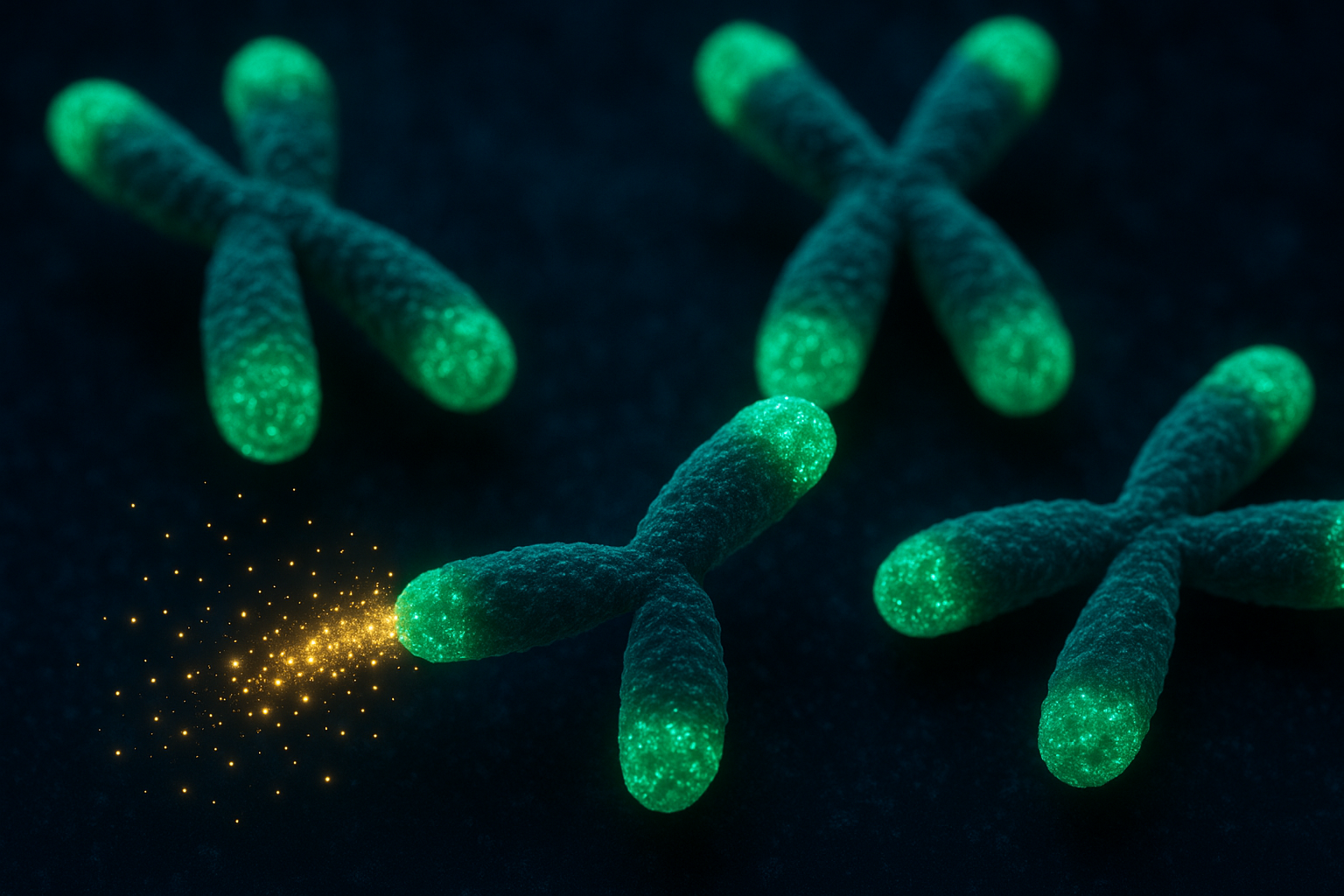
Every time a cell divides, its telomeres get shorter. Telomeres are the protective caps on the ends of chromosomes, often compared to the plastic tips on shoelaces.
When telomeres get too short, the cell enters senescence. It stops dividing, and accumulating senescent cells is one of the hallmarks of aging at the cellular level.
Telomerase is the enzyme that rebuilds telomeres. Most adult cells produce very little of it.
Epithalon reactivates telomerase expression. In human somatic cells, it has been shown to increase telomerase activity by stimulating hTERT gene expression, elongate telomeres in human fetal fibroblasts beyond the Hayflick limit, and extend replicative lifespan of cells by an additional 10+ passages (Khavinson et al., 2003).
In human fetal fibroblast cultures, Epithalon overcame the Hayflick limit, allowing cells to divide 44 additional population doublings beyond untreated controls.
Pineal Gland and Melatonin Regulation
The pineal gland is central to circadian rhythm, and its function declines sharply with age. Epithalon appears to restore some of that function.
Research shows it stimulates melatonin production in aging pineal glands, normalizes circadian rhythm disruptions common in older adults, and restores pineal gland sensitivity to light-dark cycle signaling (Anisimov et al., 2003).
This melatonin connection matters. Melatonin is not just a sleep hormone. It's a potent antioxidant, immune modulator, and oncostatic agent.
Antioxidant and Gene Expression Effects
Beyond telomerase and melatonin, Epithalon influences broader gene regulation. It activates antioxidant enzymes including superoxide dismutase (SOD) and glutathione peroxidase, modulates gene expression related to cell proliferation and apoptosis, and reduces lipid peroxidation in aging tissues.
| Mechanism | Effect | Relevance |
|---|---|---|
| Telomerase activation | Telomere elongation | Cellular lifespan extension |
| Melatonin stimulation | Circadian rhythm restoration | Sleep, immune function |
| Antioxidant upregulation | Reduced oxidative damage | Tissue protection |
| Gene regulation | Normalized expression patterns | Healthier cell function |
Epithalon doesn't target just one pathway. It acts on the pineal gland, telomere maintenance, and antioxidant defenses simultaneously, which is part of why animal studies show such broad effects on aging.
The Khavinson Research: 30 Years of Data
Dr. Vladimir Khavinson has published over 800 papers on peptide bioregulation. His work on Epithalon and epithalamin spans from the late 1980s to today.
Here's a fair assessment: the research volume is impressive, but nearly all of it comes from Russian institutions with limited independent replication by Western labs.
Animal Lifespan Studies
The most striking data comes from rodent and fruit fly models.
CBA Mice Lifespan Study
Epithalon-treated CBA mice lived an average of 699 days vs. 589 days in controls, an increase of roughly 18.7%. Maximum lifespan extended from 770 to 860 days. Tumor incidence dropped from 45.8% to 26.5% (Anisimov et al., 2003).
| Parameter | Control | Epithalon-Treated |
|---|---|---|
| Mean lifespan | 589 days | 699 days |
| Maximum lifespan | 770 days | 860 days |
| Lifespan increase | Baseline | ~18.7% |
| Tumor incidence | 45.8% | 26.5% |
In Drosophila (fruit flies), treatment with Epithalon extended mean lifespan by 11–16% depending on strain. The peptide also delayed age-related decline in locomotor activity (Khavinson et al., 2014).
In aging female rats, epithalamin (the natural precursor) restored estrous function and reduced the incidence of spontaneous tumors from 41% to 10.8% (Anisimov et al., 2001).
Across multiple animal models, Epithalon consistently extended lifespan by 12–24% and reduced spontaneous tumor incidence. Few other peptides have this kind of cross-species longevity data.
Human Cell Studies
Khavinson's team tested Epithalon on human cell cultures and found it could reactivate telomerase in somatic cells that normally have low telomerase activity.
| Cell Type | Result |
|---|---|
| Fetal fibroblasts | 44 additional population doublings beyond Hayflick limit |
| Pulmonary fibroblasts | Telomere elongation observed |
| Retinal pigment epithelial cells | Increased proliferative capacity |
Human Clinical Observations
This is where the evidence gets thinner.
Khavinson's group conducted a long-running observational study on elderly patients in St. Petersburg. Participants received either epithalamin or Epithalon alongside thymic peptides over a 6-year period (1992–2007).
Cardiovascular
Mortality reduced by 50% in the treated group.
Immune Function
Improved T-cell function and immune biomarkers.
Sleep Quality
Melatonin rhythm restoration in disrupted patients.
The sample size was roughly 260 patients aged 60–89. While the results are promising, these were not blinded, randomized trials by modern Western standards. The study combined epithalamin with thymalin (a thymic peptide), making it difficult to isolate Epithalon's specific contribution.
The human data is suggestive but not definitive. No double-blind, placebo-controlled phase 2 or phase 3 trials have been conducted on Epithalon by Western research institutions.
Epithalon vs. Other Longevity Peptides
Several peptides show up in longevity discussions, but they work through very different mechanisms. Here's how Epithalon compares to the most common alternatives.
| Feature | Epithalon | BPC-157 | GHK-Cu | Thymosin Alpha-1 |
|---|---|---|---|---|
| Primary target | Telomerase / pineal | Gut healing / tissue repair | Collagen / wound healing | Immune modulation |
| Anti-aging mechanism | Telomere elongation | Indirect (tissue repair) | Skin / tissue remodeling | Immune function |
| Route | Subcutaneous injection | Oral / injectable | Topical / injectable | Subcutaneous injection |
| Human clinical data | Limited (Russian) | Very limited | Moderate (topical) | FDA orphan drug status |
| Lifespan data (animal) | Yes, 12–24% extension | No | Limited | No |
Epithalon is unique in this group because it's the only peptide with published animal lifespan extension data. That's a significant distinction in longevity research.
Dosing Protocols
These are research-based protocols, not medical prescriptions. Always work with a qualified provider before starting any peptide regimen.
The most commonly referenced protocol comes from the Khavinson studies and community use.
Standard Protocol
| Parameter | Recommendation |
|---|---|
| Dose | 5–10 mg per day |
| Frequency | Once daily |
| Route | Subcutaneous injection |
| Cycle length | 10–20 days |
| Cycles per year | 2–3 |
| Timing | Evening preferred (melatonin synergy) |
| Total per cycle | 50–200 mg |
Common Cycling Approaches
| Approach | Dose | Duration | Frequency |
|---|---|---|---|
| Conservative | 5 mg/day | 10 days | Every 6 months |
| Standard | 10 mg/day | 10 days | Every 4–6 months |
| Aggressive | 10 mg/day | 20 days | Every 3–4 months |
Most users follow the 10 mg/day for 10 days, repeated every 4–6 months approach. This mirrors the most commonly cited protocol in Khavinson's publications.
Why Cycling?
Epithalon is almost always used in cycles rather than continuously. There are several reasons for this approach.
Lasting Effects
Telomerase activation and pineal stimulation persist well beyond the dosing period, so continuous use isn't necessary.
Research Protocol
Cycling mirrors the original research protocols used in both animal and human studies by Khavinson's lab.
Reconstitution
Epithalon comes as a lyophilized powder. Reconstitute with bacteriostatic water, then draw doses from the vial.
For detailed step-by-step instructions, see our peptide reconstitution guide.
Side Effects and Safety
Epithalon has a remarkably clean side effect profile across published studies. No serious adverse events have been reported in either animal or human research.
| Side Effect | Frequency | Notes |
|---|---|---|
| Injection site redness | Occasional | Mild, resolves within hours |
| Mild drowsiness | Rare | Likely related to melatonin increase |
| Headache | Rare | Usually transient |
| Vivid dreams | Anecdotal | Reported by users, possibly melatonin-related |
Anyone with a current cancer diagnosis or history of cancer should avoid telomerase-activating compounds unless cleared by an oncologist. While animal studies showed reduced tumor incidence, the long-term effects of repeated telomerase activation are not fully understood.
When to Stop
Discontinue if you experience persistent injection site reactions that worsen over time, allergic response including swelling or rash, or unusual fatigue and mood changes that coincide with dosing.
The safety data comes from a relatively small body of research. Epithalon has not undergone the rigorous safety testing required for FDA approval.
For a broader overview, see our peptide side effects guide.
Common Stacks
Many users combine Epithalon with other longevity-focused peptides. No significant interactions have been reported, but clinical interaction data does not exist.
Immune + Anti-Aging
Epithalon + Thymosin Alpha-1. Mirrors Khavinson's original clinical protocols for immune and anti-aging support.
Repair + Longevity
Epithalon + BPC-157. Combines tissue repair with cellular anti-aging for a broad-spectrum approach.
Skin + Cellular
Epithalon + GHK-Cu. Pairs skin and tissue remodeling with telomere-level anti-aging support.
Measuring Results: What to Test
Since Epithalon's effects are primarily cellular, you won't see dramatic visible changes. Bloodwork and biomarker testing are the best way to track progress.
| Test | What It Measures | When to Test |
|---|---|---|
| Telomere length test | Average telomere length (leukocytes) | Before first cycle and 3–6 months after |
| Melatonin (24-hour urine) | Pineal function | Before and 2–4 weeks after cycle |
| IGF-1 | Growth hormone axis | Baseline and post-cycle |
| CRP / inflammatory markers | Systemic inflammation | Baseline and post-cycle |
| Complete metabolic panel | Overall health markers | Every 6 months |
Telomere length testing has significant variability between labs and even between draws. Use the same lab and testing methodology for before/after comparisons to get meaningful data.
Legal Status and Availability
Epithalon occupies a gray area in most countries. Here's the breakdown by region.
United States
Legal to purchase as a "research chemical." Not FDA-approved for human use. Most suppliers label it "for research purposes only."
European Union
Varies by country. Generally available from research suppliers, but regulations differ significantly across member states.
Russia
Most studied here. Epithalamin has been used in clinical settings, and the research infrastructure is strongest in St. Petersburg.
Australia / Canada
Australia: regulated under TGA, prescription-only for compounding. Canada: not approved, available through research chemical suppliers.
Check our peptide legality guide for full details on regulations in your region.
Who Might Consider Epithalon
Epithalon isn't for everyone. Based on the available research, certain profiles align better with its mechanism of action than others.
Age-Related Decline
Adults over 40 experiencing measurable telomere shortening or disrupted sleep patterns related to declining melatonin production.
Longevity Enthusiasts
People already tracking biomarkers and running longevity protocols who want to add a telomerase-activating compound to their regimen.
Circadian Disruption
Those with age-related circadian rhythm disturbances who haven't responded well to standard melatonin supplementation.
Researchers
Scientists studying telomere biology, cellular senescence, or pineal gland function in the context of aging.
Frequently Asked Questions
What does Epithalon actually do?
How long does it take to see results?
Is Epithalon safe?
Can I take Epithalon with other peptides?
Does Epithalon cause cancer?
How is Epithalon different from TA-65?
Is Epithalon legal to buy?
What's the best time of day to inject Epithalon?
The Bottom Line
Epithalon is one of the most studied peptides in anti-aging research. Thirty years of data show consistent results: telomerase activation, lifespan extension in animals, melatonin restoration, and reduced tumor incidence. The limitation is that most of this research comes from a single group of investigators in Russia.
Independent replication by Western labs is sparse. The human data, while promising, doesn't meet the gold standard of large, randomized, placebo-controlled trials.
For people interested in longevity science, Epithalon sits in an interesting spot. The mechanistic case is strong, and the animal data is compelling. The human evidence is suggestive but incomplete. Whether that's enough depends on your personal threshold for evidence.
This article is for educational and informational purposes only. It is not medical advice, and it does not constitute a doctor-patient relationship. Epithalon is not FDA-approved for any medical condition. Always consult a qualified healthcare provider before starting any peptide protocol. The research cited here is summarized for educational purposes and may not reflect the full body of evidence on this compound.
References
Khavinson VKh, Bondarev IE, Butyugov AA. Epithalon peptide induces telomerase activity and telomere elongation in human somatic cells. Bull Exp Biol Med. 2003;135(6):590–592. PubMed
Anisimov VN, Khavinson VKh, Popovich IG, et al. Effect of Epitalon on biomarkers of aging, life span and spontaneous tumor incidence in female Swiss-derived SHR mice. Biogerontology. 2003;4(4):193–202. PubMed
Khavinson VKh, Bondarev IE, Butyugov AA, Smirnova TD. Peptide promotes overcoming of the division limit in human somatic cell. Bull Exp Biol Med. 2004;137(5):503–506. PubMed
Anisimov VN, Loktionov AS, Khavinson VKh, Morozov VG. Effect of low-molecular-weight factors of thymus and pineal gland on life span and spontaneous tumour development in female mice of different age. Mech Ageing Dev. 2001;122(9):1075–1089. PubMed
Khavinson VKh. Peptides and ageing. Neuro Endocrinol Lett. 2005;23(Suppl 3):11–144. PubMed
Khavinson VKh, Linkova NS, Pronyaeva VE, et al. Effects of peptide Ala-Glu-Asp-Gly on telomerase activity and telomere length in human somatic cells. Bull Exp Biol Med. 2014;157(1):148–152. PubMed
Related reading:
What Are Peptides? Beginner's Guide · Peptide Side Effects: What to Know · Are Peptides Legal? FDA Regulations in 2026 · Longevity Stack Guide
For compound profiles and sourcing info, visit PeptideArc.