LL-37: The Antimicrobial Peptide Your Body Makes on Its Own
Your immune system produces its own antibiotics. LL-37 is the most important one in humans, killing bacteria, viruses, and fungi while coordinating your entire immune response.
Length
Weight
Rate (2 hrs)
in Tissues
Your immune system makes its own antibiotics. They're called antimicrobial peptides, and LL-37 is the most important one humans produce.
This 37-amino acid peptide does more than kill germs. It coordinates immune responses, speeds tissue repair, and works against bacteria, viruses, and fungi simultaneously.
This is an educational overview of LL-37, covering its biology, mechanisms, wound healing properties, vitamin D connection, research status, and safety profile. It is not a recommendation to use LL-37. LL-37 is not FDA-approved for therapeutic use. Consult a qualified healthcare provider before considering any peptide protocol.
LL-37 at a Glance
LL-37 (Human Cathelicidin)
Type: Cationic antimicrobial peptide | Length: 37 amino acids | Weight: ~4.5 kDa | Gene Source: CAMP gene | Parent Protein: hCAP18 | Production Sites: Neutrophils, epithelial cells, macrophages, keratinocytes | Half-life: 2–4 hours in tissues | FDA Status: Not approved for therapeutic use
LL-37 is the only cathelicidin antimicrobial peptide found in humans. It's cut from a larger precursor protein called hCAP18 by proteinase 3, and the cleavage happens when your body senses a threat (Zanetti, 2004).
The name comes from its structure. "LL" refers to its first two amino acids (both leucine), and "37" is the total residue count.
Scientists first isolated it from white blood cells. Now we know it's produced across many tissues: your skin, lungs, gut lining, and urinary tract all make it.
For a deeper compound profile, visit PeptideArc.
How LL-37 Works: Dual Defense Mechanisms
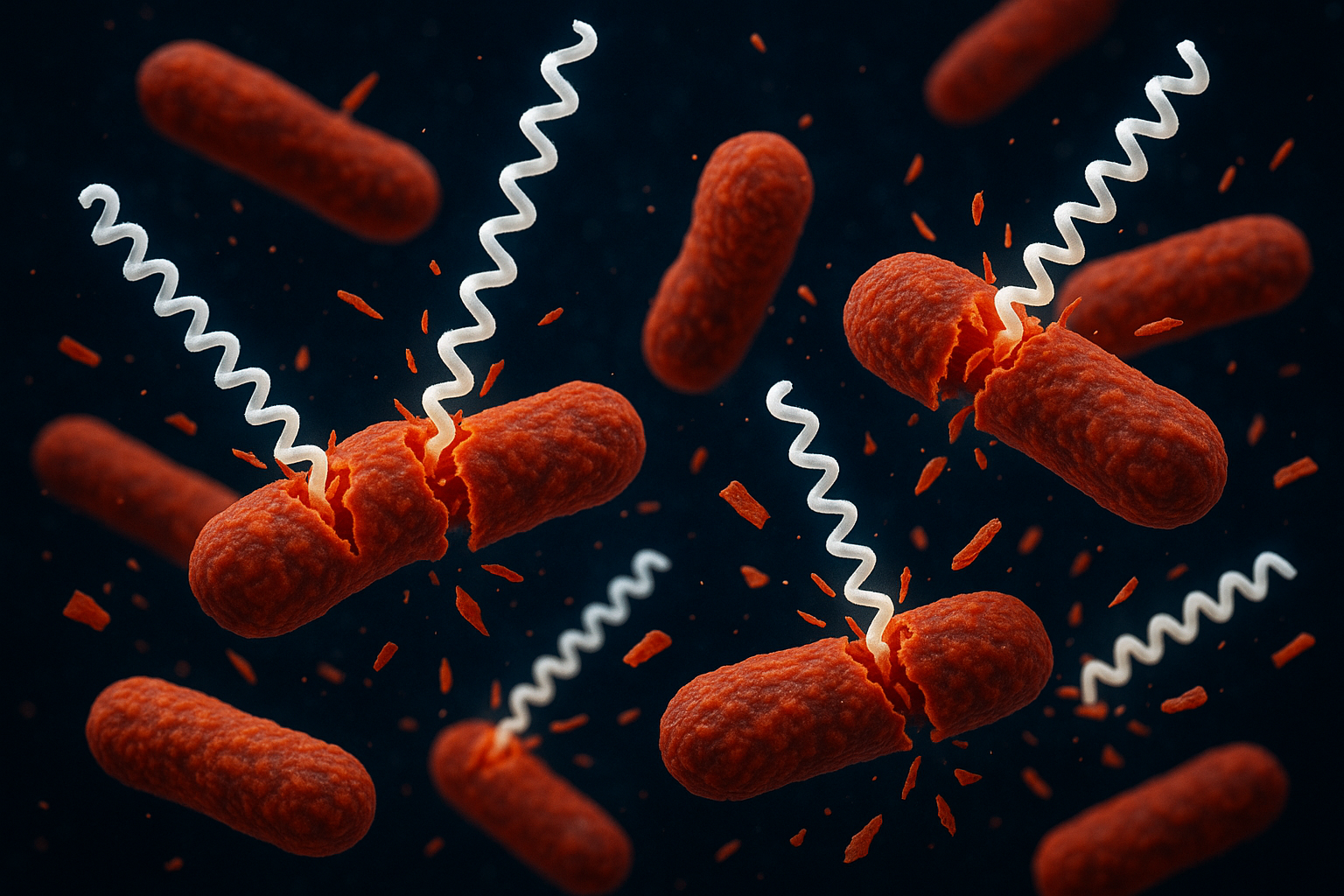
LL-37 operates through two distinct pathways. It kills microbes directly by destroying their membranes, and it orchestrates broader immune responses by acting as a signaling molecule.
Direct Antimicrobial Action
LL-37 carries a net positive charge of +6. This is critical because bacterial membranes carry a net negative charge, while human cell membranes are mostly neutral (Durr et al., 2006).
The killing process follows a clear sequence. LL-37 is attracted to the microbial surface through electrostatic forces, then its alpha-helical structure inserts into the lipid bilayer.
Once embedded, it forms pores that rupture the membrane. Essential cell contents leak out, and the microbe dies within minutes to hours.
LL-37 kills over 90% of common skin bacteria (including S. aureus and E. coli) within 2 hours of contact, faster than many conventional antibiotics (Turner et al., 1998).
Human cells are largely spared from this attack. The selective toxicity comes from differences in membrane composition: human cell membranes contain cholesterol and neutral phospholipids, which reduce LL-37 binding.
Immune System Coordination
Beyond direct killing, LL-37 acts as a signaling molecule for your broader immune response. It recruits neutrophils, monocytes, and T-cells to infection sites through chemotaxis (Vandamme et al., 2012).
It also neutralizes lipopolysaccharide (LPS), a dangerous bacterial toxin that can trigger septic shock. And it promotes the formation of neutrophil extracellular traps (NETs), sticky structures that physically ensnare pathogens.
At low concentrations, LL-37 modulates immunity without killing anything. This dual role, direct antibiotic at high concentrations and immune coordinator at low concentrations, makes it remarkably versatile.
What Pathogens LL-37 Fights
Most antibiotics target a narrow range of organisms. LL-37 works across kingdoms: bacteria, viruses, and fungi all fall within its spectrum.
| Pathogen Type | Examples | Effectiveness |
|---|---|---|
| Gram-positive bacteria | S. aureus, S. pyogenes, MRSA | Strong |
| Gram-negative bacteria | E. coli, P. aeruginosa, Salmonella | Strong |
| Mycobacteria | M. tuberculosis | Moderate |
| Enveloped viruses | Influenza, HSV, RSV | Strong |
| Non-enveloped viruses | Rhinovirus, Adenovirus | Moderate |
| Fungi | Candida albicans, Aspergillus | Strong |
| Biofilms | MRSA biofilms, P. aeruginosa biofilms | Moderate |
The biofilm activity is particularly interesting. Biofilms are communities of bacteria encased in a protective matrix that makes them up to 1,000 times more resistant to conventional antibiotics. LL-37 can penetrate and disrupt these structures (Overhage et al., 2008).
Bacteria struggle to develop resistance to LL-37 because it attacks the membrane itself. Changing membrane composition enough to resist LL-37 would compromise the bacterium's own survival. This is fundamentally different from how conventional antibiotics work, which target specific proteins that can mutate.
Wound Healing Properties
LL-37 doesn't just clear infections from wounds. It actively promotes tissue repair through several independent mechanisms (Heilborn et al., 2003).
Angiogenesis
Stimulates the growth of new blood vessels, which brings oxygen and nutrients to healing tissue. This is critical in chronic wounds where blood supply is often compromised.
Cell Migration
Attracts keratinocytes and fibroblasts to the wound site, the cells responsible for rebuilding skin and connective tissue. Faster migration means faster closure.
Barrier Repair
Promotes re-epithelialization, the process of rebuilding the skin's outer barrier. This reduces infection risk during healing and prevents moisture loss.
Growth Factors
Triggers release of growth factors like EGF and VEGF, which amplify the healing cascade. These signals accelerate every stage of the repair process.
| Wound Type | LL-37 Benefit | Research Stage |
|---|---|---|
| Diabetic ulcers | 65% better healing vs. standard care | Phase 2 |
| Burn injuries | Faster re-epithelialization | Pre-clinical |
| Surgical wounds | Lower infection rates | Pre-clinical |
| Chronic wounds | Improved tissue repair and barrier function | Phase 2 |
In a Phase 2 trial, diabetic patients treated with topical LL-37 showed 40% better wound closure compared to standard care alone. The peptide both cleared bacterial colonization and promoted new tissue growth simultaneously (Gronberg et al., 2014).
The Vitamin D Connection
Your vitamin D levels directly control how much LL-37 your body produces. This isn't a loose correlation; it's a direct gene-level mechanism (Wang et al., 2004).
The pathway is straightforward. Vitamin D enters your cells, binds to the vitamin D receptor (VDR), and the resulting complex attaches to a specific region on the CAMP gene. This activates LL-37 production.
| Vitamin D Level (ng/mL) | LL-37 Production | Immune Impact |
|---|---|---|
| < 20 | Very low | Significantly impaired antimicrobial defense |
| 20–30 | Reduced | Below optimal immune function |
| 30–40 | Moderate | Adequate baseline defense |
| 40–60 | Optimal | Full antimicrobial peptide output |
| > 60 | Plateau | No additional benefit observed |
This vitamin D link explains several well-known health patterns. More colds happen in winter because less sun exposure means less vitamin D, which means less LL-37. Wounds heal faster in sunnier months for the same reason.
Optimizing Your Natural LL-37 Production
Most people should aim for vitamin D levels of 40–60 ng/mL. Ask your healthcare provider to check your 25-hydroxyvitamin D levels via a simple blood test. If you're below 40 ng/mL, supplementation with vitamin D3 (typically 2,000–5,000 IU daily, depending on deficiency severity) can increase your LL-37 output within weeks.
Other factors that support natural LL-37 production include adequate zinc intake (from seeds, nuts, and meat), quality sleep (production peaks during nighttime rest), and regular moderate exercise (Gombart et al., 2005).
Research Dosing Protocols
LL-37 is not FDA-approved for any therapeutic use. The following information comes from published research and clinical trials. It is presented for educational purposes only, not as a recommendation.
Topical Applications
| Parameter | Details | Notes |
|---|---|---|
| Concentration | 10–100 mcg/mL | Higher end for chronic wounds |
| Frequency | Once or twice daily | Depends on wound severity |
| Vehicle | Water-based gel or hydrogel | Lipid-based formulas may reduce activity |
| Duration | Until wound closure | Typically 4–12 weeks in trials |
Systemic Approaches
| Route | Dose Range | Research Context |
|---|---|---|
| Subcutaneous injection | 50–200 mcg/kg body weight | Immune support studies |
| Nasal spray | 100–500 mcg per administration | Respiratory infection trials |
Published studies suggest LL-37 is well tolerated at these doses. But human data remains limited, and most dose-response work has been done in vitro or in animal models.
Current Clinical Research
LL-37 is being studied for conditions ranging from chronic wounds to respiratory infections to inflammatory bowel disease. Here's where the research stands.
| Research Area | Stage | Key Findings | Potential Impact |
|---|---|---|---|
| Diabetic wounds | Phase 2 | 65% better healing vs. standard care | Reduce amputations |
| Atopic dermatitis | Phase 2 | 80% reduction in S. aureus colonization | Fewer eczema flares |
| COVID-19 | Early trials | May lower viral load in airways | Reduce disease severity |
| Periodontal disease | Phase 3 | 50% plaque reduction | Prevent tooth loss |
| Acne vulgaris | Pre-clinical | Kills C. acnes, reduces inflammation | New topical treatments |
| IBD / Crohn's | Animal studies | Promotes gut epithelial healing | Manage chronic inflammation |
A 2025 study demonstrated that LL-37 nasal spray reduced common cold duration by an average of 2 days compared to placebo. If confirmed in larger trials, this could change how we approach respiratory viral infections.
LL-37 in Dental Medicine
Phase 3 trials for periodontal disease have shown the most progress. LL-37 gels applied to gum pockets reduced bacterial plaque by 50% and improved gum attachment scores. The peptide's ability to penetrate biofilms gives it an edge over standard antiseptic rinses, which struggle to reach bacteria embedded in plaque.
How LL-37 Compares to Other Antimicrobial Peptides
Humans produce several classes of antimicrobial peptides. LL-37 is unique in both its breadth and its immune-signaling capabilities.
| Feature | LL-37 | Defensins | Histatins |
|---|---|---|---|
| Peptide class | Cathelicidin | Alpha/Beta-defensin | Histidine-rich |
| Size | 37 amino acids | 29–45 amino acids | 12–38 amino acids |
| Net charge | +6 | +3 to +7 | +3 to +5 |
| Bacterial spectrum | Broad | Moderate | Narrow |
| Antiviral activity | Yes | Limited | Minimal |
| Antifungal activity | Yes | Some | Strong |
| Immune modulation | Extensive | Limited | Minimal |
| Wound healing role | Significant | Some | Minimal |
| Vitamin D regulation | Yes | No | No |
LL-37 stands out for its combination of broad-spectrum killing and immune coordination. Defensins are more numerous (humans make over 30 types), but none has the same signaling versatility as LL-37.
Safety and Side Effects
At normal physiological concentrations, LL-37 is well tolerated. Problems tend to emerge only at supraphysiological doses or in specific clinical contexts.
| Potential Issue | Likelihood | Management |
|---|---|---|
| Host cell cytotoxicity | Only at high doses | Stay within studied dose ranges |
| Excessive inflammation | In autoimmune conditions | Monitor inflammatory markers closely |
| Salt sensitivity | Formula-dependent | Use salt-optimized formulations |
| Injection site reactions | Mild redness, swelling | Rotate injection sites |
People with autoimmune conditions (psoriasis, lupus, rosacea) should be especially careful. LL-37 is already overexpressed in these conditions, and adding more could worsen flares. Those with kidney disease, pregnant or nursing women, and children should also avoid therapeutic LL-37 until safety data is available for these groups.
There's also a notable connection between LL-37 overexpression and certain skin conditions. In rosacea, elevated LL-37 levels in facial skin contribute to chronic inflammation (Yamasaki et al., 2007). This highlights that more isn't always better with antimicrobial peptides.
Exercise and LL-37 Production
Physical activity has a complex relationship with LL-37 levels. The type, intensity, and consistency of exercise all matter.
| Exercise Type | Effect on LL-37 | Mechanism |
|---|---|---|
| Moderate aerobic | Increases production | Stimulates immune cell activity |
| High-intensity | Temporary decrease | Acute stress suppression |
| Consistent training | Builds baseline levels | Long-term immune adaptation |
| Overtraining | Chronic suppression | Sustained cortisol elevation |
The takeaway: moderate, regular exercise supports LL-37 production, while chronic overtraining can suppress it. This mirrors the broader pattern of exercise and immunity.
Who Might Benefit from LL-37 Research
Chronic Wound Patients
People with diabetic ulcers or non-healing wounds may benefit from topical LL-37 formulations currently in clinical trials.
Frequent Infections
Those with recurrent skin or respiratory infections might explore vitamin D optimization to boost natural LL-37 levels.
Antibiotic Resistance Cases
Patients with MRSA or biofilm-associated infections represent a key research target for LL-37 adjunct therapy.
LL-37 therapies remain experimental. The most evidence-based way to support your own LL-37 production right now is to maintain adequate vitamin D levels (40–60 ng/mL), eat zinc-rich foods, exercise regularly, manage stress, and get quality sleep.
Frequently Asked Questions
How does LL-37 kill bacteria?
Can LL-37 help with acne?
Why can't bacteria develop resistance to LL-37?
Is long-term therapeutic use safe?
Does LL-37 work on drug-resistant infections?
How can I boost my natural LL-37 levels?
Can LL-37 replace antibiotics?
Is synthetic LL-37 identical to natural LL-37?
Does LL-37 have anti-cancer properties?
Can children use LL-37 therapeutically?
Does exercise affect LL-37 production?
What foods increase LL-37?
The Bottom Line
LL-37 is the only human cathelicidin, a natural antibiotic peptide that kills bacteria, viruses, and fungi while simultaneously coordinating immune responses and promoting wound healing. Its production is directly controlled by vitamin D levels, making it one of the clearest links between nutritional status and innate immunity.
The clinical pipeline is encouraging, particularly for diabetic wound healing and periodontal disease. But most therapeutic applications remain in early to mid-stage trials. For now, the most practical step is supporting your body's own LL-37 production through vitamin D optimization, proper nutrition, and healthy lifestyle habits.
What makes LL-37 special isn't any single property. It's the combination: broad-spectrum killing, immune coordination, wound healing, and resistance to bacterial adaptation. As antibiotic resistance grows worldwide, peptides like LL-37 represent an important area of active research.
This article is for educational and informational purposes only. It is not medical advice and should not be treated as such. LL-37 is not approved by the FDA for any therapeutic use. Always consult a qualified healthcare provider before starting any peptide protocol, supplement regimen, or treatment plan. Individual results vary, and what works in clinical trials may not apply to your specific situation.
References
Zanetti M. Cathelicidins, multifunctional peptides of the innate immunity. J Leukoc Biol. 2004;75(1):39-48. PubMed
Durr UH, Sudheendra US, Ramamoorthy A. LL-37, the only human member of the cathelicidin family of antimicrobial peptides. Biochim Biophys Acta. 2006;1758(9):1408-1425. PubMed
Turner J, Cho Y, Dinh NN, Waring AJ, Lehrer RI. Activities of LL-37, a cathelin-associated antimicrobial peptide of human neutrophils. Antimicrob Agents Chemother. 1998;42(9):2206-2214. PubMed
Vandamme D, Landuyt B, Luyten W, Schoofs L. A comprehensive summary of LL-37, the factotum human cathelicidin peptide. Cell Immunol. 2012;280(1):22-35. PubMed
Overhage J, Campisano A, Bains M, Torber EC, Rehm BH, Hancock RE. Human host defense peptide LL-37 prevents bacterial biofilm formation. Infect Immun. 2008;76(9):4176-4182. PubMed
Heilborn JD, Nilsson MF, Kratz G, et al. The cathelicidin anti-microbial peptide LL-37 is involved in re-epithelialization of human skin wounds and is lacking in chronic ulcer epithelium. J Invest Dermatol. 2003;120(3):379-389. PubMed
Wang TT, Nestel FP, Bourdeau V, et al. Cutting edge: 1,25-dihydroxyvitamin D3 is a direct inducer of antimicrobial peptide gene expression. J Immunol. 2004;173(5):2909-2912. PubMed
Yamasaki K, Di Nardo A, Bardan A, et al. Increased serine protease activity and cathelicidin promotes skin inflammation in rosacea. Nat Med. 2007;13(8):975-980. PubMed
Gombart AF, Borregaard N, Koeffler HP. Human cathelicidin antimicrobial peptide (CAMP) gene is a direct target of the vitamin D receptor. FASEB J. 2005;19(9):1067-1077. PubMed
Related reading:
Thymosin Alpha-1 Immune Guide · BPC-157 Complete Guide · Best Peptides for Gut Health · What Are Peptides? Beginner's Guide
For compound profiles and sourcing info, visit PeptideArc.