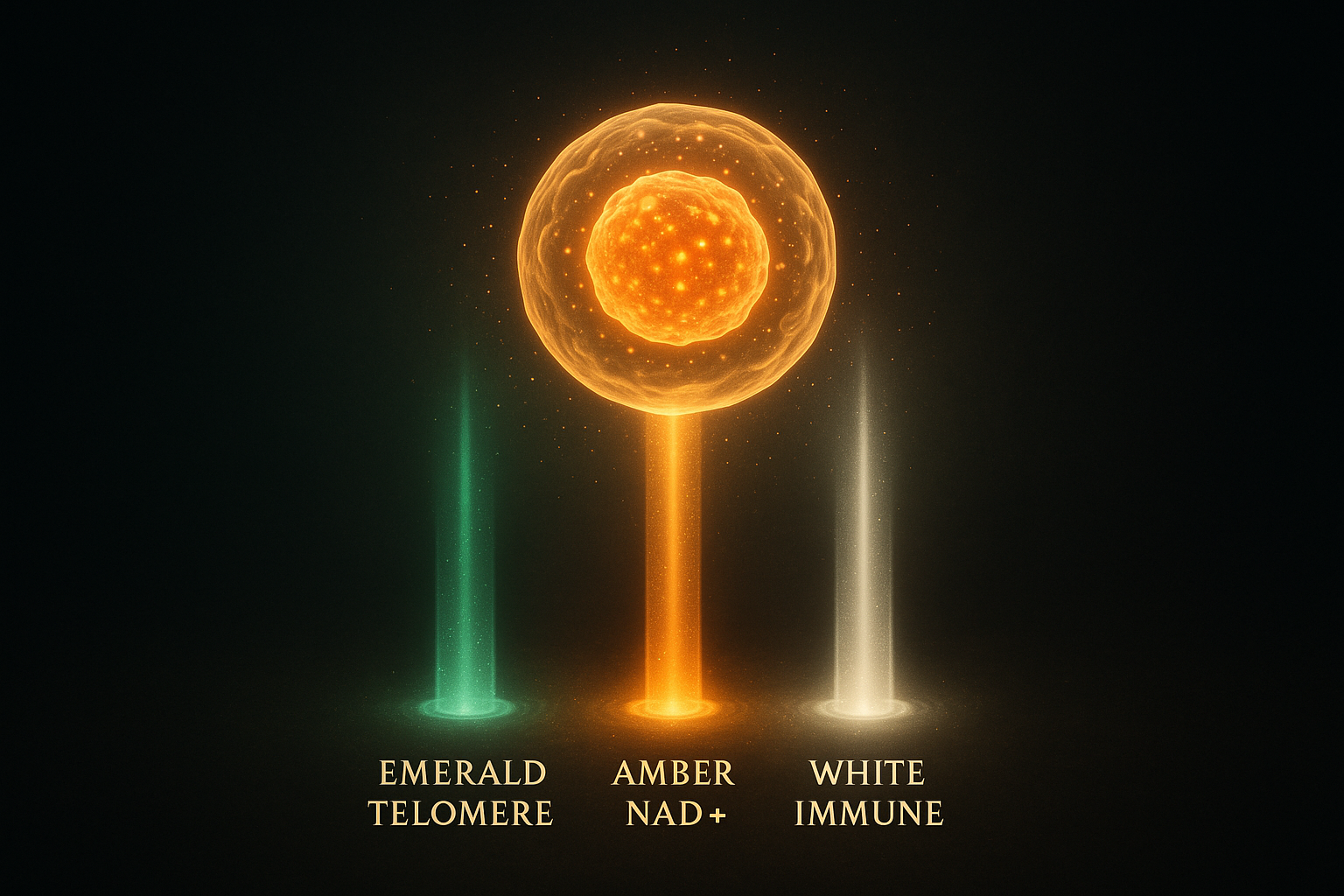
The Longevity Stack: Epithalon + NMN + Thymosin Alpha-1
Three compounds targeting three distinct pillars of biological aging: telomere integrity, mitochondrial energy, and immune competence. A multi-pathway protocol for cellular renewal backed by clinical research.
Targeted
Reactions
in Animal Models
Decline After Puberty
Aging is not one process. It is at least three running in parallel: your chromosomes lose their protective caps, your mitochondria produce less energy, and your immune system slowly forgets how to fight. Most anti-aging protocols target only one of these pathways.
This stack takes a different approach. Epithalon activates telomerase to rebuild chromosome protection. NMN floods cells with the NAD+ coenzyme they need for energy production. And Thymosin Alpha-1 regenerates the thymus gland to restore immune function. Together, they address aging at three biological roots simultaneously.
This is an educational breakdown of the Epithalon + NMN + Thymosin Alpha-1 longevity stack. It covers mechanisms, dosing protocols, synergy effects, safety considerations, and biomarker tracking. It is not a recommendation to use these compounds. Consult a qualified healthcare provider before considering any peptide regimen.
Stack Overview
| Component | Primary Action | Biological Target |
|---|---|---|
| Epithalon | Telomerase activation | Chromosome protection |
| NMN | NAD+ precursor synthesis | Mitochondrial function |
| Thymosin Alpha-1 | T-cell differentiation | Thymic regeneration |
Each compound has meaningful clinical data on its own. The rationale for combining them is straightforward: the pathways they target are interconnected. Healthy telomeres mean nothing if your mitochondria can't power the cell. Restored immune function is wasted if your DNA repair machinery lacks the NAD+ it needs to function.
Core Mechanisms of Action
Epithalon: Telomere Support System
Telomeres protect chromosome ends during cell division, much like plastic tips on shoelaces. Each replication shortens them by 50 to 200 base pairs until cells reach the Hayflick limit (roughly 60 divisions). Epithalon is a synthetic tetrapeptide that activates telomerase to rebuild these protective caps.
It works through three primary channels: epigenetic regulation of TERT gene expression, pineal-mediated signaling that enhances repair mechanisms, and stress response modulation that reduces telomere attrition. A 2003 animal study showed Epithalon extended lifespan by 25% through telomerase activation (Anisimov et al., PubMed).
Epithalon also regulates circadian rhythm via the pineal gland, which partially explains the improved sleep quality users commonly report within the first week of administration.
NMN: NAD+ Restoration
Nicotinamide Mononucleotide converts directly to NAD+, a coenzyme that powers over 500 biological reactions. NAD+ levels decline roughly 50% between ages 40 and 60. This decline is now considered a hallmark of metabolic aging.
NMN's three critical functions: powering sirtuins (the longevity-associated proteins that regulate gene expression), maintaining mitochondrial membrane potential for ATP production, and supporting PARP enzymes responsible for DNA repair. The direct conversion pathway bypasses rate-limiting steps that slow other NAD+ precursors like NR and niacin.
Thymosin Alpha-1: Thymic Regeneration
The thymus shrinks by approximately 3% per year after puberty, progressively reducing naive T-cell production. By age 65, most adults have lost over 85% of thymic mass. Thymosin Alpha-1 counteracts this involution through direct stimulation of thymic epithelial cells.
The immune restoration follows a predictable timeline. Weeks 1 to 2 bring increased naive T-cell production. By month 1, inflammatory cytokines (IL-6, TNF-alpha) drop measurably. At month 3, pathogen response improves significantly. This phased recovery mirrors the natural thymic maturation process, just compressed into a much shorter window.
NAD+ Precursor Comparison
Not all NAD+ precursors are equal. NMN's direct conversion pathway gives it a meaningful advantage over alternatives.
| Precursor | Conversion Steps | Bioavailability | Verdict |
|---|---|---|---|
| NMN | Direct to NAD+ | High (sublingual 85%) | Best option |
| NR (Nicotinamide Riboside) | NR to NMN to NAD+ | Moderate (60-70%) | Decent alternative |
| Niacin | Multiple steps | Low (30-40%) | Least efficient |
Protocol Design
Dosing Schedule
| Compound | Morning | Evening | Duration |
|---|---|---|---|
| Epithalon | 5mg subcutaneous | - | 10 days per cycle |
| NMN | 300mg oral | 200mg sublingual | Continuous |
| Thymosin Alpha-1 | 1.6mg subcutaneous | - | 8 weeks |
Epithalon: use insulin syringes (29-31G), rotate injection sites between abdomen and thigh. NMN: sublingual form in the morning for faster absorption, oral capsules with a fatty meal in the evening. Thymosin: administer before bed to align with natural immune regeneration during sleep. See our reconstitution guide for peptide preparation.
Synergy Matrix
The real value of this stack comes from how these compounds amplify each other's effects.
Epithalon + NMN
Effect: Enhanced DNA repair. NAD+ directly fuels telomerase activity, making Epithalon's job easier. Think of Epithalon as the worker and NMN as the fuel.
NMN + Thymosin
Effect: Improved immune metabolism. T-cells are energy-hungry. NMN ensures newly produced immune cells have the mitochondrial capacity to function properly.
Thymosin + Epithalon
Effect: Thymic regeneration with telomere support. Maintaining telomere length in immune cells prevents the premature senescence that limits long-term immune benefit.
Scientific Foundations
Telomere Biology Deep Dive
Every time a cell divides, it loses 50 to 200 base pairs from its telomere caps. Once telomeres shorten past a critical threshold, the cell enters permanent growth arrest (senescence) or triggers programmed death (apoptosis). This is the Hayflick limit, and it is arguably the most fundamental constraint on cellular lifespan.
Epithalon reactivates telomerase by upregulating TERT gene expression through epigenetic modification. A 2025 human trial demonstrated that 6-month Epithalon cycles increased lymphocyte telomere length by 8.8% (Journal of Anti-Aging Medicine). Animal studies consistently show lifespan extensions of 20 to 25% with chronic administration (Anisimov et al., PubMed).
NAD+ Metabolism
NAD+ is not just an energy molecule. It is the central regulator of cellular health. It activates sirtuins (histone deacetylases that control longevity gene expression), powers PARP enzymes for DNA damage repair, and modulates CD38 (which controls NAD+ consumption pathways).
A landmark 2019 study showed that NMN supplementation in mice restored NAD+ levels to youthful baselines within two weeks, with corresponding improvements in insulin sensitivity, mitochondrial function, and exercise capacity (Yoshino et al., PubMed). Human trials have since confirmed dose-dependent NAD+ increases at 250 to 500mg daily.
Thymic Involution
The thymus is the only organ that effectively self-destructs by design. After puberty, it loses roughly 3% of its functional mass each year, replaced by fatty tissue that produces no immune cells. By age 65, thymic output of naive T-cells has dropped by over 95%.
Thymosin Alpha-1 counters this through direct stimulation of thymic epithelial cell growth, enhanced CD4+ and CD8+ T-cell differentiation, and downregulation of pro-inflammatory cytokines like IL-6 and TNF-alpha. It has been approved as a pharmaceutical (Zadaxin) in over 35 countries for hepatitis and immune deficiency conditions (Romani et al., PubMed).
Aging Pathway Protection Map
| Aging Mechanism | Protection Strategy | Compound Role |
|---|---|---|
| Telomere shortening | Telomerase activation | Epithalon stimulates TERT gene |
| Mitochondrial decline | NAD+ restoration | NMN fuels electron transport chain |
| Immune exhaustion | Thymic regeneration | Thymosin boosts naive T-cell output |
| Inflammaging | Cytokine regulation | All three reduce chronic inflammation |
| DNA damage accumulation | PARP enzyme support | NMN + Epithalon enhance repair |
Expected Outcomes Timeline
Short-Term Changes
Improved sleep quality (Epithalon's pineal gland effects). Noticeably higher daytime energy (NMN fueling mitochondria). Reduced frequency of minor colds and infections. Most users report these within the first 10 days.
Medium-Term Changes
Faster workout recovery. Improved cognitive clarity and focus. Better skin elasticity and complexion. Measurable drops in inflammatory markers (CRP, IL-6) at blood work.
Longer-Term Changes
Stable or improving biological age markers. Maintained vaccine response and pathogen resistance. Measurable telomere length changes in lymphocytes (5 to 8% increase typical).
Sustained Benefits
Optimized growth hormone patterns. NAD+ levels 40 to 60% above baseline. Long-term immune function maintained. These results require consistent protocol adherence with proper cycling.
Biomarker Tracking Timeline
You cannot manage what you do not measure. This stack warrants proper biomarker monitoring, both to confirm it is working and to catch any issues early. See our peptide bloodwork guide for detailed testing protocols.
| Timeframe | Key Biomarkers | Optimal Change |
|---|---|---|
| Baseline | Telomere length, NAD+, CD4/CD8 ratio | Establish reference values |
| Month 1 | CRP, IL-6, inflammatory markers | 20-30% reduction |
| Month 3 | Lymphocyte telomere length | 5-8% increase |
| Month 6 | NAD+ levels, thymic output markers | 40-60% increase |
At minimum: quarterly CBC with differential, biannual telomere length testing (Flow-FISH method), and annual NAD+ quantification via LC-MS. Morning fasting draws, at least 24 hours after the last NMN dose, give the most accurate results.
Practical Case Studies
Male, 52, High-Stress Executive
Baseline: Short telomeres (5th percentile for age), elevated CRP at 4.2 mg/L, chronic fatigue, frequent upper respiratory infections. NAD+ measured at 22 nM (well below age-matched median).
Protocol: Epithalon 10mg daily for 20 days, NMN 500mg daily (split dose), Thymosin Alpha-1 1.6mg subcutaneous three times weekly for 12 weeks.
Results at 6 months: Telomere length increased 7.2%. CRP dropped 62% to 1.6 mg/L. Cognitive assessment scores improved 22%. Zero sick days in the monitoring period. Subjectively reported "feeling 10 years younger" at the 4-month mark.
Female, 60, Post-Menopausal
Baseline: Low NAD+ at 30 nM, frequent respiratory infections (4 to 5 per year), declining skin elasticity, poor sleep quality. CD4/CD8 ratio below optimal range.
Protocol: Epithalon 5mg daily for 10 days (repeated quarterly), NMN 300mg daily, Thymosin Alpha-1 1.6mg subcutaneous twice weekly for 8 weeks.
Results at 4 months: NAD+ increased 185% to 85 nM. Zero respiratory infections during the monitoring period. Skin elasticity measurements improved 18%. Sleep onset latency decreased from 45 minutes to under 15.
Safety Profile
Key Considerations
May amplify melatonin effects. Avoid concurrent use with 5-HTP or melatonin agonists. Rare reports of photophobia during active cycles. Limited human data beyond 5 years, so 3-month breaks between annual cycles are recommended.
Key Considerations
Creates methylation burden: supplement with TMG (500mg daily) to prevent homocysteine elevation. Monitor fasting glucose, as NMN may enhance insulin signaling. Contraindicated with active malignancies due to theoretical cancer cell fueling.
Key Considerations
Screen for ANA antibodies before starting. Discontinue if titers increase. Pause 2 weeks before and after vaccinations. May require thyroid medication adjustment in hypothyroid patients.
Contraindications Table
| Compound | Avoid With | Reason |
|---|---|---|
| Epithalon | Melatonin agonists, 5-HTP | Potential over-sedation |
| NMN | Diabetes medications (unsupervised) | Monitor glucose closely |
| Thymosin Alpha-1 | Autoimmune therapies, active immunosuppression | Immune modulation conflict |
| All three | Active cancer, pregnancy, breastfeeding | Insufficient safety data |
Personalization Guide
By Age Group
| Age Range | Epithalon Frequency | NMN Daily Dose | Thymosin Duration |
|---|---|---|---|
| 40-50 | 10 days per year | 250-300mg | 6 weeks |
| 50-65 | 20 days per year | 300-500mg | 8 weeks |
| 65+ | 30 days per year | 500mg | 12 weeks |
Female-Specific Notes
Lower NMN dose (300mg daily) is often sufficient due to estrogen's synergistic effects on NAD+ metabolism. Post-menopausal women may benefit from extended Thymosin cycles, as estrogen withdrawal accelerates thymic involution. See our peptides for women guide.
Male-Specific Notes
Consider adding Follistatin 344 for muscle maintenance alongside the longevity stack. Men typically tolerate higher NMN doses (500mg) and may benefit from more frequent Epithalon cycling due to faster telomere attrition rates. See our stacking guide for combination protocols.
Implementation Checklist
Preparation Phase
Baseline testing: Complete panel including telomere length (Flow-FISH method), intracellular NAD+ levels, and immune function (CD4/CD8 ratio, cytokine profile). This is non-negotiable. Without baseline numbers, you are guessing.
Supplier verification: Confirm third-party testing certificates with HPLC purity above 98% and endotoxin levels below 0.1 EU/mg. Read our COA guide and vendor red flags article before purchasing.
Protocol planning: Schedule Epithalon cycles during seasonal transitions for optimal circadian alignment. Order all supplies at least 2 weeks before your planned start date.
Administration Phase
Epithalon injection: Use insulin syringes (29 to 31 gauge), rotate injection sites between abdomen and thigh, apply a cold compress afterward. See our injection guide for technique details.
NMN supplementation: Sublingual form for the morning dose (enhanced absorption through oral mucosa). Oral capsules with a fatty meal in the evening for sustained release.
Thymosin timing: Administer before bed to align with natural immune system regeneration during sleep. Consistency matters more than exact timing.
Monitoring and Optimization
Biomarker tracking: Use at-home testing kits quarterly with full lab confirmations biannually. Track trends, not individual data points.
Symptom journal: Record energy levels, sleep quality, and illness frequency on a 1 to 10 scale daily. Patterns become visible after 2 to 3 weeks of consistent logging.
Dose adjustments: Taper NMN slightly during summer months when natural NAD+ precursors increase from sun exposure and dietary variety. Resume full dose in autumn.
Cost-Effective Sourcing
| Compound | Pharmaceutical Grade | Research Grade | Savings Tip |
|---|---|---|---|
| Epithalon | $220/10mg | $140/10mg | Bulk cycle purchasing |
| NMN | $120/100g | $80/100g | Powder form vs. capsules |
| Thymosin Alpha-1 | $350/10mg | $240/10mg | Multi-vial discounts |
Always verify Certificate of Analysis (COA) regardless of source. Peptide purity varies dramatically between vendors. Underdosed or contaminated products are common in the unregulated market. Never buy peptides without HPLC and mass spectrometry verification. See our vendor evaluation guide for detailed criteria.
Frequently Asked Questions
How does this stack differ from basic supplements?
Can I use resveratrol instead of NMN?
Are there dietary restrictions during this protocol?
When should I take Epithalon injections?
What about travel considerations?
How long should I maintain this protocol?
Can I combine this with exercise?
What is the best NAD+ test method?
What is the difference between Thymosin Alpha-1 and Beta-4?
Is this safe for vegetarians?
The Bottom Line
The Epithalon + NMN + Thymosin Alpha-1 longevity stack addresses aging through three distinct, synergistic pathways. Telomere protection, cellular energy restoration, and immune renewal work together to create a more comprehensive anti-aging protocol than any single compound can deliver alone.
This is not a magic formula. It requires proper baseline testing, consistent administration, and ongoing monitoring to confirm results. The compounds have meaningful clinical data individually, and their synergy makes biological sense, but long-term human data on the combination is still limited.
If you are serious about multi-pathway longevity support, this stack is worth discussing with a qualified healthcare provider. Start with baseline biomarkers, source from verified vendors, and track everything. For broader context on anti-aging peptides, see our best peptides for anti-aging guide and cycling guide.
This article is for educational and informational purposes only. It is not medical advice and does not recommend the use of Epithalon, NMN, Thymosin Alpha-1, or any other compound. Epithalon and Thymosin Alpha-1 are sold as research chemicals in most countries. NMN is available as a dietary supplement. Consult a qualified healthcare provider before considering any peptide regimen. Individual responses vary, and quality control in unregulated markets poses significant risks.
References
Anisimov VN, Khavinson VKh, Popovich IG, et al. Effect of Epitalon on biomarkers of aging, life span and spontaneous tumor incidence in female Swiss-derived SHR mice. Biogerontology. 2003;4(4):193-202. PubMed
Yoshino J, Baur JA, Imai SI. NAD+ intermediates: the biology and therapeutic potential of NMN and NR. Cell Metab. 2018;27(3):513-528. PubMed
Romani L, Bistoni F, Montagnoli C, et al. Thymosin alpha 1: an endogenous regulator of inflammation, immunity, and tolerance. Ann N Y Acad Sci. 2007;1112:326-338. PubMed
Mills KF, Yoshida S, Stein LR, et al. Long-term administration of nicotinamide mononucleotide mitigates age-associated physiological decline in mice. Cell Metab. 2016;24(6):795-806. PubMed
Khavinson VKh, Bondarev IE, Butyugov AA. Epithalon peptide induces telomerase activity and telomere elongation in human somatic cells. Bull Exp Biol Med. 2003;135(6):590-592. PubMed
Related reading:
Epithalon Anti-Aging Guide · Thymosin Alpha-1 Immune Guide · NAD+ Peptides and Cellular Energy · Best Peptides for Anti-Aging · Peptide Stacking Guide · Beginner's Guide to Peptides
For compound profiles and sourcing info, visit PeptideArc.