Thymosin Beta-4 (TB-4): The Complete Guide
A naturally occurring 43-amino-acid peptide that coordinates tissue repair across the entire body. How it works, what the research shows for wound healing, cardiac repair, and hair growth, plus dosing and safety.
(Daltons)
in Sequence
in Mouse Models
Identified
Thymosin Beta-4 is one of the most abundant intracellular peptides in the human body. It's present in nearly every tissue, with concentrations spiking dramatically at injury sites. When you cut your skin, strain a tendon, or damage heart muscle, TB-4 is one of the first molecular responders.
Unlike many synthetic peptides, TB-4 is a natural compound your body already produces. White blood cells and platelets release it locally during healing. It doesn't circulate like a hormone; it acts right where it's needed.
This is an educational breakdown of TB-4 covering its mechanisms, clinical research, dosing protocols, and safety profile. It is not a recommendation to use TB-4. TB-4 is not FDA-approved for medical use. Consult a qualified healthcare provider before considering any peptide regimen.
TB-4 at a Glance
Thymosin Beta-4 (TB-4)
Length: 43 amino acids | Type: Endogenous peptide | Molecular Weight: 4,963 Da | Discovery: 1981, thymus gland isolation | Routes: Subcutaneous injection | FDA Status: Not approved; research compound | Primary Actions: Cell migration, angiogenesis, anti-inflammatory, stem cell recruitment
TB-4 was originally isolated from the thymus gland, which is where its name comes from. Since then, researchers have found it in virtually every tissue type. It's especially concentrated in wound fluid, blood platelets, and developing embryonic tissue.
For a deeper compound profile, visit PeptideArc.
How TB-4 Works: Four Core Mechanisms
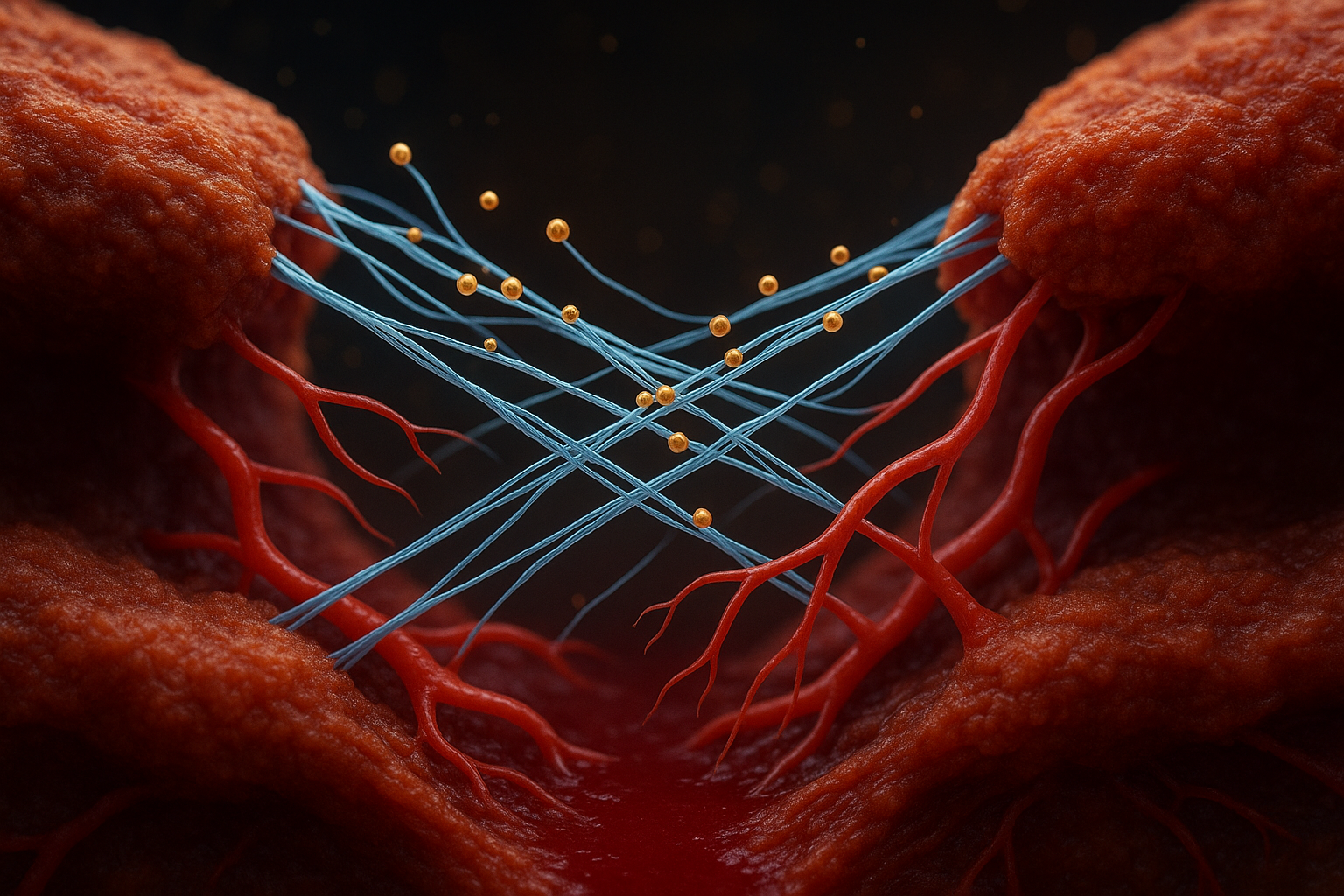
TB-4 acts on multiple repair pathways at once. This multi-target approach is what makes it different from most single-mechanism healing agents.
Actin Binding and Cell Migration
TB-4's primary molecular function is binding G-actin monomers. This prevents premature polymerization into filaments, giving cells the cytoskeletal flexibility they need to move toward wound sites (Safer et al., 1994).
This matters most for fibroblasts, the cells responsible for laying down new connective tissue. When fibroblasts can move freely into a wound, they produce more flexible tissue instead of dense scar formations.
Blood Vessel Formation (Angiogenesis)
Healing tissue needs blood supply. TB-4 stimulates vascular endothelial growth factor (VEGF) production and enhances endothelial cell activity (Malinda et al., 1999).
The result is increased capillary density at injury sites. More blood vessels mean better oxygen and nutrient delivery to regenerating tissue.
TB-4's angiogenic activity sets it apart from simple wound closure agents. It doesn't just close wounds; it creates the vascular infrastructure needed for genuine tissue regeneration.
Inflammation Control
TB-4 downregulates pro-inflammatory cytokines like TNF-alpha and IL-1 beta while increasing anti-inflammatory signals like IL-10. This creates a balanced immune environment rather than shutting down inflammation entirely.
That balance matters. You need some inflammation for proper healing. TB-4 keeps the response proportional to the injury.
Stem Cell Recruitment
Recent research shows TB-4 promotes mesenchymal stem cell (MSC) migration to injury sites (Smart et al., 2011). Once there, these stem cells differentiate into the specific cell types needed for repair.
This is especially relevant for cardiac applications. TB-4 appears to activate resident cardiac progenitor cells that would otherwise remain dormant after a heart attack.
Research Evidence by Application
TB-4 has been studied across a wide range of injury types. Here's what the preclinical and early clinical data actually shows.
Wound Healing
This is TB-4's most extensively studied application. Multiple animal models show significant acceleration of wound closure, with improved tissue quality compared to controls.
| Study | Model | Result |
|---|---|---|
| Goldstein et al. | Mouse skin wounds | 40% faster healing |
| Sosne et al. | Corneal injuries | Reduced scarring |
| Philp et al. | Human cell models | Better cell migration |
| Badamchian et al. | Burn models | Faster skin recovery |
These findings have implications for chronic wounds like diabetic ulcers and pressure sores, conditions where normal healing mechanisms are impaired.
Cardiac Repair
Heart tissue has very limited regenerative capacity on its own. TB-4's ability to activate cardiac progenitor cells makes it an exciting candidate for post-heart-attack therapy.
| Study | Model | Outcome |
|---|---|---|
| Bock-Marquette et al. | Heart attack | Better pumping function |
| Sosne et al. | Ischemia model | Smaller damaged areas |
| Peng et al. | Heart failure | Improved function (modest) |
While cardiac findings are promising, human trials remain limited. Most heart-related applications are still investigational. Always consult a cardiologist before considering TB-4 for any cardiac condition.
Hair Growth
TB-4 stimulates hair follicle activity through its angiogenic and cell migration properties. It appears to extend the anagen (growth) phase of the hair cycle.
| Study | Model | Result |
|---|---|---|
| Philp et al. | Mouse follicles | Longer growth phase |
| Kim et al. | Human cells | Increased proliferation |
| Gao et al. | Hair loss model | Better density (moderate) |
Hair regrowth typically requires 3–6 months of consistent use. Don't expect overnight results.
Brain and Nerve Support
Newer research explores TB-4's effects on neural tissue. The same mechanisms that repair skin and heart, cell migration, angiogenesis, and inflammation control, appear to benefit the nervous system too.
| Study | Model | Finding |
|---|---|---|
| Morris et al. | Brain injury | Smaller lesion size |
| Zhang et al. | Stroke model | Better functional recovery |
| Xiong et al. | Spinal injury | Improved nerve regrowth |
These studies suggest TB-4 isn't limited to peripheral tissue repair. Central nervous system applications are still early-stage but worth watching.
Dosing Protocols
TB-4 dosing varies based on the target condition and individual factors. Most research protocols use subcutaneous injection. Here's what the published literature and clinical protocols suggest.
| Parameter | Typical Range | Notes |
|---|---|---|
| Daily Amount | 2–10 mg | Lower end for maintenance |
| Frequency | 1–2x daily | Based on half-life |
| Injection Sites | Abdomen, thigh | Rotate locations |
| Cycle Length | 4–12 weeks | Varies by purpose |
Body weight, injury severity, and treatment goals all influence appropriate dosing. There is no one-size-fits-all protocol. Work with a healthcare provider to determine what makes sense for your situation.
Storage and Handling
TB-4 is a sensitive peptide that breaks down under heat, light, and extreme pH. Proper handling directly affects whether you get therapeutic benefit.
| Factor | Effect | Recommendation |
|---|---|---|
| Temperature | Degrades when warm | Refrigerate at all times |
| Light | UV sensitive | Store in dark container |
| pH Level | Unstable at extremes | Use bacteriostatic water |
| Time | Activity drops over time | Use within 30 days |
TB-4 vs. TB-500: What's the Difference?
This is one of the most common questions in the peptide space. TB-500 is not just a nickname for TB-4. It's a synthetic fragment of the full peptide, containing the active region responsible for actin binding.
| Feature | TB-4 (Full Peptide) | TB-500 (Fragment) |
|---|---|---|
| Structure | Full 43-amino-acid sequence | 17-amino-acid active fragment |
| Primary Action | Multiple mechanisms | Mainly actin binding |
| Stability | Moderate | Higher |
| Research Support | More extensive | Less established |
| Cost | Higher | Lower |
| Stem Cell Effects | Demonstrated | Uncertain |
TB-500 is more affordable and more stable, which makes it popular. But the full TB-4 peptide provides broader regenerative effects because it retains structural elements that the fragment lacks.
If cost isn't a factor, TB-4 is the more complete option. If budget matters, TB-500 still offers meaningful actin-binding activity.
Stacking with Other Peptides
TB-4 is commonly combined with other regenerative peptides for potentially synergistic effects. The logic is straightforward: different peptides hit different repair pathways.
TB-4 + BPC-157
The most popular combination. BPC-157 works through different pathways (nitric oxide, growth hormone receptors) while TB-4 handles actin regulation and stem cell recruitment. Complementary mechanisms with minimal overlap.
TB-4 + GHK-Cu
GHK-Cu supports collagen synthesis and skin remodeling. Combined with TB-4's cell migration and angiogenic effects, this pairing targets tissue repair from multiple angles.
Combination protocols are largely based on theoretical rationale, not controlled human trials. Always discuss multi-peptide regimens with a healthcare provider. Potential interactions haven't been fully studied.
Side Effects and Safety
TB-4 is generally well-tolerated in research settings. Reported issues are mild and usually resolve on their own.
| Potential Issue | Frequency | Management |
|---|---|---|
| Injection site reactions | Uncommon | Rotate injection sites |
| Headaches | Rare | Rest and hydration |
| Fatigue | Occasional | Adjust timing to evening |
| Mild flu-like symptoms | Rare | Symptomatic care |
Long-term safety data is limited. TB-4 promotes cell growth and blood vessel formation, which raises theoretical concerns for anyone with active cancer or pre-cancerous conditions. If you have a history of malignancy, discuss this with your oncologist before considering TB-4. Report any lasting side effects to your healthcare provider promptly.
Cycling Protocols
Most peptide cycling protocols recommend periodic breaks from TB-4. This helps prevent potential receptor desensitization and gives the body time to consolidate repair gains.
| Phase | Duration | Dosing |
|---|---|---|
| Loading | 2–4 weeks | Higher end of range (5–10 mg/day) |
| Maintenance | 4–8 weeks | Lower end (2–5 mg/day) |
| Off Cycle | 4–12 weeks | No TB-4 |
Cycle length depends on the condition being addressed. Acute injuries may need shorter, more intense cycles. Chronic conditions may benefit from longer maintenance periods.
Who Might Benefit from TB-4 Research
Wound Management
Diabetic foot ulcers, pressure sores, surgical healing, burn recovery.
Musculoskeletal
Tendon and ligament injuries, muscle strains, joint recovery, connective tissue repair.
Appearance
Hair thinning and loss, skin rejuvenation, scar improvement.
Cardiac Support
Post-heart attack recovery, blood vessel growth in damaged cardiac tissue, heart function improvement.
Neuroprotection
Traumatic brain injury recovery, stroke rehabilitation, spinal cord injury support.
Regulatory Status
TB-4 is not approved for medical use in most countries. Its regulatory classification varies by region.
United States
Research compound only. Not approved for human therapeutic use by the FDA.
European Union
Research compound. Special authorization required for clinical use.
Australia
Schedule 4 prescription substance. Available through authorized practitioners.
Canada
Restricted compound. Special access program required.
Regulatory status changes as research progresses. Always check current regulations in your jurisdiction.
Frequently Asked Questions
What does TB-4 actually do in the body?
How soon can I expect to see results?
Is TB-4 safe for extended use?
Can I combine TB-4 with BPC-157?
How does TB-4 differ from growth hormones?
What's the difference between TB-4 and TB-500?
Are there natural ways to increase TB-4 levels?
Should I take breaks from TB-4?
The Bottom Line
TB-4 is a naturally occurring peptide with broad tissue repair capabilities backed by strong preclinical evidence. Its multi-mechanism approach (actin binding, angiogenesis, inflammation control, stem cell recruitment) makes it one of the most versatile regenerative peptides studied to date. Human clinical data is still limited, and all applications remain investigational.
The research on TB-4 is genuinely interesting. Its ability to coordinate multiple repair pathways simultaneously gives it potential that single-mechanism therapies can't match.
That said, preclinical promise doesn't automatically translate to human benefit. We need more controlled human trials before drawing strong conclusions about therapeutic use. For now, TB-4 remains a research compound with real scientific merit and uncertain clinical translation.
This article is for educational and informational purposes only. It is not medical advice, and it does not replace consultation with a qualified healthcare provider. Thymosin Beta-4 is not approved by the FDA for therapeutic use. Do not begin any peptide protocol without professional medical guidance. The authors have no financial relationships with peptide vendors.
References
Safer D, Elzinga M, Nachmias VT. Thymosin beta 4 and Fx, an actin-sequestering peptide, are indistinguishable. J Biol Chem. 1991;266(7):4029-4032. PubMed
Malinda KM, Sidhu GS, Mani H, et al. Thymosin beta4 accelerates wound healing. J Invest Dermatol. 1999;113(3):364-368. PubMed
Bock-Marquette I, Saxena A, White MD, et al. Thymosin beta4 activates integrin-linked kinase and promotes cardiac cell migration, survival and cardiac repair. Nature. 2004;432(7016):466-472. PubMed
Smart N, Risebro CA, Melville AAD, et al. Thymosin beta4 induces adult epicardial progenitor mobilization and neovascularization. Nature. 2007;445(7124):177-182. PubMed
Philp D, Goldstein AL, Kleinman HK. Thymosin beta4 promotes angiogenesis, wound healing, and hair follicle development. Mech Ageing Dev. 2004;125(2):113-115. PubMed
Sosne G, Qiu P, Goldstein AL, Wheater M. Biological activities of thymosin beta4 defined by active sites in short peptide sequences. FASEB J. 2010;24(7):2144-2151. PubMed
Morris DC, Chopp M, Zhang L, et al. Thymosin beta4 improves functional neurological outcome in a rat model of embolic stroke. Neuroscience. 2010;169(2):674-682. PubMed
Related reading:
TB-500 Complete Guide · BPC-157 Complete Guide · GHK-Cu Copper Peptide Guide · Peptide Cycling Guide
For compound profiles and sourcing info, visit PeptideArc.