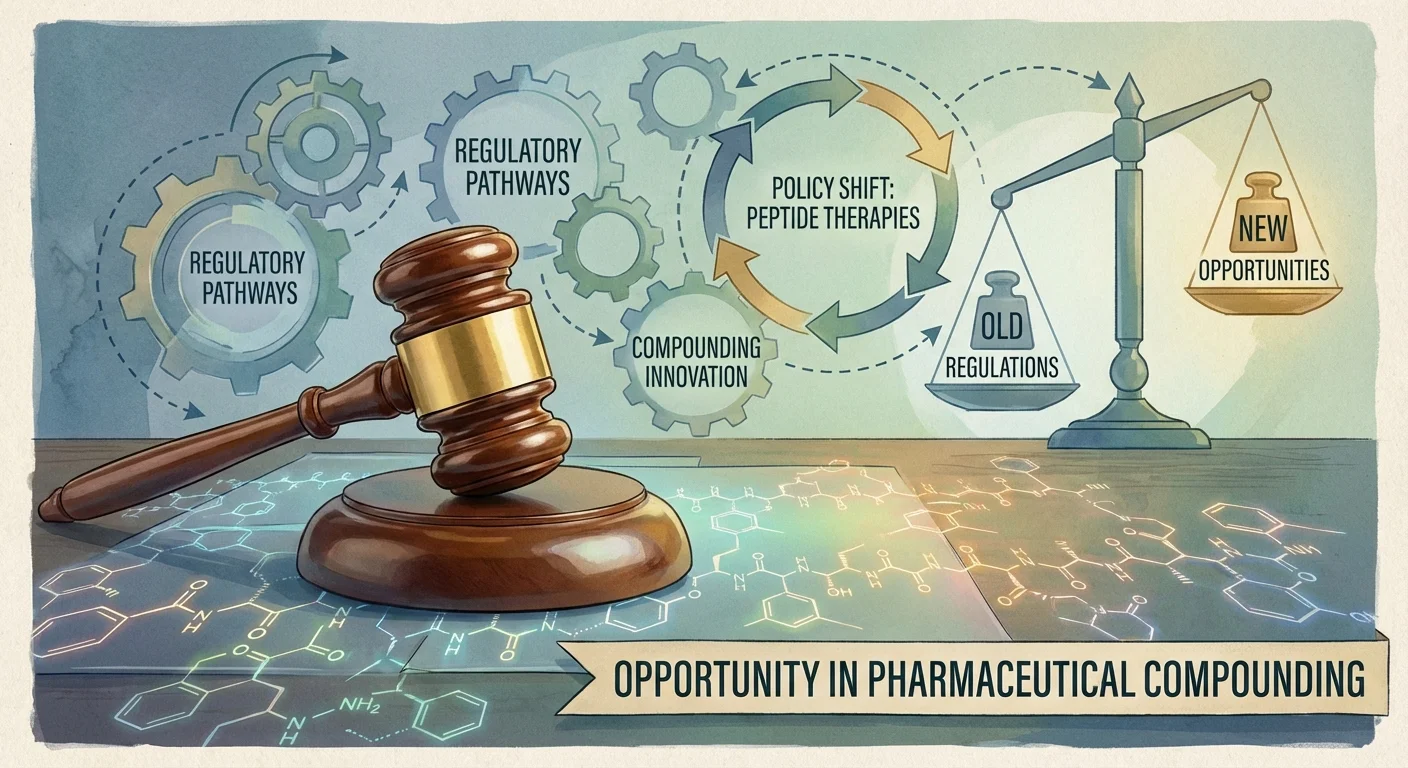
FDA Peptide Reclassification: A New Era for Compounding Pharmacies?
HHS Secretary Robert F. Kennedy Jr.'s recent comments hint at a significant shift in FDA peptide regulation, potentially opening new avenues for compounding pharmacies and reshaping the market.
The landscape of peptide regulation in the United States is poised for a significant shift, following recent statements from U.S. Department of Health and Human Services (HHS) Secretary Robert F. Kennedy Jr. During an appearance on “The Joe Rogan Experience” on February 27, 2026, Kennedy indicated that the U.S. Food and Drug Administration (FDA) is expected to take action that could make approximately 14 peptides more accessible. This announcement has sent ripples through the industry, signaling a potential new era for licensed and compliant compounding pharmacies.
A Glimmer of Hope for Accessibility
Kennedy expressed optimism that these substances will soon find “a place where people have access from ethical suppliers.” He critiqued the previous administration’s handling of peptide regulation, asserting that the FDA had “illegally” reclassified 19 peptides into a category of potentially unsafe substances on the agency’s interim bulks drug substance list during the Biden era. This move, according to Kennedy, prompted widespread concern among clinicians, med spas, and patients.
The Secretary’s comments likely refer to the 17 peptides the FDA designated as Category 2 substances in September 2023. These classifications, while not formal rulemakings, effectively halted the lawful compounding of many popular peptides under the FDA’s interim policy due to identified “potential significant safety risks.” Among these were substances frequently used in biohacking and longevity circles, such as BPC-157, GHK-Cu Injectable, CJC-1295, Ipamorelin, Epithalon, and Melanotan II.
Understanding the Regulatory Maze
To grasp the full impact of Kennedy’s statements, it’s essential to understand the federal framework governing compounded peptides. Under Section 503A of the Federal Food, Drug, and Cosmetic Act (FDCA), pharmacies can compound drugs provided they meet specific conditions. A crucial requirement is that bulk drug substances must either comply with United States Pharmacopeia (USP) or National Formulary (NF) standards, be components of FDA-approved drugs, or appear on FDA’s official Section 503A Bulks List. Substances not meeting these criteria cannot be used in 503A compounding.
The FDA’s interim policy categorized nominated bulk drug substances into two main groups:
- Category 1: Substances under evaluation without identified significant safety risks. Compounding is temporarily permitted with enforcement discretion, provided specific manufacturing and analytical conditions are met (e.g., GHK-Cu, excluding injectable routes).
- Category 2: Substances where the FDA identified potential significant safety risks. Enforcement discretion does not extend to these, prohibiting their lawful compounding.
Several substances initially placed in Category 2, like AOD-9604, CJC-1295, Ipamorelin acetate, Thymosin alpha-1, and Selank acetate, were later removed from this list due to withdrawn nominations. However, the PCAC (Pharmacy Compounding Advisory Committee) ultimately voted against their inclusion on the 503A bulks list, placing them in a category of “Other Bulk Drug Substances That May Present Significant Safety Risks.”
Implications for the Market
If the FDA acts on Kennedy’s signal and reclassifies a substantial number of peptides out of Category 2, it would be a monumental shift. This would empower 503A compounding pharmacies to legally prepare patient-specific formulations of previously prohibited peptides. The commercial opportunities would be significant, impacting API suppliers, prescribing physicians, wellness clinics, and telehealth platforms, especially given the robust consumer demand in what has largely been an unregulated market.
However, even with reclassification, strict requirements remain. Lawful compounding will necessitate pharmaceutical-grade active pharmaceutical ingredients (API) from registered manufacturers, complete with proper documentation. This means compounders cannot simply source from unregulated channels, emphasizing the need for robust supply chain integrity.
The Future of Peptide Regulation
Kennedy’s remarks also highlighted concerns about the “very, very substandard” unregulated peptide market, hinting at a potential crackdown. This sentiment aligns with a notable recent development: Peptide Sciences, a prominent online seller of research-use-only peptides, announced its voluntary shutdown and discontinuation of research peptide sales. This move could signify the beginning of the end for the unregulated market, as the regulatory landscape moves towards legitimate compounding channels.
For 503A compounding pharmacies with proper licensing, registered ingredient suppliers, and compliant operational structures, this impending change represents a transformative commercial opportunity. Those preparing to produce peptides in the United States stand to become pioneers in a rapidly expanding and newly regulated market. The era of unregulated peptide sales may be drawing to a close, paving the way for a more controlled and potentially safer environment for peptide access.