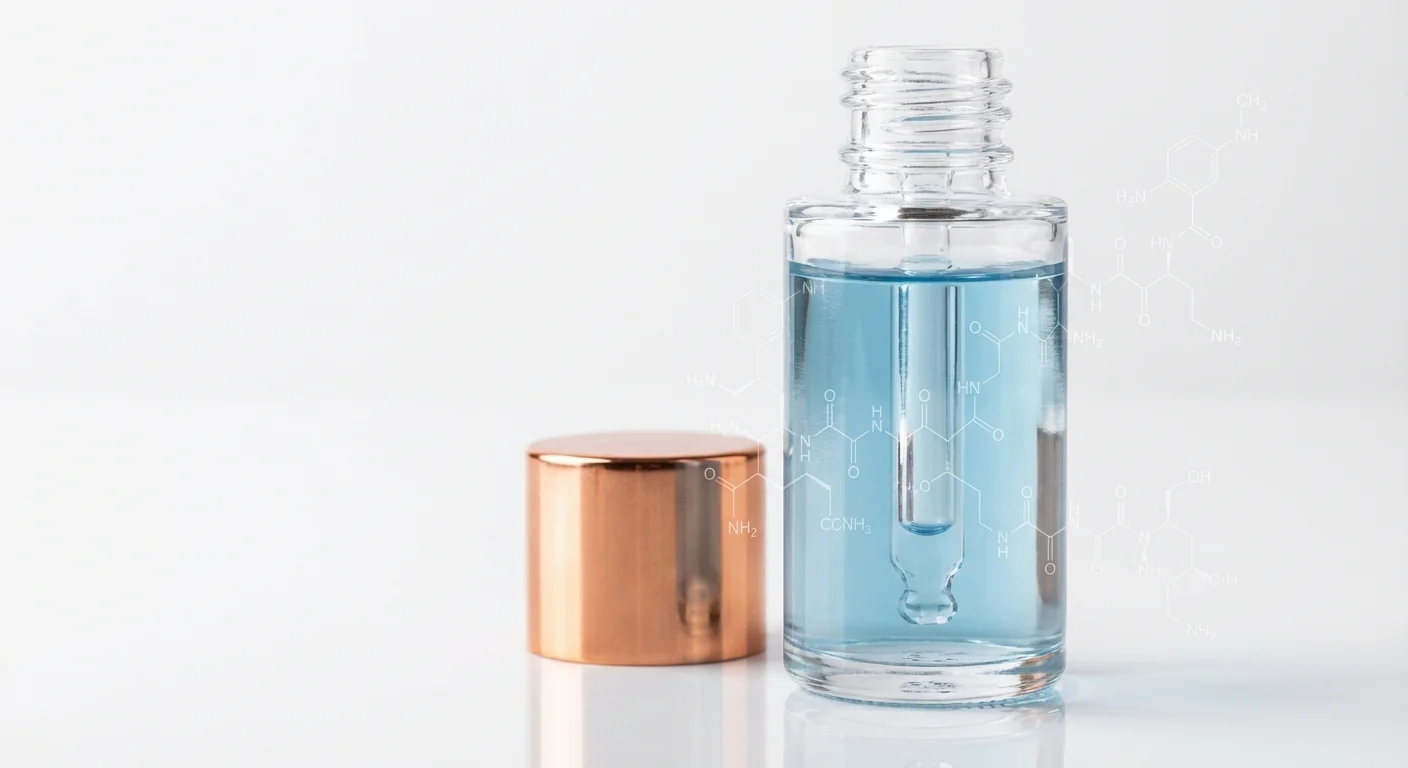
Copper peptides (GHK-Cu) are having a moment in skincare
A luxury skincare story is pushing GHK-Cu back into the spotlight. Here’s what the copper peptide is, what the research suggests, and where the hype can outrun the data.
Copper peptides are back in the conversation.
A short February 2026 skincare piece from Airmail frames GHK-Cu as the peptide that might “change your life, or at least your skin.” It also slips in a useful warning: lots of peptide hype now lives in a regulatory gray zone, especially when products are injectable and loosely sourced.
Source:
- Airmail (Feb 2026): https://airmail.news/skincare/2026/2/peptide-power
If you are wondering why GHK-Cu keeps resurfacing in beauty and wellness circles, it helps to separate two very different product realities.
Topical copper peptide skincare is one thing.
Injectable “peptide stacks” sold online are another.
What GHK-Cu is, in plain language
GHK-Cu is a small tripeptide (glycyl-L-histidyl-L-lysine) bound to a copper ion.
It shows up in research because copper plays a role in tissue repair and enzymes involved in extracellular matrix dynamics.
In other words, it is a biologically plausible molecule to study for healing signals.
It is also an easy story to sell.
Collagen. Elasticity. “Regeneration.”
Those words move product.
What the research actually supports
GHK-Cu has a long history in lab and animal research tied to inflammation and tissue repair.
A 2026 narrative review aimed at sports medicine physicians (not skincare marketing) lists GHK-Cu among popular injectable peptides. The authors describe promise in wound healing and anti-inflammatory effects, while also emphasizing that clinical evidence for musculoskeletal use is lacking.
PubMed: “Injectable Peptide Therapy: A Primer for Orthopaedic and Sports Medicine Physicians” (PMID: 41476424)
https://pubmed.ncbi.nlm.nih.gov/41476424/
A separate 2025 preclinical study looked at GHK-Cu in a mouse model of ulcerative colitis and reported reduced inflammatory markers and improved barrier proteins (ZO-1 and occludin), with proposed involvement of the SIRT1 and STAT3 pathway.
That is not a skincare trial.
But it is a concrete example of what GHK-Cu research tends to look like today: mechanistic, animal-based, and focused on inflammation and healing.
PubMed: “Exploring the beneficial effects of GHK-Cu on an experimental model of colitis and the underlying mechanisms” (PMID: 40672369)
https://pubmed.ncbi.nlm.nih.gov/40672369/
Where hype sneaks in
Two common leaps show up in copper peptide content.
One is the leap from “a signaling molecule studied in healing” to “you should inject it for cosmetic results.”
The other is the leap from “topical ingredient in a formulated product” to “research-grade powder that I reconstituted at home.”
The second leap is the dangerous one.
Even the best peptide on earth is not worth much if the vial is impure, mislabeled, or contaminated.
That is why mainstream reporting on peptides keeps circling back to quality and oversight.
MIT Technology Review’s recent explainer on the broader peptide boom calls out the rise of research-only peptide sellers and the lack of consistent enforcement, even as peptides go more mainstream.
Source:
- MIT Technology Review (Feb 23, 2026): https://www.technologyreview.com/2026/02/23/1133522/peptides-are-everywhere-heres-what-you-need-to-know/
The safer takeaway
If you want to be practical about GHK-Cu, start with basics.
- Topical skincare products are generally the more conservative lane.
- Claims should be specific. “Improves skin texture” is easier to evaluate than “reverses aging.”
- If someone is selling injectable copper peptides as a lifestyle upgrade, ask for clinical trial evidence and sourcing transparency.
Copper peptides are interesting.
But “interesting” is not the same as “settled.”
And in 2026, the peptide market is loud enough that caution is not prudish. It is just good judgment.