CJC-1295 with DAC: Benefits, Risks, and How It Works
The GHRH analog that binds to albumin and keeps working for days instead of minutes. How it works, what the clinical data shows, and how it compares to the no-DAC version and ipamorelin.
With DAC
In Clinical Trials
Frequency
Weight
If you've spent any time looking into growth hormone peptides, you've probably run into CJC-1295. But there's a catch that trips people up: there are two versions.
CJC-1295 with DAC and CJC-1295 without DAC (sometimes called "mod GRF 1-29") are related compounds with very different behavior in the body. This guide covers the DAC version, the one that sticks around for days instead of minutes.
This is an educational breakdown of CJC-1295 DAC covering its mechanism, benefits, dosing protocols, side effects, and comparisons to alternatives. It is not a recommendation to use CJC-1295 DAC. This peptide is not FDA-approved for human use. Consult a qualified healthcare provider before considering any peptide regimen.
CJC-1295 with DAC is a synthetic analog of growth hormone–releasing hormone (GHRH) with a Drug Affinity Complex (DAC) attached. The DAC binds to albumin in the blood, stretching the half-life from minutes to roughly 6–8 days, so it keeps signaling the pituitary to release growth hormone for about a week. In clinical trials it raised IGF-1 by 36–105%. CJC-1295 without DAC (Mod GRF 1-29) acts for only about 30 minutes and produces shorter, more natural pulses. It is not FDA-approved for any use.
CJC-1295 DAC at a Glance
CJC-1295 with Drug Affinity Complex
Type: Synthetic GHRH analog | Origin: ConjuChem Biotechnologies | Half-Life: 5.8–8 days (albumin-bound) | Route: Subcutaneous injection | Mechanism: GHRH receptor agonist with albumin binding | FDA Status: Not approved; research chemical | Primary Actions: GH secretion, IGF-1 elevation, lipolysis
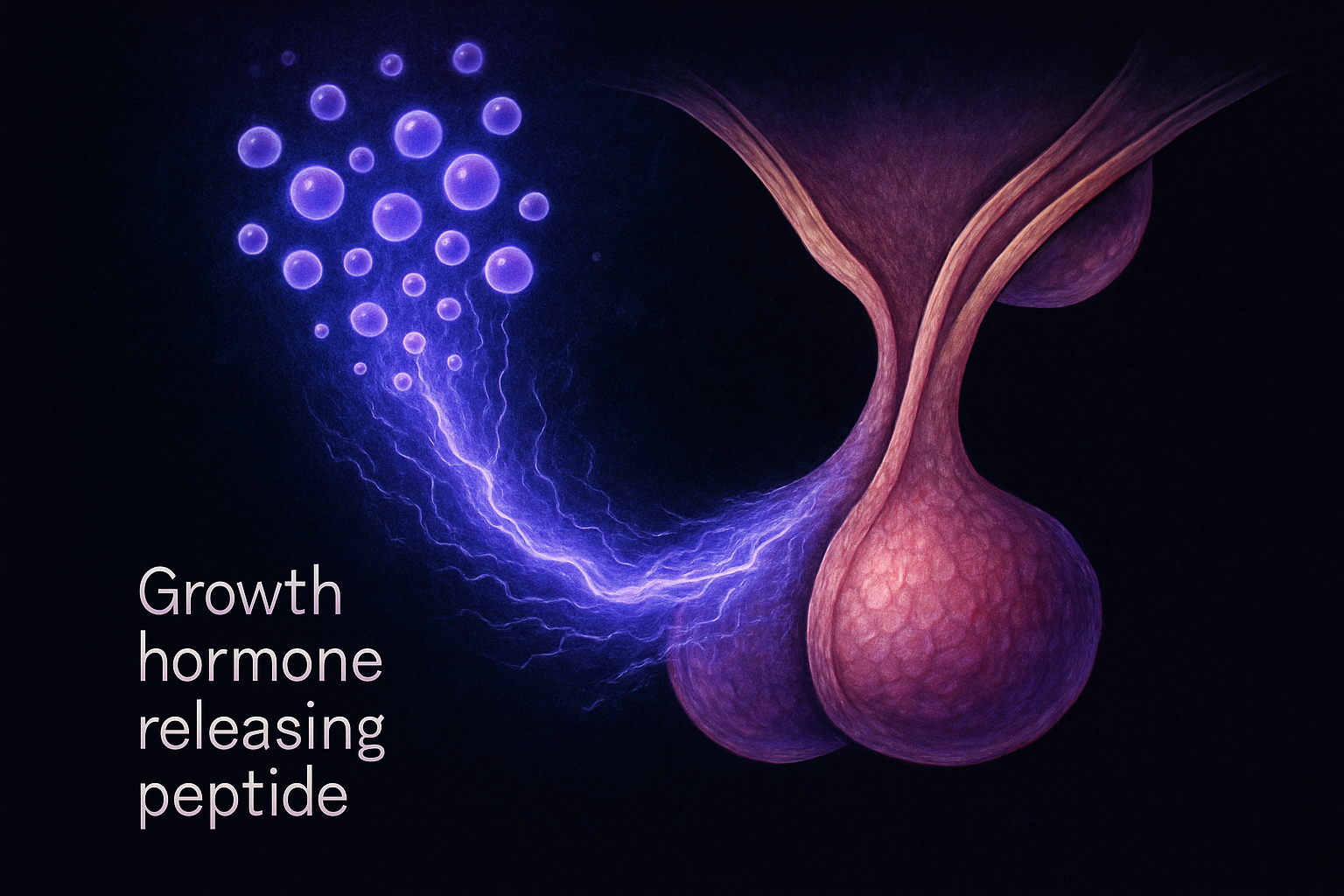
CJC-1295 is a synthetic analog of growth hormone-releasing hormone (GHRH). Your hypothalamus naturally produces GHRH, which tells the pituitary gland to release growth hormone (GH).
The problem with natural GHRH is that enzymes chew it up in minutes. Researchers at ConjuChem Biotechnologies solved this by modifying the first 29 amino acids of GHRH and attaching a Drug Affinity Complex (DAC), a reactive chemical group that binds to albumin in your blood.
For a deeper compound profile, visit PeptideArc.
How the Drug Affinity Complex Works
Once injected, the DAC moiety forms a covalent bond with circulating albumin. Albumin has a half-life of roughly 19–21 days in humans.
By hitching a ride on albumin, CJC-1295 DAC extends its own half-life from about 30 minutes (for the non-DAC version) to approximately 5.8–8 days (Teichman et al., 2006). The albumin binding also shields the peptide from enzymatic degradation by dipeptidyl peptidase IV (DPP-IV).
GH Pulsatility and Negative Feedback
Unlike exogenous GH injections that flatten natural pulsatility, CJC-1295 DAC works with your body's existing GH rhythm. It amplifies both the amplitude and frequency of GH pulses while the pulsatile pattern stays intact (Ionescu & Bhatt, 2018).
Somatostatin, the hormone that puts the brakes on GH release, still functions normally. This provides a built-in safety buffer you don't get with direct GH injection.
CJC-1295 DAC stimulates your pituitary to produce its own GH. Exogenous GH bypasses the pituitary entirely. That difference matters for long-term pituitary health and natural GH recovery after discontinuation.
Benefits: What CJC-1295 DAC Actually Does
Most benefits stem from sustained elevation of GH and IGF-1. These aren't overnight effects. Expect gradual improvements over weeks to months of consistent use.
Lipolysis and Body Composition
GH is one of the most potent lipolytic hormones in your body. It promotes breakdown of stored triglycerides, increases fatty acid oxidation, and consistently reduces visceral fat in GH-deficient adults (Johannsson et al., 1997). The long half-life makes CJC-1295 DAC particularly well-suited here.
Muscle Growth and Repair
GH and IGF-1 promote protein synthesis and nitrogen retention. They don't build muscle the way testosterone does, but they create an anabolic environment that supports lean tissue growth with resistance training. Recovery is where most users notice the biggest difference (Doessing et al., 2010).
Deep Sleep Enhancement
GH secretion naturally peaks during deep sleep. GH-releasing peptides have been shown to increase slow-wave sleep duration (Frieboes et al., 1995). Users frequently report improved sleep depth and feeling more rested.
Skin and Connective Tissue
GH stimulates collagen production. Users often notice improved skin elasticity and thickness after 2–3 months. Hair and nail growth may also improve. GH accelerates tissue repair processes, well-documented in clinical settings (Herndon et al., 2004).
| Benefit | Mechanism | Typical Timeline | Evidence Level |
|---|---|---|---|
| Fat loss | Lipolysis, fatty acid oxidation | 4–12 weeks | Strong (clinical) |
| Recovery | Collagen synthesis, protein turnover | 2–4 weeks | Strong (clinical) |
| Sleep quality | Slow-wave sleep enhancement | 1–2 weeks | Moderate |
| Skin/hair | Collagen production | 8–12 weeks | Moderate (anecdotal + GH data) |
| Lean mass | IGF-1 driven protein synthesis | 8–16 weeks | Moderate |
CJC-1295 DAC vs. No-DAC (Mod GRF 1-29)
This is the comparison that matters most. The two versions share a core peptide structure but behave very differently once injected.
| Feature | CJC-1295 DAC | No-DAC (Mod GRF 1-29) |
|---|---|---|
| Half-life | 5.8–8 days | ~30 minutes |
| Dosing frequency | 2x per week | 2–3x per day |
| GH release pattern | Sustained elevation (GH "bleed") | Sharp pulse, then baseline |
| Convenience | High | Low |
| GH pulsatility | Somewhat blunted between doses | Closely mimics natural pulses |
| Best for | Steady IGF-1, convenience | Natural-style GH pulses |
The no-DAC version is often preferred by people who want to preserve the most natural GH pulsatility possible. CJC-1295 DAC keeps stimulating GH release continuously, which is more convenient but slightly less physiological.
Some researchers have raised concern about partial desensitization of somatotroph cells over time, though clinical data hasn't shown this to be a major issue at standard doses.
CJC-1295 DAC vs. Ipamorelin
These two get compared constantly because they're often used together. But they work through completely different mechanisms.
CJC-1295 DAC
GHRH analog. Acts on the GHRH receptor. Tells the pituitary how much GH to make. Long-acting (days).
Ipamorelin
Growth hormone secretagogue (GHS). Acts on the ghrelin receptor (GHS-R1a). Tells the pituitary when to release GH. Short-acting (hours).
They stimulate GH release through separate pathways, producing a synergistic effect when combined. Unlike GHRP-6 or GHRP-2, ipamorelin doesn't significantly raise cortisol or prolactin at normal doses (Raun et al., 2009).
This makes the CJC-1295 DAC + ipamorelin combination popular: sustained baseline GH elevation plus acute pulses, without hunger or cortisol spikes. For a full breakdown, see the tesamorelin and ipamorelin stack guide.
Think of GHRH as the gas pedal and GHS as a turbo boost. CJC-1295 DAC sets the baseline level of GH production higher, while ipamorelin adds sharp pulses on top. The two pathways don't compete with each other.
How to Dose CJC-1295 DAC
| Parameter | Recommendation | Notes |
|---|---|---|
| Standard dose | 1–2 mg subcutaneous | Twice per week |
| Injection timing | Evening preferred | Consistent schedule matters |
| Cycle length | 8–16 weeks on | 4–8 weeks off between cycles |
| With ipamorelin | CJC-1295 DAC 2 mg 2x/wk | + ipamorelin 200–300 mcg 1–3x daily |
| Reconstitution | Bacteriostatic water | Gently swirl, never shake |
| Storage | Refrigerate after reconstitution | Use within 3–4 weeks |
Elevated blood sugar and insulin blunt GH release. Many users inject on an empty stomach or before bed to maximize the GH response. Fasting for 1–2 hours before injection is a common practice.
CJC-1295 DAC typically comes as lyophilized powder. Reconstitute with bacteriostatic water and store refrigerated. See the peptide storage guide for details.
Side Effects and Safety
CJC-1295 DAC is generally well-tolerated in studies. Most side effects relate to GH elevation itself and are dose-dependent.
| Side Effect | Frequency | Severity | Management |
|---|---|---|---|
| Water retention | Common | Mild to moderate | Lower dose; usually resolves |
| Numbness/tingling | Common | Mild | Reduce dose if persistent |
| Injection site reactions | Common | Mild | Rotate sites; temporary |
| Headaches | Occasional | Mild | Often resolves after week 1–2 |
| Joint discomfort | Occasional | Mild | Related to water retention |
| Blood sugar effects | Uncommon | Monitor closely | Check glucose if insulin-resistant |
Chronically high IGF-1 levels have been associated with increased cancer risk in epidemiological studies (Renehan et al., 2004). Anyone with a history of cancer or active malignancy should avoid GH-stimulating peptides. For a broader look at risks, see the peptide side effects guide.
Lab Monitoring
Track IGF-1 levels, fasting glucose, and HbA1c periodically. IGF-1 gives an objective measure of whether the peptide is working and whether you're in a safe range.
Cortisol and prolactin can see modest increases with GHRH analogs, though pairing with ipamorelin (rather than GHRP-6) minimizes this concern.
Cycling Protocol
| Phase | Duration | Details |
|---|---|---|
| On cycle | 8–16 weeks | 1–2 mg subcutaneous, twice weekly |
| Off cycle | 4–8 weeks | Allow receptor sensitivity to reset |
| Lab check | Before starting + week 4 | IGF-1, fasting glucose, HbA1c |
| Dose adjustment | Week 2–3 | Increase only if well-tolerated and labs support it |
Most protocols suggest starting at the lower end (1 mg twice weekly) and increasing only if side effects remain manageable and IGF-1 stays within a reasonable range.
Who Might Consider CJC-1295 DAC
Age-Related GH Decline
Adults over 30 experiencing declining GH output who want to support recovery, body composition, and sleep without daily injections.
Athletes and Lifters
Those seeking improved recovery, connective tissue support, and gradual body composition improvements alongside training.
Convenience-Focused Users
People who prefer twice-weekly dosing over the 2–3 daily injections required by short-acting GHRH analogs like mod GRF 1-29.
Legal Status
Regulatory Status
CJC-1295 DAC is not approved by the FDA for human use. It's sold as a research chemical in many countries. Some clinics prescribe it off-label under physician supervision.
Sports Prohibition
Banned by WADA and most sports organizations under the category of growth hormone releasing factors. Athletes subject to drug testing should not use it.
CJC-1295 DAC vs. Sermorelin
Both are GHRH analogs, but sermorelin is the original with a very short half-life (about 10–20 minutes). It was FDA-approved for GH deficiency in children before being discontinued for commercial reasons.
CJC-1295 DAC is a more potent, longer-lasting successor. Sermorelin requires daily injections while CJC-1295 DAC needs only twice weekly. For a full comparison, see the CJC-1295 vs. sermorelin comparison.
Frequently Asked Questions
What does DAC stand for in CJC-1295 DAC?
What is the difference between CJC-1295 with DAC and without DAC?
How fast does CJC-1295 DAC start working?
Can I use CJC-1295 DAC without combining it with anything?
Does CJC-1295 DAC suppress natural GH production?
Is CJC-1295 DAC legal?
How do I know if my CJC-1295 DAC is real?
What's the difference between CJC-1295 DAC and sermorelin?
Should I take CJC-1295 DAC on an empty stomach?
What labs should I monitor while using CJC-1295 DAC?
The Bottom Line
CJC-1295 DAC is one of the most practical GH-releasing peptides available. Its long half-life means fewer injections, more stable GH output, and better compliance compared to short-acting alternatives. The trade-off is less precise control over GH pulsatility.
It's not a magic bullet. The benefits are real but gradual, and they work best alongside solid training, nutrition, and sleep habits.
Start with a low dose, monitor your labs, and pay attention to how your body responds. Work with a knowledgeable healthcare provider who understands peptide therapy.
This article is for educational and informational purposes only and does not constitute medical advice. CJC-1295 DAC is not approved by the FDA for human use. Always consult a qualified healthcare provider before starting any peptide protocol. Individual responses vary, and peptide therapy carries risks that should be discussed with a physician.
References
Teichman SL, Neale A, Lawrence B, Gagnon C, Castaigne JP, Bhatt R. Prolonged stimulation of growth hormone (GH) and insulin-like growth factor I secretion by CJC-1295, a long-acting analog of GH-releasing hormone, in healthy adults. J Clin Endocrinol Metab. 2006;91(3):799-805. PubMed
Ionescu M, Bhatt R. Prolonged pharmacodynamic effects of CJC-1295 on growth hormone secretion. Growth Horm IGF Res. 2018. PubMed
Johannsson G, Marin P, Lonn L, et al. Growth hormone treatment of abdominally obese men reduces abdominal fat mass, improves glucose and lipoprotein metabolism. J Clin Endocrinol Metab. 1997;82(3):727-734. PubMed
Doessing S, Heinemeier KM, Holm L, et al. Growth hormone stimulates the collagen synthesis in human tendon and skeletal muscle without affecting myofibrillar protein synthesis. J Physiol. 2010;588(Pt 2):341-351. PubMed
Frieboes RM, Murck H, Maier P, Schier T, Holsboer F, Steiger A. Growth hormone-releasing peptide-6 stimulates sleep, growth hormone, ACTH and cortisol release in normal man. Neuroendocrinology. 1995;61(5):584-589. PubMed
Herndon DN, Tompkins RG. Support of the metabolic response to burn injury. Lancet. 2004;363(9424):1895-1902. PubMed
Raun K, Hansen BS, Johansen NL, et al. Ipamorelin, the first selective growth hormone secretagogue. Eur J Endocrinol. 1998;139(5):552-561. PubMed
Renehan AG, Zwahlen M, Minder C, O'Dwyer ST, Shalet SM, Egger M. Insulin-like growth factor (IGF)-I, IGF binding protein-3, and cancer risk: systematic review and meta-regression analysis. Lancet. 2004;363(9418):1346-1353. PubMed
Related reading:
Sermorelin Growth Hormone Guide · CJC-1295 vs. Sermorelin Comparison · Tesamorelin + Ipamorelin Stack Guide · Best Peptides for Fat Loss
For compound profiles and sourcing info, visit PeptideArc.