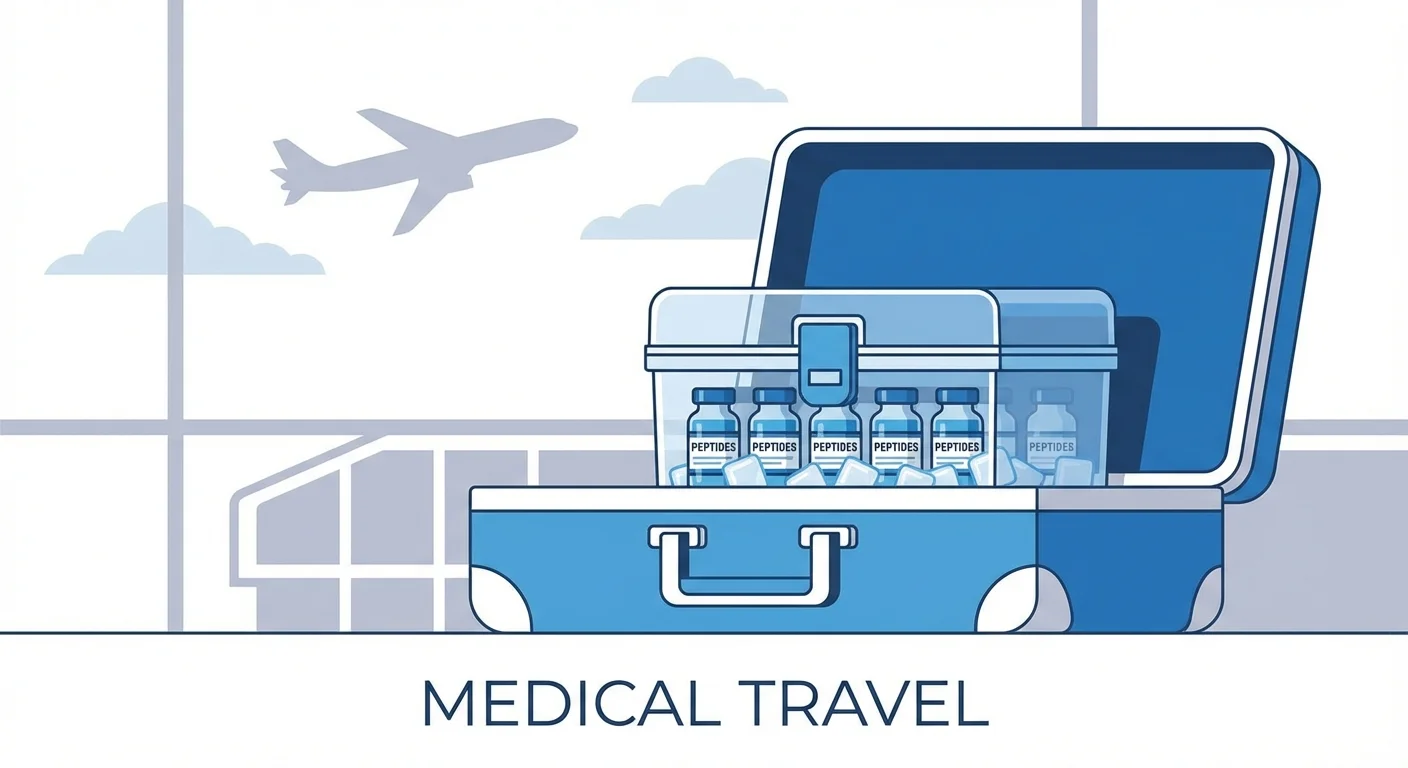
How to Travel with Peptides: TSA Rules, Storage Tips, and Packing Guide
Everything you need to know about flying domestically, crossing international borders, maintaining cold chain, and keeping your peptide supply intact from departure to destination.
Temperature
Recommended
Cooling Duration
Before Travel
Traveling with peptides forces you to solve problems that don't exist with traditional medications. These biological compounds are temperature-sensitive, legally ambiguous in some regions, and unfamiliar to most security officers.
A ruined peptide supply means wasted money and interrupted treatment protocols. The good news: thousands of people fly with peptides every week without incident. They just plan ahead.
TSA rules for domestic flights, international customs requirements, cold chain maintenance, packing strategies, hotel storage solutions, required documentation, and common mistakes that ruin peptide supplies mid-trip.
TSA and Domestic Air Travel Rules
The TSA allows peptides in both carry-on and checked luggage. Peptides classify as medications, which exempts them from standard liquid restrictions when you declare them properly.
Tell TSA officers about your peptides before screening begins. Present them in a separate clear bag along with any cooling equipment.
Always Declare Before Screening
Inform the TSA officer that you are carrying medical peptides and cooling equipment before they begin scanning your bag. This prevents delays, demonstrates compliance, and gives you a chance to explain what the vials contain. Original pharmacy labels reduce questioning significantly.
| Item Type | TSA Status | Requirements |
|---|---|---|
| Lyophilized peptide vials | Allowed | No declaration needed |
| Reconstituted peptides | Allowed | Must declare as medication |
| Ice packs (frozen solid) | Permitted | Any size for medications |
| Gel cooling packs | Permitted | Must be frozen at checkpoint |
| Insulin travel cases | Recommended | Medical exemption applies |
Officers may inspect your cooling containers separately. They cannot require you to open sealed medication vials, but they may test the exterior for explosive residue. Carry printed TSA medication guidelines to clarify any confusion at the checkpoint.
Never pack peptides in checked luggage if you can avoid it. Cargo holds swing between extreme temperatures that destroy peptide stability. The cabin keeps conditions more controlled and keeps your supply within reach.
TSA PreCheck members still need to declare peptides, but they get shorter wait times. The medical liquid exemption applies regardless of your security program enrollment.
International Travel Considerations
International peptide transport gets complicated fast. Regulations vary wildly between countries, and what's perfectly legal at home may trigger customs violations abroad.
Some nations require prescriptions for all peptide forms. Others restrict certain compounds entirely, regardless of medical need.
Research your destination's rules at least three weeks before departure. Embassy websites list current import requirements, but regulations shift frequently. When you're unsure, contact the embassy directly with specific questions about your compounds.
Some countries completely prohibit certain peptides regardless of medical need. Undeclared peptides can lead to confiscation, fines, or criminal charges. The "nothing to declare" line is never an option when carrying peptides across borders.
Consider specialized pharmaceutical shipping services for complex international trips. These companies handle customs documentation and maintain cold chain throughout transport. It costs more than carrying peptides personally, but it eliminates travel stress and regulatory risk.
Maintaining Cold Chain During Travel
Temperature control determines whether your peptides survive the trip. Even brief heat exposure causes irreversible degradation that renders peptides ineffective.
Lyophilized peptides handle temperature swings better than reconstituted forms. But both need protection from extremes. Airport tarmacs hit 140 degrees F in summer. Cargo holds can drop below freezing.
Phase Change Materials vs. Regular Ice Packs
Medical-grade cooling cases use phase change materials that freeze and melt at specific temperatures. They maintain 2-8 degrees C for 24 to 48 hours, far exceeding regular ice pack performance. Standard gel packs lose effectiveness within 4 to 6 hours in warm environments. The investment in proper cooling equipment pays for itself the first time it saves a peptide supply.
Reconstituted Peptides
Require constant refrigeration between 36-46 degrees F. Never allow freezing, as ice crystals destroy peptide structures. Keep in carry-on, never checked bags.
Lyophilized Peptides
Tolerate brief room temperature exposure. Degrade faster above 77 degrees F. More forgiving for travel, but still need cooling for trips over a few hours.
Monitor temperatures with a digital data logger placed inside your cooling case. These devices record excursions and provide evidence if peptides are damaged during transport. Many insurance policies require temperature documentation for claims.
Pack peptides in the center of your cooling case, surrounded by cooling elements on all sides. This creates the most stable temperature zone and protects against external heat. Avoid opening the case frequently during travel.
Cooling Equipment Compared
| Equipment Type | Duration | Temp Range | Best For |
|---|---|---|---|
| Phase change cooling case | 24-48 hours | 2-8 degrees C | Long-haul flights |
| Medical insulin cooler | 12-24 hours | 2-8 degrees C | Domestic travel |
| Gel ice packs in insulated bag | 4-6 hours | Variable | Short trips only |
| Standard cooler with ice | 6-10 hours | Hard to control | Road trips |
| No cooling (lyophilized only) | 2-4 hours max | Ambient | Very short transfers |
Insulin travel cases designed for diabetics work well for peptide transport too. They're TSA-recognized, appropriately sized, and come with built-in temperature indicators. Most cost between $30 and $80.
Road Trips vs. Air Travel
Driving with peptides is simpler than flying in many ways. No TSA checkpoints, no customs declarations, and you control the environment the entire time.
The main risk on road trips is leaving peptides in a hot car. Interior car temperatures can exceed 150 degrees F within 30 minutes on a sunny day, even with windows cracked.
Road Trip Advantages
No security screening. Full control of temperature. Easy access to cooler for ice replenishment. Can store extra supplies in the trunk.
Road Trip Risks
Extreme car interior heat during stops. Longer exposure windows. No flight attendants to provide emergency ice. Rest stop refrigeration is unreliable.
Never leave peptides unattended in a parked vehicle, even briefly. Bring your cooling case inside during every stop. If you're checking into a hotel mid-drive, bring the case to your room before unloading anything else.
Keep your peptide cooling case in the passenger cabin, not the trunk. Trunk temperatures run significantly hotter than cabin temperatures, especially in summer months. Treat your peptides like a passenger, not cargo.
Packing Checklist and Organization
Successful peptide travel starts with redundant safety measures. Build a dedicated travel kit that contains everything you need for safe transport and emergency situations.
Pack 25% more peptides than your trip requires. Delays happen. Vials break. Cooling fails. That buffer keeps your treatment protocol on track.
| Category | Essential Items | Optional Additions |
|---|---|---|
| Temperature Control | Insulated case, ice packs, thermometer | Backup cooling packs, data logger |
| Documentation | Prescription, COA certificates, ID | Translated documents, embassy contacts |
| Supplies | Alcohol wipes, sharps container | Reconstitution supplies, buffer solutions |
| Emergency | Extra peptides, provider contact info | Local pharmacy locations, insurance cards |
Use waterproof bags for all cooling elements to prevent leaks that could damage documentation. Color-code different peptide types to avoid confusion. Label everything with your name and contact information.
Place critical documents in an easily accessible outer pocket of your carry-on. Security officers and customs agents appreciate quick access to proper paperwork. Keep digital copies in cloud storage as backup.
Pre-positioning supplies at your destination through pharmaceutical couriers is worth considering for longer trips. It reduces travel complexity and ensures proper storage is waiting when you arrive.
Hotel and Accommodation Storage
Hotel mini-fridges are unreliable for peptide storage. Many cycle between freezing and warm temperatures, creating the exact conditions that destroy peptide integrity.
Test any hotel refrigerator with a thermometer before storing peptides inside. You want steady temperatures between 36-46 degrees F without freezing cycles.
Hotels
Request medical-grade refrigeration when booking. Many quality properties provide specialized units for guests with medical needs.
Vacation Rentals
Full-size refrigerators with better temperature control. Filter platforms for properties with specific amenities.
Extended Stays
Consider renting temporary medical refrigeration equipment. Medical supply companies in major cities offer short-term rentals.
When proper refrigeration is not available, maintain your cooling case with fresh ice packs. Most hotels will freeze gel packs in their kitchen freezers. Some properties have ice machines that work in a pinch for insulated containers.
Contact hotels directly before booking to confirm medical refrigeration availability. Front desk staff often don't know about specialized services that the property actually offers.
What Documentation to Carry
Proper documentation prevents problems with security, customs, and medical emergencies abroad. Each document serves a specific purpose and should be within arm's reach during travel.
Generic descriptions like "research chemicals" create suspicion and delays. Be specific and medical in all your paperwork.
Required Documents for Peptide Travel
Physician prescription with your name matching your passport, specific peptide names, dosages, and the prescribing doctor's contact info. Certificates of Analysis proving pharmaceutical-grade purity and sterility (see our COA reading guide). Medical necessity letter describing your diagnosis, treatment protocol, and why alternatives are not suitable. Emergency contact card with physician info, insurance details, and local embassy contacts.
For international travel, notarize all documents and obtain certified translations into the destination country's language. Some nations require apostille certification from your state government. Start this process at least one month before departure.
Laminate emergency contact cards and carry multiple copies in different bags. Include information about your specific peptides and potential side effects in case you need medical attention abroad.
Common Mistakes to Avoid
The biggest mistake is assuming peptides can travel like regular medications. Traditional drugs tolerate temperature abuse that would destroy most peptides. This false confidence leads to inadequate cooling and ruined supplies.
| Mistake | Consequence | Prevention |
|---|---|---|
| Inadequate cooling | Peptide degradation | Use medical-grade cooling systems |
| Missing documentation | Confiscation or legal issues | Carry complete paperwork |
| Undeclared at customs | Fines or criminal charges | Always declare medications |
| Checked luggage storage | Temperature excursions | Keep peptides in carry-on |
| No backup supplies | Treatment interruption | Pack 25% extra peptides |
| Early reconstitution | Faster degradation | Travel lyophilized when possible |
Reconstituting peptides too early before travel increases degradation risk. Our reconstitution guide covers optimal timing for peptide preparation. When possible, travel with lyophilized forms and reconstitute at your destination.
Some countries treat undeclared peptides as drug smuggling, resulting in arrest and prosecution. Failing to research destination regulations creates serious legal risks that no amount of cooling equipment can fix.
Allow extra time at airports, especially during peak travel periods. Rushing through checkpoints with medical supplies often triggers additional scrutiny that could have been avoided with a few extra minutes of patience.
Using regular consumer coolers instead of medical-grade equipment often results in temperature failures. The small additional cost of proper equipment prevents major losses. Think of it as insurance for compounds that cost hundreds of dollars per vial.
Travel Day Timeline
A structured approach to travel day removes the guesswork. Here's what experienced peptide travelers do at each stage of the journey.
Before Leaving Home
Freeze all cooling elements 24 hours in advance. Verify all documents are packed and accessible. Check peptide vials for any signs of degradation. Place a fresh battery in your temperature data logger. Confirm hotel refrigeration arrangements one final time.
At the Airport
Arrive 30 minutes earlier than you normally would. Have your peptide documentation accessible before entering the security line. Inform the TSA officer immediately that you're carrying medical supplies requiring cooling. Stay calm if they want to inspect your case. Request a private screening if you prefer discretion.
During the Flight
Store your cooling case under the seat in front of you for easy access, not in the overhead bin. Check the temperature indicator during longer flights. If cooling is failing, request ice from the flight crew. Keep the case closed as much as possible to preserve cold temperatures.
After Landing
Head directly to your accommodation. Transfer peptides to proper refrigeration within 2 hours of landing. Check the data logger for any temperature excursions during transit. If excursions occurred, photograph the log and contact your healthcare provider before using the peptides.
Frequently Asked Questions
Can I travel internationally with research peptides not approved for human use?
Research peptides face additional scrutiny at international borders compared to prescribed medications. Many countries prohibit importing compounds not approved by their regulatory agencies, regardless of research purpose. Academic travelers need institutional documentation, research protocols, and sometimes special import permits. Contact destination embassies well before travel and consider shipping through specialized research courier services instead of personal transport.
What happens if my cooling system fails during a long flight?
Ask flight attendants for ice to create temporary cooling in your travel case. Wrap peptides in aluminum foil for additional insulation if ice is not available. Upon landing, prioritize finding replacement cooling immediately through airport pharmacies, nearby hotels, or medical facilities. Document the temperature excursion with photos and timestamps for potential insurance claims. Consult your healthcare provider about replacement protocols before continuing use.
How do I know if my peptides were damaged during travel?
Obvious signs include crystallization changes in lyophilized powders, unusual cloudiness in reconstituted solutions, or particles floating in previously clear liquids. Temperature data loggers provide objective evidence of harmful excursions. However, subtle degradation may not show visible signs while still reducing potency. When in doubt, consider peptides potentially compromised and consult your healthcare provider about potency testing or replacement.
Are there countries where peptides are completely prohibited?
Several countries maintain complete prohibitions on specific peptides or all non-approved biological compounds. Middle Eastern nations often ban growth hormone-related peptides entirely. Some Asian countries prohibit any compounds not approved by their national health agencies. These restrictions apply regardless of prescription status or medical need in your home country. Always verify legal status through official embassy channels before booking travel.
Can I ship peptides ahead to avoid travel complications?
Specialized pharmaceutical shipping services offer cold-chain transport with proper documentation and customs handling. Costs typically range from $200-500 depending on destination and urgency, but they eliminate personal legal risks and travel stress. Shipping requires advance planning, typically 1 to 2 weeks for international delivery including customs clearance. This option works best for extended stays where the shipping cost is justified by reduced complexity.
What should I do if customs officials question my peptides?
Stay calm and professional. Present your documentation immediately: prescription, medical necessity letter, and certificates of analysis. Explain that peptides are prescribed medications for specific health conditions, not recreational substances. Avoid technical jargon that might confuse officers. If officials seem skeptical, request to speak with a medical officer or supervisor. Never consent to disposing of peptides without exploring all options first. Contact your embassy if detained.
Should I bring extra peptides beyond what I need?
Always pack 25-30% more than your planned trip requires. Flight cancellations, extended stays, or cooling system failures can leave you short. But don't pack excessive quantities that might raise customs suspicions about commercial importing. Document the medical need for backup supplies in your physician's letter and consider peptide shelf life when deciding what to bring as extras.
This article is for educational purposes only and does not constitute medical advice. Always consult a qualified healthcare provider before traveling with any peptide protocol. Regulations vary by jurisdiction and change frequently. Verify all legal requirements through official government sources before travel.