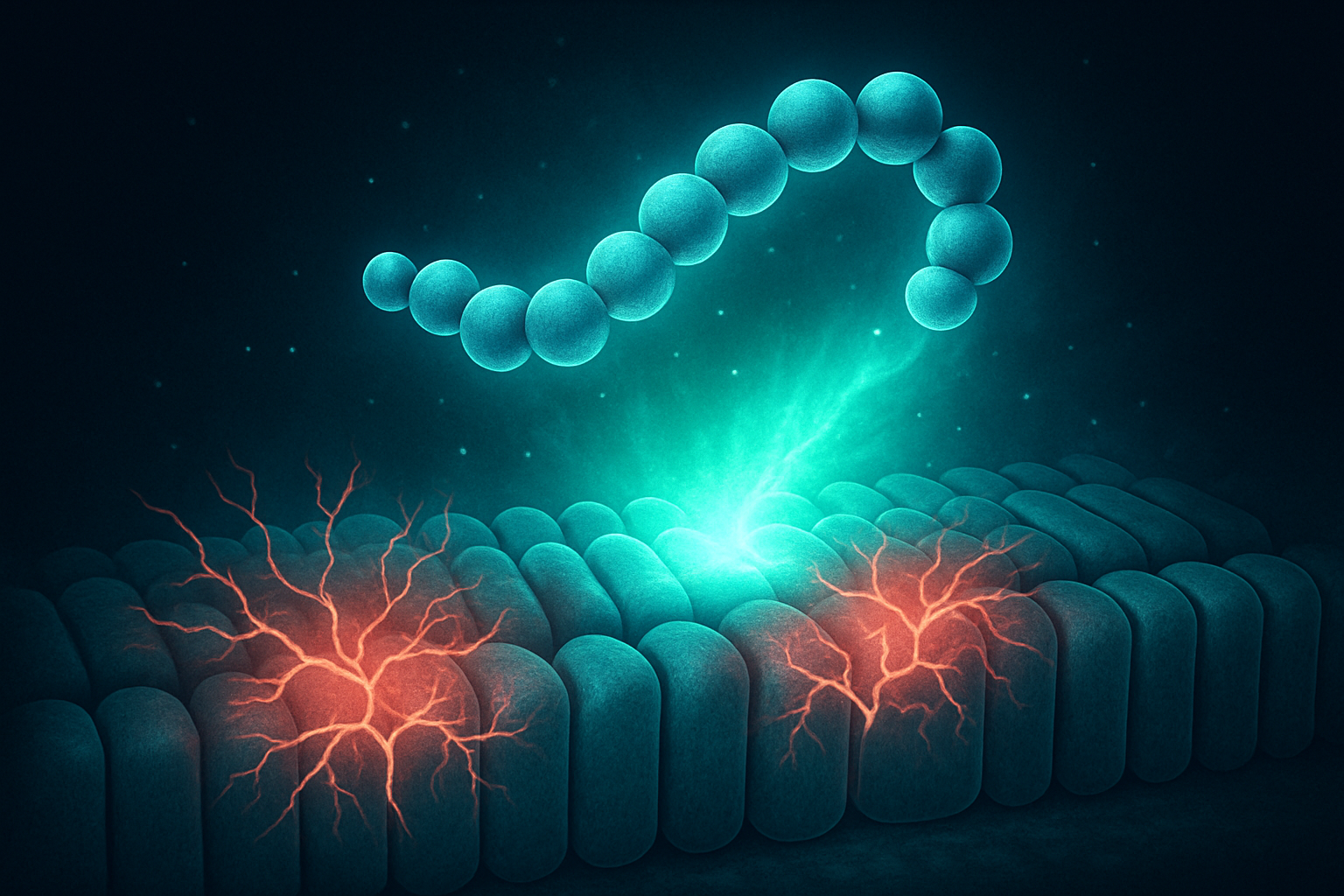
KPV Peptide: The Anti-Inflammatory Tripeptide for Gut Health
A tiny three-amino-acid fragment of alpha-MSH with potent anti-inflammatory effects, oral bioavailability, and strong preclinical data for IBD and colitis. What the research actually shows and what remains unknown.
in Sequence
Mechanism
(Rare for Peptides)
Research Focus
Chronic inflammatory conditions like Crohn's disease and ulcerative colitis affect millions of people worldwide. Conventional treatments often fall short, leaving patients searching for alternatives.
KPV is a tripeptide fragment that's been generating serious interest among researchers studying inflammatory bowel disease (IBD), skin conditions, and general immune modulation. Its small size and oral bioavailability make it unusual among peptides, most of which are destroyed in the digestive tract.
This is an educational breakdown of KPV peptide, covering its mechanisms, gut health research, dosing considerations, and safety profile. It is not a recommendation to use KPV. KPV is not FDA-approved for any indication. Consult a qualified healthcare provider before considering any peptide protocol.
KPV at a Glance
KPV (Alpha-MSH Fragment)
Sequence: Lysine-Proline-Valine (K-P-V) | Length: 3 amino acids | Derived from: C-terminal end of alpha-MSH | Primary Mechanism: NF-kB inhibition | Routes: Oral, subcutaneous injection | Key Advantage: Oral bioavailability | Main Research Area: IBD, colitis, gut inflammation | FDA Status: Not approved for any indication
Alpha-melanocyte-stimulating hormone (alpha-MSH) is a 13-amino-acid peptide with well-documented anti-inflammatory properties. Researchers discovered that much of that activity could be traced to its last three amino acids: lysine, proline, and valine.
That fragment is KPV. At just three amino acids, it's one of the smallest bioactive peptides studied for anti-inflammatory effects. Its tiny size is actually an advantage: it can potentially survive oral administration better than larger peptides.
For a deeper compound profile, visit PeptideArc.
How KPV Works
KPV's primary mechanism centers on NF-kB (nuclear factor kappa-light-chain-enhancer of activated B cells). This transcription factor acts as a master switch for inflammation throughout the body.
NF-kB: The Master Inflammation Switch
When NF-kB activates normally, it produces pro-inflammatory cytokines (TNF-alpha, IL-6, IL-1beta) in a regulated way. The problem arises in conditions like IBD, where NF-kB stays chronically active and drives ongoing tissue damage.
A 1999 study demonstrated that alpha-MSH peptides, including KPV, could enter the nucleus of immune cells and directly interact with NF-kB signaling pathways (Ichiyama et al., 1999). KPV essentially tells the inflammation switch to turn off at its source.
| NF-kB State | What Happens |
|---|---|
| Normal Activation | Produces pro-inflammatory cytokines in a regulated way |
| Chronic Activation (IBD) | Drives ongoing tissue damage and inflammation |
| KPV Treatment | Inhibits NF-kB activation, turns down inflammatory response at source |
Additional Mechanisms
Beyond NF-kB, KPV acts through several supporting pathways. It reduces pro-inflammatory cytokine production, decreasing TNF-alpha and other inflammatory markers directly.
KPV also modulates immune cell behavior, influencing how macrophages and other immune cells respond to threats. It can cross the blood-brain barrier, opening the possibility for central anti-inflammatory effects as well.
KPV provides broad inflammatory dampening without the immune suppression seen with corticosteroids or biologics. It turns down overactive inflammation rather than shutting off the immune system entirely.
KPV for Gut Health
This is where KPV research gets most interesting. The gut health data is the strongest body of evidence supporting this peptide's potential.
IBD and Colitis Research
A landmark study by Laroui et al. tested KPV in mouse models of colitis and found it significantly reduced inflammation, decreased inflammatory cytokine levels, and improved overall disease scores. The standout finding: KPV worked when administered orally (Laroui et al., 2010).
That matters because most peptides are destroyed in the digestive tract. Oral bioavailability is rare for peptides, and it makes KPV especially practical for gut-targeted applications.
Oral KPV Reduces Colitis in Animal Models
A follow-up study loaded KPV into nanoparticles designed to release specifically in the colon, showing even better results than standard oral delivery (Laroui et al., 2012). This nanoparticle approach represents a potential future direction for targeted gut therapy.
How KPV Helps the Gut
| Mechanism | Effect | Significance |
|---|---|---|
| Direct NF-kB inhibition | Intestinal cells downregulate inflammatory signaling | Core mechanism |
| Reduced immune cell infiltration | Less neutrophil and macrophage migration into inflamed tissue | Tissue protection |
| Barrier preservation | Helps maintain tight junctions between gut cells | Permeability defense |
| Decreased oxidative stress | Less ROS-driven tissue damage | Cellular protection |
Oral KPV makes particular sense for gut issues because the peptide acts locally on inflamed tissue as it passes through. The drug goes exactly where you need it.
Current Research Status
Most KPV gut research has been done in animal models. Large-scale human clinical trials don't exist yet.
The mechanism is well-characterized and animal data is consistent, but this remains an off-label and experimental application. Treat the evidence as promising but preliminary.
KPV for Skin Health
The connection between KPV and skin makes sense given its parent molecule. Alpha-MSH is deeply involved in skin biology, playing roles in pigmentation, inflammation, and immune regulation within the dermis.
Research shows KPV reduces inflammation in skin cells. A study on human dermal fibroblasts found KPV reduced inflammatory mediators when cells were exposed to bacterial components (Brzoska et al., 2008).
| Application | Mechanism | Evidence Level |
|---|---|---|
| Eczema / Dermatitis | NF-kB-driven inflammation reduction | Preclinical |
| Psoriasis | NF-kB central to disease pathology | Preclinical |
| Wound healing | Modulates inflammatory phase of repair | Preclinical |
| General skin irritation | Anti-inflammatory soothing | Early-stage |
For more on peptides and skin applications, see our guide to the best peptides for skin and hair.
Oral vs. Injectable KPV
KPV can be taken through two main routes, and the choice depends largely on what you're targeting. Each route has distinct advantages.
Oral Route
Best for: Gut-specific issues (IBD, colitis, intestinal inflammation). Acts directly on inflamed tissue as it passes through. Studied orally in colitis research. Capsules are user-friendly.
Subcutaneous Injection
Best for: Systemic inflammation, skin conditions. Predictable bioavailability. Requires reconstitution and injection. Standard peptide delivery method with whole-body distribution.
| Factor | Oral | Subcutaneous |
|---|---|---|
| Best for | Gut-specific issues | Systemic inflammation, skin |
| Bioavailability | Decent (small size helps) | Predictable, higher |
| Convenience | Capsules, user-friendly | Requires reconstitution |
| Research support | Colitis studies used oral route | Standard peptide delivery |
| Local action | Acts directly on gut tissue | Whole-body distribution |
Some people use both routes simultaneously, though no formal research exists on combined protocols.
Dosing Protocols
No FDA-approved dosing exists for KPV. The information below comes from animal studies and practitioner protocols, not from controlled human trials.
These are general reference points, not prescriptions. Individual responses vary. Working with a knowledgeable healthcare provider is the safest approach for any peptide protocol.
| Route | Dose | Timing | Typical Cycle |
|---|---|---|---|
| Oral | 200–500 mcg/day | Empty stomach, split AM/PM | 4–8 weeks |
| Injectable | 200–500 mcg/day | Once daily, subcutaneous | 4–8 weeks |
Need help with dosing math? Use our free Peptide Reconstitution Calculator.
Side Effects and Safety
KPV has a relatively clean safety profile. Being a naturally occurring fragment of alpha-MSH, your body already produces and processes similar molecules.
Reported Side Effects
| Side Effect | Frequency | Severity |
|---|---|---|
| Injection site reactions | Occasional | Mild |
| GI discomfort (oral) | Occasional | Mild, temporary |
| Skin flushing | Rare | Mild |
Serious adverse effects have not been widely reported. Long-term effects remain unknown due to limited human trial data.
Who Should Be Cautious
Pregnant or breastfeeding women: No safety data exists. People with melanoma history: The melanocortin pathway connection warrants caution. Those on immunosuppressive therapy: Potential interactions with immune modulation.
KPV vs. BPC-157 for Gut Health
These two peptides are commonly discussed together for gut health, but they work through fundamentally different mechanisms. KPV calms the inflammatory process; BPC-157 focuses on healing damaged tissue.
| Factor | KPV | BPC-157 |
|---|---|---|
| Primary mechanism | NF-kB inhibition (anti-inflammatory) | Growth factor modulation (tissue repair) |
| Focus | Calming the inflammatory process | Healing damaged tissue |
| Oral viability | Yes (studied orally) | Yes (oral forms available) |
| Size | 3 amino acids | 15 amino acids |
| Common pairing | Often stacked with BPC-157 | Often stacked with KPV |
They target different aspects of gut pathology, which is why some protocols combine them. KPV reduces the inflammation while BPC-157 repairs the damage. For more on BPC-157, see our complete guide.
Who Might Consider KPV
Gut Inflammation
People dealing with IBD, colitis, or chronic intestinal inflammation who haven't responded well to conventional treatments. Strongest research support.
Skin Conditions
Those with inflammatory skin issues like eczema, psoriasis, or chronic dermatitis where NF-kB plays a central role. Evidence is preclinical.
Systemic Inflammation
Individuals with chronic inflammatory markers seeking an immune-modulating approach. The broadest and least studied application.
Research Status in 2026
KPV sits in an interesting position. Preclinical data is strong and consistent across multiple animal studies, and the mechanism is well-understood at the molecular level.
But large randomized controlled trials haven't been completed. Small peptide fragments are difficult to patent, reducing the financial incentive for pharmaceutical companies to fund expensive trials.
Advanced Delivery Systems
Active research continues on nanoparticle formulations and hydrogel-based approaches for targeted gut delivery. These could dramatically improve KPV's effectiveness by concentrating the peptide exactly where inflammation occurs in the colon.
Frequently Asked Questions
Is KPV legal?
How long does it take to notice effects?
Can I take KPV with other peptides?
Does KPV need to be refrigerated?
Is KPV the same as alpha-MSH?
Can KPV help with food sensitivities?
The Bottom Line
KPV is one of the more promising anti-inflammatory peptides in current research. Its small size, oral bioavailability, and well-characterized NF-kB inhibition mechanism make it particularly attractive for gut health applications.
The animal data on colitis and intestinal inflammation is compelling. Multiple studies show consistent results, and the nanoparticle delivery research points toward even more effective formulations in the future.
But we're still waiting on solid human clinical trial data. The preclinical picture is strong; the clinical validation is still catching up.
If you're dealing with a serious inflammatory condition, work with a healthcare provider who understands peptide therapy. Don't self-treat IBD or any significant condition based on animal studies alone.
This article is for educational and informational purposes only. It is not medical advice and should not be treated as such. KPV is not FDA-approved for any indication. Always consult a qualified healthcare provider before starting any peptide protocol. The research cited here is primarily preclinical. Do not self-diagnose or self-treat based on this information.
References
Ichiyama T et al. Alpha-MSH peptides interact with NF-kB signaling in immune cells. Ann N Y Acad Sci. 1999;885:396-399. PubMed
Laroui H et al. Functional TNF-alpha gene silencing mediated by polyethyleneimine/TNF-alpha siRNA nanocomplexes in inflamed colon. Biomaterials. 2010;32(4):1218-1228. PubMed
Laroui H et al. Nanomedicine in GI. Am J Physiol Gastrointest Liver Physiol. 2012;300(3):G371-383. PubMed
Brzoska T et al. Alpha-melanocyte-stimulating hormone and related tripeptides: biochemistry, antiinflammatory and protective effects. Endocr Rev. 2008;29(5):581-602. PubMed
Related reading:
BPC-157 Complete Guide · Best Peptides for Gut Health · Best Peptides for Skin and Hair · What Are Peptides? Beginner's Guide
For compound profiles and sourcing info, visit PeptideArc.