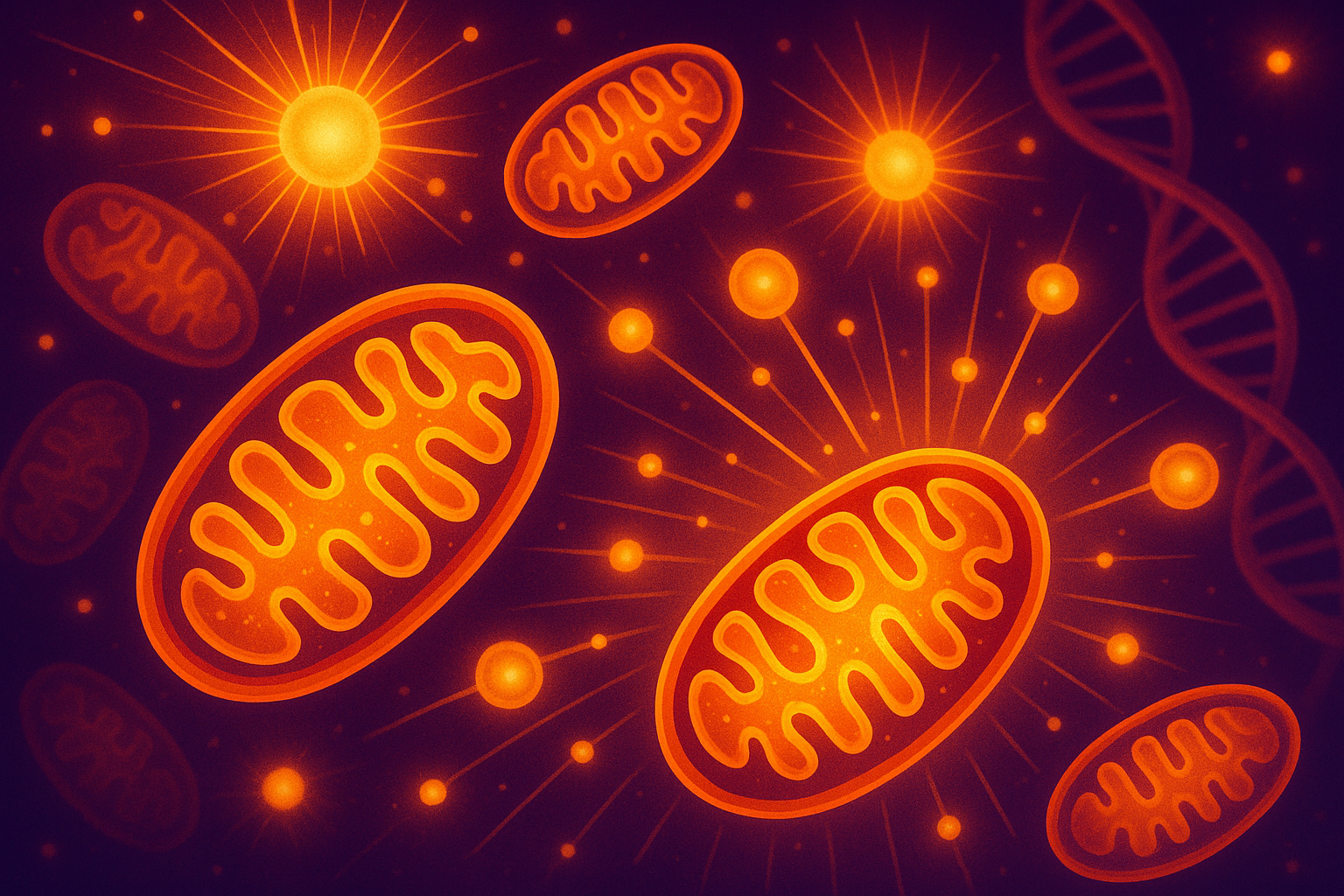
NAD+ and Peptides: Boosting Cellular Energy for Longevity
NAD+ is the coenzyme your mitochondria need to produce energy. Three peptides can help restore it as you age: MOTS-c, 5-Amino-1MQ, and SS-31.
by Middle Age
for NAD+ Support
Currency
Activated by NAD+
NAD+ (nicotinamide adenine dinucleotide) sits at the center of cellular energy production. Every living cell depends on it to convert nutrients into ATP, and without enough of it, mitochondria can't do their job (Rajman et al., 2018).
The problem is that NAD+ levels drop steadily with age. By the time you hit your 40s or 50s, you may have half the NAD+ you had in your 20s, and that decline drives many of the symptoms we associate with getting older.
This article explains how three peptides (MOTS-c, 5-Amino-1MQ, and SS-31) support NAD+ levels and mitochondrial function. It's for educational purposes only and does not constitute medical advice.
Why NAD+ Matters for Aging
NAD+ does more than power your mitochondria. It also activates sirtuins, a family of seven proteins that regulate DNA repair, inflammation, and stress resistance (Imai & Guarente, 2014).
Sirtuins can't function without NAD+. When NAD+ runs low, sirtuin activity drops, and the cellular repair processes they control slow down or stall entirely.
NAD+ also serves as a signaling molecule that influences circadian rhythms, inflammatory responses, and metabolic flexibility. These aren't minor background functions; they're central to how well your cells perform under stress.
NAD+ isn't just an energy molecule. It's the required cofactor for sirtuins, creating a direct link between NAD+ levels and the pace of cellular aging.
What Causes NAD+ to Decline
Several factors work together to drain NAD+ as you age. Understanding them helps explain why simple supplementation alone often isn't enough.
| Factor | Mechanism | Impact |
|---|---|---|
| CD38 overactivity | This enzyme consumes NAD+ and ramps up with chronic inflammation | Major driver of age-related decline |
| Reduced NAMPT | The key enzyme for NAD+ recycling drops 30–50% by age 50 | Limits the salvage pathway |
| DNA damage | PARP enzymes consume NAD+ to repair accumulated DNA breaks | Increases with age and UV exposure |
| Mitochondrial ROS | Aging mitochondria leak more free radicals that destroy NAD+ | Creates a vicious cycle |
| Metabolic signaling shifts | Changes in AMPK and mTOR pathways disrupt NAD+ balance | Compounds other factors |
Chronic inflammation and oxidative stress accelerate all of these processes. Lifestyle factors like poor diet, sedentary behavior, and chronic stress compound the damage further.
Three NAD+-Boosting Peptides
Traditional NAD+ precursors like NMN and NR supply raw materials. Peptides work differently: they target the enzymes and pathways that control how your body makes, uses, and preserves NAD+.
Three peptides stand out for their distinct mechanisms of action.
MOTS-c: The Exercise Mimetic
MOTS-c is a 16-amino-acid peptide encoded by mitochondrial DNA. Your body naturally produces more of it during exercise, and it functions as a metabolic signaling molecule that crosses from mitochondria into the nucleus to influence gene expression (Lee et al., 2015).
It improves insulin sensitivity in muscle tissue, enhances glucose uptake during physical activity, and activates the AMPK pathway for cellular energy balance. A 2021 study found aged mice given MOTS-c showed 30% higher NAD+ levels and significantly improved endurance.
5-Amino-1MQ: The NNMT Blocker
5-Amino-1MQ takes a different approach than most NAD+ boosters. Instead of adding more raw material, it blocks NNMT, an enzyme that breaks down NAD+ precursors before they can be converted (Neelakantan et al., 2021).
By inhibiting NNMT, this peptide preserves the building blocks your cells need to synthesize NAD+. It amplifies the effects of NMN and NR supplements, improves metabolic flexibility during fasting, and supports healthy body composition.
SS-31 (Elamipretide): The Inner Membrane Protector
SS-31 is a tetrapeptide that concentrates inside mitochondria, specifically at the inner membrane where electron transport happens. It binds to cardiolipin, a phospholipid essential for the structural integrity of the energy-producing machinery (Birk et al., 2014).
By stabilizing cardiolipin, SS-31 reduces electron leakage and oxidative damage. This protects NAD+ from destruction by free radicals and helps mitochondria produce ATP more efficiently. It's currently in Phase 3 clinical trials for certain mitochondrial diseases.
Head-to-Head Comparison
Each of these peptides targets a different bottleneck in NAD+ metabolism. The table below shows how they compare across key dimensions.
| Feature | MOTS-c | 5-Amino-1MQ | SS-31 |
|---|---|---|---|
| Primary action | Metabolic signaling | Enzyme inhibition | Mitochondrial protection |
| Mechanism | Activates AMPK pathway | Inhibits NNMT enzyme | Stabilizes cardiolipin |
| Time to effect | 3–7 days | 1–2 hours | 30–60 minutes |
| Duration | 12–24 hours | 6–8 hours | 4–6 hours |
| Synergy with NMN | High | Very high | Moderate |
| Best application | Insulin resistance | Metabolic health | Neuroprotection |
| Research status | Human trials ongoing | Promising preclinical | Phase 3 trials |
| Administration | Subcutaneous injection | Oral capsule | Subcutaneous injection |
How NAD+ Peptides Work Together
These three peptides aren't redundant. They target different steps in the NAD+ production and preservation chain, which means combining them can address the problem from multiple angles.
5-Amino-1MQ protects NAD+ precursors from being destroyed before they're used. MOTS-c activates AMPK to boost the cell's demand-driven production of NAD+. SS-31 shields the mitochondria where NAD+ is consumed, reducing wasteful oxidative losses.
Used together, they address the supply side, the demand side, and the protection side of NAD+ metabolism.
NAD+ Restoration Protocol
The following protocol combines peptides with NAD+ precursors and lifestyle interventions. It's a framework to discuss with your healthcare provider, not a prescription.
Always start with lower doses and consult a healthcare provider before beginning any new regimen. Individual needs vary significantly based on age, health status, and current medications.
Supplement Timing
| Time | Compound | Dose Range | Purpose |
|---|---|---|---|
| 7:00 AM | 5-Amino-1MQ + NMN | 50–100mg + 250–500mg | Support morning energy metabolism |
| 8:00 AM | Morning walk or light exercise | 20–30 minutes | Activate AMPK pathway naturally |
| 12:00 PM | First meal (after 16-hour fast) | N/A | Enhance cellular repair windows |
| 4:00 PM | MOTS-c (pre-workout) | 5–10mg subcutaneous | Optimize exercise benefits |
| 6:00 PM | Strength or HIIT training | 30–45 minutes | Boost mitochondrial biogenesis |
| 9:00 PM | SS-31 | 20–40mg subcutaneous | Support overnight cellular repair |
Lifestyle Factors That Support NAD+
Peptides work best when paired with behaviors that naturally support NAD+ production. These aren't optional extras; they're foundational.
Time-Restricted Eating
14–16 hour daily fasts activate autophagy and boost NAD+ through the salvage pathway. Even a 12-hour overnight fast provides measurable benefits.
High-Intensity Exercise
Brief intense activity (HIIT, sprints, heavy resistance training) directly increases NAMPT expression and endogenous MOTS-c production.
Cold Exposure
Mild cold stress (cold showers, 2–3 minutes) activates NAD+-dependent sirtuins and stimulates brown fat mitochondrial activity.
Monitoring Your NAD+ Status
You can't manage what you don't measure. Tracking biomarkers helps you personalize dosing and confirm that your protocol is actually working.
| Marker | Optimal Range | Significance | Frequency |
|---|---|---|---|
| NAD+/NADH ratio | 5:1 to 10:1 | Cellular energy status | Baseline, then every 6 months |
| NMN levels | 40–80 ng/mL | NAD+ precursor availability | Before starting, then quarterly |
| hs-CRP | <1.0 mg/L | Systemic inflammation control | Every 3–6 months |
| Fasting insulin | <5 uIU/mL | Metabolic health indicator | Every 3–6 months |
| Mitochondrial DNA | >200 copies/cell | Mitochondrial density | Baseline and annually |
| Urinary 8-OHdG | <10 ng/mg creatinine | Oxidative stress marker | Annually |
Work with a functional medicine practitioner who specializes in these advanced biomarkers. Many standard labs don't offer NAD+ or mitochondrial DNA testing.
Get baseline bloodwork before starting any protocol. Without a starting point, you won't know whether changes in how you feel reflect actual biochemical improvement or placebo.
Who Might Benefit
NAD+ peptides aren't for everyone. They're most relevant for people experiencing specific signs of age-related mitochondrial decline.
Good Candidates
Adults over 40 with persistent fatigue not relieved by sleep, reduced exercise tolerance, age-related metabolic changes, or family history of neurodegenerative conditions.
Contraindications
Active cancer (NAD+ may fuel tumor growth), pregnancy or breastfeeding, severe kidney disease, or anyone on immunosuppressive therapy without physician approval.
Benefits vs. Considerations
| Potential Benefits | Important Considerations |
|---|---|
| Improved cellular energy production | Requires consistent, ongoing use |
| Enhanced exercise performance and recovery | Cycling (3 months on, 1 month off) prevents desensitization |
| Metabolic health and body composition support | Quality sourcing is essential for safety |
| Neuroprotective effects over time | Not a substitute for medical treatment |
NAD+ optimization aims for balance, not maximum elevation. Excessive boosting can cause temporary flushing, jitteriness, or sleep disturbances. If you experience these, reduce your dosage immediately.
Side Effects and Safety
NAD+ peptides are generally well-tolerated in research settings, but they aren't without risk. Here's what the data shows.
| Peptide | Common Side Effects | Rare Side Effects | Severity |
|---|---|---|---|
| MOTS-c | Injection site redness, mild nausea | Temporary blood sugar fluctuations | Mild |
| 5-Amino-1MQ | GI discomfort, headache | Sleep disruption at high doses | Mild |
| SS-31 | Injection site discomfort, flushing | Dizziness, low blood pressure | Mild to moderate |
Most side effects resolve within hours of reducing dosage. Long-term safety data beyond 12 months is limited for all three peptides, which is something to weigh in your risk-benefit calculation.
Cycling Protocol
Cycling prevents receptor desensitization and maintains your body's natural NAD+ production capacity.
| Phase | Duration | Protocol |
|---|---|---|
| Loading | Weeks 1–2 | Start with lowest effective doses; assess tolerance |
| Active | Weeks 3–12 | Full protocol with all three peptides and NMN |
| Rest | Weeks 13–16 | Discontinue peptides; maintain lifestyle interventions only |
| Reassess | Week 17 | Repeat bloodwork; adjust doses based on biomarkers |
Complementary Longevity Approaches
NAD+ peptides work best as part of a broader longevity strategy. Several other interventions target overlapping but distinct aging pathways.
Epithalon
Supports telomere maintenance through peptide signaling. Addresses the "cellular clock" aspect of aging that NAD+ peptides don't directly target.
Thymosin Beta-4
Aids tissue repair by modulating cellular migration and differentiation. Complements NAD+ support by addressing structural damage.
Hyperbaric Oxygen
Enhances mitochondrial function through oxygen saturation. Can amplify the benefits of SS-31 by improving the raw material supply for oxidative phosphorylation.
Red Light Therapy
May boost cellular energy production through photon absorption at cytochrome c oxidase. A non-invasive complement to peptide-based mitochondrial support.
These combinations should be guided by a knowledgeable healthcare provider who can design a personalized protocol based on your health status and goals.
Frequently Asked Questions
How soon might I notice changes?
Can I use these with NR instead of NMN?
Are there food sources of NAD+?
What are signs I might be taking too much?
How do peptides compare to IV NAD+?
Should I take these continuously?
Can NAD+ peptides help with neurological conditions?
Are there genetic tests that predict NAD+ response?
The Bottom Line
NAD+ decline is one of the most well-documented features of aging. MOTS-c, 5-Amino-1MQ, and SS-31 each target different bottlenecks in NAD+ metabolism, and combining them with NMN and lifestyle interventions offers a multi-angle approach to supporting cellular energy and longevity. Work with a qualified provider to build a protocol that fits your individual biology.
The science of NAD+ restoration is still evolving, but the foundational research is strong. Mitochondrial decline drives much of what we experience as aging, and these peptides offer targeted tools to address it.
Start with bloodwork. Build your protocol around data, not guesswork. And remember that peptides are one piece of a larger puzzle that includes exercise, nutrition, sleep, and stress management.
This article is for educational and informational purposes only. It is not medical advice, and it does not substitute for professional medical consultation, diagnosis, or treatment. Always consult a qualified healthcare provider before starting any peptide protocol or making changes to your health regimen. Individual results vary, and the compounds discussed here are not FDA-approved for the uses described.
References
Rajman L, Chwalek K, Sinclair DA. Therapeutic Potential of NAD-Boosting Molecules: The In Vivo Evidence. Cell Metab. 2018;27(3):529–547. PubMed
Imai SI, Guarente L. NAD+ and sirtuins in aging and disease. Trends Cell Biol. 2014;24(8):464–471. PubMed
Lee C, Zeng J, Drew BG, et al. The mitochondrial-derived peptide MOTS-c promotes metabolic homeostasis and reduces obesity and insulin resistance. Cell Metab. 2015;21(3):443–454. PubMed
Neelakantan H, et al. Selective and membrane-permeable small molecule inhibitors of nicotinamide N-methyltransferase reverse high fat diet-induced obesity in mice. Biochem Pharmacol. 2021;147:141–152. PubMed
Birk AV, et al. The mitochondrial-targeted compound SS-31 re-energizes ischemic mitochondria by interacting with cardiolipin. J Am Soc Nephrol. 2014;24(8):1250–1261. PubMed
Yoshino J, Baur JA, Imai SI. NAD+ Intermediates: The Biology and Therapeutic Potential of NMN and NR. Cell Metab. 2018;27(3):513–528. PubMed
Camacho-Pereira J, et al. CD38 Dictates Age-Related NAD Decline and Mitochondrial Dysfunction through an SIRT3-Dependent Mechanism. Cell Metab. 2016;23(6):1127–1139. PubMed
Related reading:
SS-31 Elamipretide Guide · MOTS-c Mitochondrial Peptide · Peptide Bloodwork Guide · Longevity Stack Guide
For compound profiles and sourcing info, visit PeptideArc.